Last Chance in Geneva: The US-Iran Nuclear Standoff
With over 150 US aircraft deployed to the region and Trump's 15-day ultimatum ticking down, Thursday's Geneva talks between Washington and Tehran may be the last diplomatic off-ramp before military conflict.
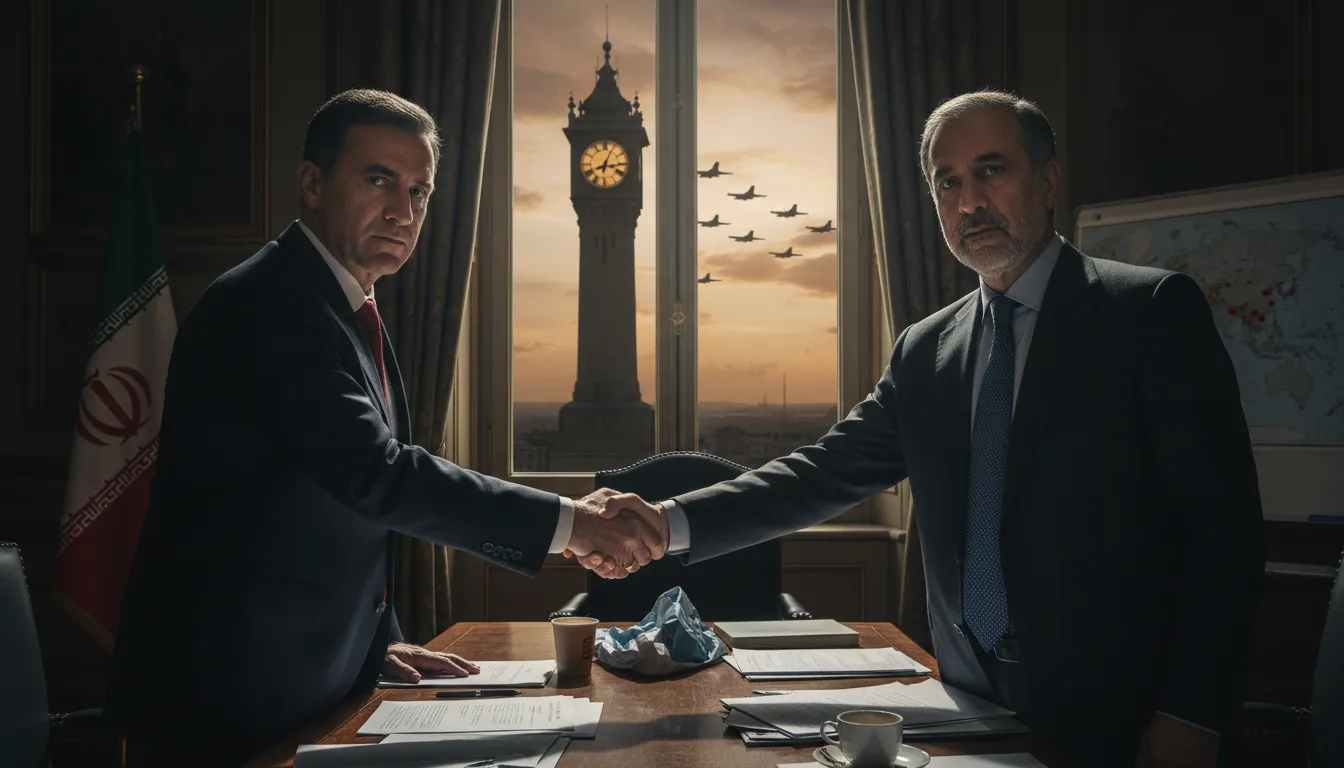
A Deadline, a Buildup, and a City Under Pressure
Geneva has hosted some of history's most consequential diplomatic meetings. On Thursday, it will host what may be the most consequential of this decade: a third round of nuclear talks between the United States and Iran, convened under the shadow of an explicit military ultimatum and the largest American military buildup in the Middle East in more than two decades.
The stakes could hardly be higher. If diplomacy fails, analysts warn that an American air campaign against Iranian nuclear sites could reshape energy markets, destabilize the broader region, and trigger a crisis whose effects would ripple far beyond the Persian Gulf.
How We Got Here
The current crisis stems from a second round of US-Iran nuclear talks held in Geneva on February 17 that ended without a breakthrough. According to The Soufan Center, the two sides remain deeply divided over core issues: Washington is demanding Iran permanently dismantle its uranium enrichment infrastructure — so-called "zero enrichment" — while Tehran has offered only a three-to-five year suspension. Iran has also refused to discuss its ballistic missile program or ties to regional armed groups, which the US and Israel consider non-negotiable.
Following the collapse, President Donald Trump escalated his rhetoric dramatically, warning Iran it had "10, 15 days, pretty much maximum" to reach an agreement or face what he called an "unfortunate outcome." In his State of the Union address, Trump made clear that diplomatic preference does not preclude the use of force.
The Military Dimension
Words have been matched by action. As The Washington Post first reported, the US has repositioned more than 150 aircraft — including F-35 stealth fighters, F-22 air superiority jets, F-15s, F-16s, and E-3 AWACS surveillance planes — to bases across Europe and the Middle East since the February 17 breakdown.
The naval component is equally striking. Two aircraft carrier strike groups are now deployed to the region, a rare configuration that PBS NewsHour describes as the largest American force concentration in the Middle East since before the Iraq War. Senior US national security officials have been briefed that all forces required for potential military action will be in position by mid-March.
Analysts note the assembled assets are configured for a sustained, multi-day air campaign — not a ground invasion. Iran's government has called the buildup "unnecessary and unhelpful," but has not backed down from its nuclear positions.
Signals From Tehran
Despite the confrontational backdrop, Iran has struck a notably conciliatory tone ahead of Thursday's session. Foreign Minister Abbas Araghchi said a deal is "within reach" if diplomacy is given priority, and described his country as arriving in Geneva "with a determination to achieve a fair and equitable deal — in the shortest possible time." Iran has also reportedly drafted a written nuclear proposal for US negotiators Steve Witkoff and Jared Kushner to review.
Iran's apparent willingness to negotiate is read by some analysts as genuine flexibility, and by others as a time-buying tactic — with the country's military on alert and no concessions made on the fundamental enrichment question.
Economic Warning Signs
Markets are already registering the tension. CNBC reports that oil prices have crept upward, with Brent crude trading near $71 per barrel and analysts warning that a military confrontation could push prices toward $80 or beyond. Iran controls roughly 20% of global oil transit through the Strait of Hormuz — a chokepoint whose disruption would send shockwaves through global supply chains and consumer energy prices worldwide.
Last Exit Before the Cliff
Thursday's Geneva meeting is widely described — by diplomats, analysts, and the parties themselves — as the final realistic opportunity for a negotiated solution before Trump faces a decision with no good options. A deal would require Iran to make concessions it has so far rejected. No deal could set in motion a military confrontation whose consequences, as Al Jazeera notes, neither side can fully control.