Mexico Reels After El Mencho Killing: 250 Roadblocks
The Mexican army's killing of CJNG kingpin Nemesio 'El Mencho' Oseguera Cervantes on February 22, 2026, triggered an unprecedented cartel backlash — over 250 roadblocks across 20 states, 70-plus deaths, and a dangerous power vacuum at the heart of Mexico's most violent drug organization.
The Operation That Changed Mexico
In the early hours of February 22, 2026, Mexican military forces swept into a secluded property on the outskirts of Tapalpa, a small town in the western state of Jalisco. Their target: Nemesio Rubén Oseguera Cervantes, 59, known as El Mencho — the most wanted drug lord in the world and founder of the Jalisco New Generation Cartel (CJNG). By the time the helicopters lifted off, the cartel boss was mortally wounded. He died en route to a hospital in Mexico City.
The operation, according to Mexican President Claudia Sheinbaum, was a product of months of intelligence work. Security forces tracked Oseguera after a tip emerged that one of his romantic partners had been transported to the rural compound on February 20. The lover departed on February 21 — but El Mencho stayed. Within 24 hours, the Mexican Army, the National Guard's Special Immediate Reaction Force, and the Air Force launched a coordinated raid. To avoid arousing suspicion, ground forces led the assault with limited helicopter support, according to CNN.
The United States played a supporting role. White House Press Secretary Karoline Leavitt confirmed that Washington's Joint Interagency Task Force-Counter Cartel provided intelligence to assist the mission — though no US ground forces were deployed on Mexican soil, Sheinbaum emphasized.
A Nation Under Siege
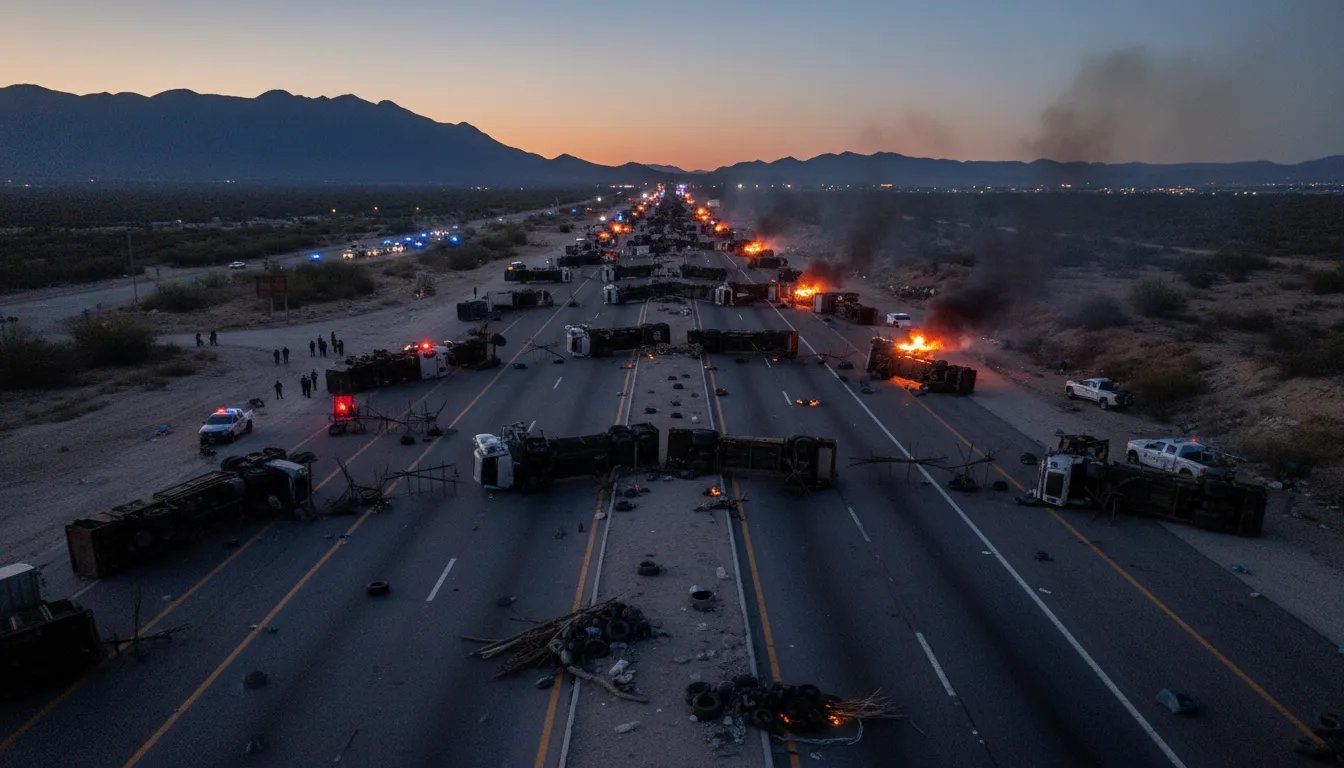
CJNG's retaliation was swift and staggering in scale. Within hours of the announcement, cartel members deployed more than 250 road blockades across federal highways in 20 states, using hijacked cargo trucks, buses, and private vehicles set ablaze to choke off traffic arteries, according to NBC News. Affected states included Jalisco, Michoacán, Guanajuato, Colima, Tamaulipas, Sinaloa, and Zacatecas.
In Guanajuato alone, authorities reported more than 70 separate attacks across 23 municipalities — 60 of them arson incidents. More than 200 Oxxo convenience stores and 18 Banco del Bienestar branches were damaged. Petrol stations, banks, and shops were set on fire. Thousands of tourists were stranded as dozens of flights were cancelled.
The full human toll of the operation and its aftermath surpassed 70 deaths, including 25 National Guard troops and at least 30 suspected CJNG fighters killed during or immediately after the initial raid, Al Jazeera reported.
Who Runs CJNG Now?
The killing leaves a murky succession battle. El Mencho's son, Rubén Oseguera González (El Menchito), is imprisoned in the United States, effectively breaking the family line. Analysts at InSight Crime point to several contenders:
- Juan Carlos Valencia González ("El Pelón" / El 03) — long considered CJNG's operational deputy, though reportedly lacking broad influence among cartel commanders.
- Rosalinda González Valencia ("La Jefa") — Oseguera's widow, expected to wield significant influence over who ultimately claims leadership.
- Julio Alberto Castillo Rodríguez ("El Chorro") — El Mencho's son-in-law and a designated CJNG leader.
Experts warn that an unclear succession could trigger violent internal fragmentation, opening the door for rival organizations — particularly the weakened but still-active Sinaloa Cartel — to exploit the chaos and contest CJNG's vast territorial holdings across Mexico and supply routes into the United States.
A Watershed Moment — But Not the End
El Mencho's elimination is the most significant blow to organized crime in Mexico since the capture of Joaquín El Chapo Guzmán a decade ago. The US State Department had designated CJNG "the most violent drug trafficking organization currently operating in Mexico." Washington had offered a $10 million reward for information leading to Oseguera's capture.
Yet history counsels caution. After El Chapo's arrest, the Sinaloa Cartel splintered — triggering years of bloodshed. Security analysts and ordinary Mexicans fear the same cycle is about to repeat. NPR reported widespread anxiety in communities across western Mexico, where CJNG has entrenched itself in local economies and governance for years. The cartels may lose their king — but the board remains perilously intact.