Nepal Votes: First Election After Deadly Gen Z Uprising
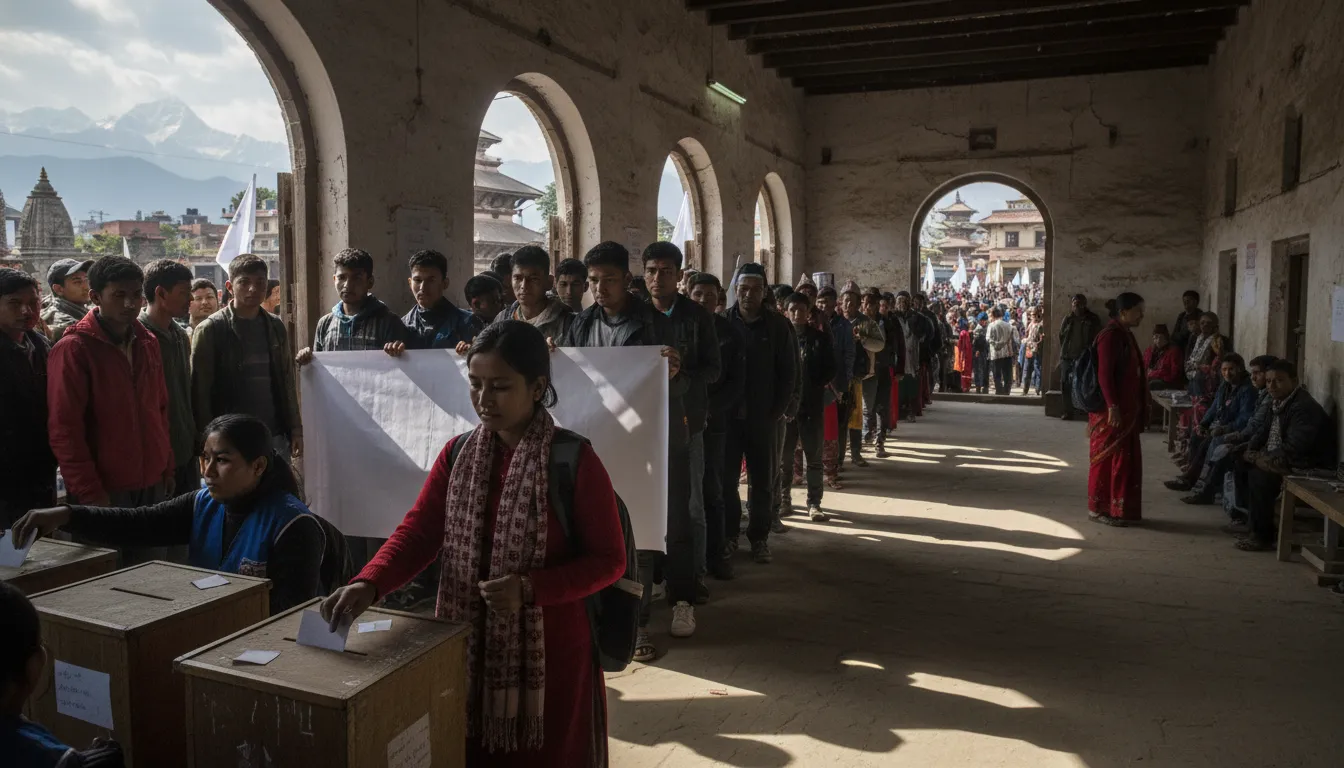
Nepal heads to the polls on March 5 for snap elections triggered by deadly Gen Z anti-corruption protests that killed 77 people in September 2025. Nearly 19 million voters will choose between aging political veterans and a new wave of reformers.
A Protest That Shook a Nation
In September 2025, students and young Nepalis flooded the streets demanding an end to decades of entrenched corruption, nepotism, and mismanagement. Security forces opened fire on the demonstrators. When the dust settled, 77 people were dead and more than 2,000 injured — among the deadliest crackdowns on civil protest in Nepal's modern history. Prime Minister K.P. Sharma Oli resigned under overwhelming pressure, and a snap election was called. On March 5, 2026 — just four days away — some 18.9 million voters will decide what comes next.
Old Guard Versus New Faces
The race to lead Nepal's 275-seat House of Representatives features a stark generational divide. On one side stand the veterans: Oli himself, 74, making another political comeback; Pushpa Kamal Dahal, 71, the former Maoist guerrilla leader turned three-time prime minister; and Gagan Thapa, 49, who took over the centrist Nepali Congress after its last electoral defeat.
On the other side stands a wave of challengers energized by the uprising. Balendra Shah — a 35-year-old rapper and former Kathmandu mayor known universally as "Balen" — has emerged as the face of political renewal, representing the Rastriya Swatantra Party (RSP). His direct contest against Oli in the Jhapa 5 constituency has become a symbolic proxy for the entire election: the old guard versus the generation that brought it down.
A total of 3,484 candidates from 68 parties are competing — yet only 5.6% are under 30, a striking mismatch given that it was Gen Z that drove the protests. Just 11% of candidates are women, and the interim government led by former Chief Justice Sushila Karki must hand over power once results are in.
Corruption, Unemployment, and the Daily Exodus
Nepal ranks 109th globally on corruption indices, and its economy tells a grim story. Youth unemployment stands at 20.8%, while approximately 2,300 citizens leave the country for foreign work every single day — draining Nepal of the young talent it desperately needs. About one-fifth of the population lives in poverty.
Anti-corruption pledges dominate every party's manifesto. But skeptics point out that Nepal has established over two dozen corruption investigation commissions in 70 years without meaningful results. As former Acting Auditor General Shukdev Bhattarai Khatri told OCCRP: "Forming a commission is not enough if they lack an implementation strategy."
New campaign finance rules require donations above Rs. 25,000 to flow through dedicated bank accounts — but election observers found enforcement remains weak.
A Himalayan Geopolitical Tightrope
Beyond domestic reform, Nepal's geography adds another layer of complexity. Squeezed between India — which handles two-thirds of its trade — and China, which provides 14% of trade and over $130 million in loans, whoever governs Kathmandu must navigate a delicate diplomatic balance. Both neighbors are watching the outcome closely.
Can Elections Deliver What Protests Demanded?
That is the defining question hanging over Nepal as it heads to the polls. The uprising demonstrated the power of collective outrage — and cost 77 lives to do so. But elections require translating that energy into durable political change, a challenge that has defeated previous reform efforts in the country.
With 915,000 first-time voters casting ballots and an entire nation watching whether its democratic institutions can root out the corruption the protests were launched to fight, March 5 may prove to be among the most consequential election days in Nepal's modern history.