Blood Moon Rising: Last Total Lunar Eclipse Until 2029
On March 3, 2026, the Moon will turn a deep crimson red in the last total lunar eclipse visible from Earth for nearly three years — a celestial event accessible to billions without any special equipment.
A Rare Window Into the Cosmos
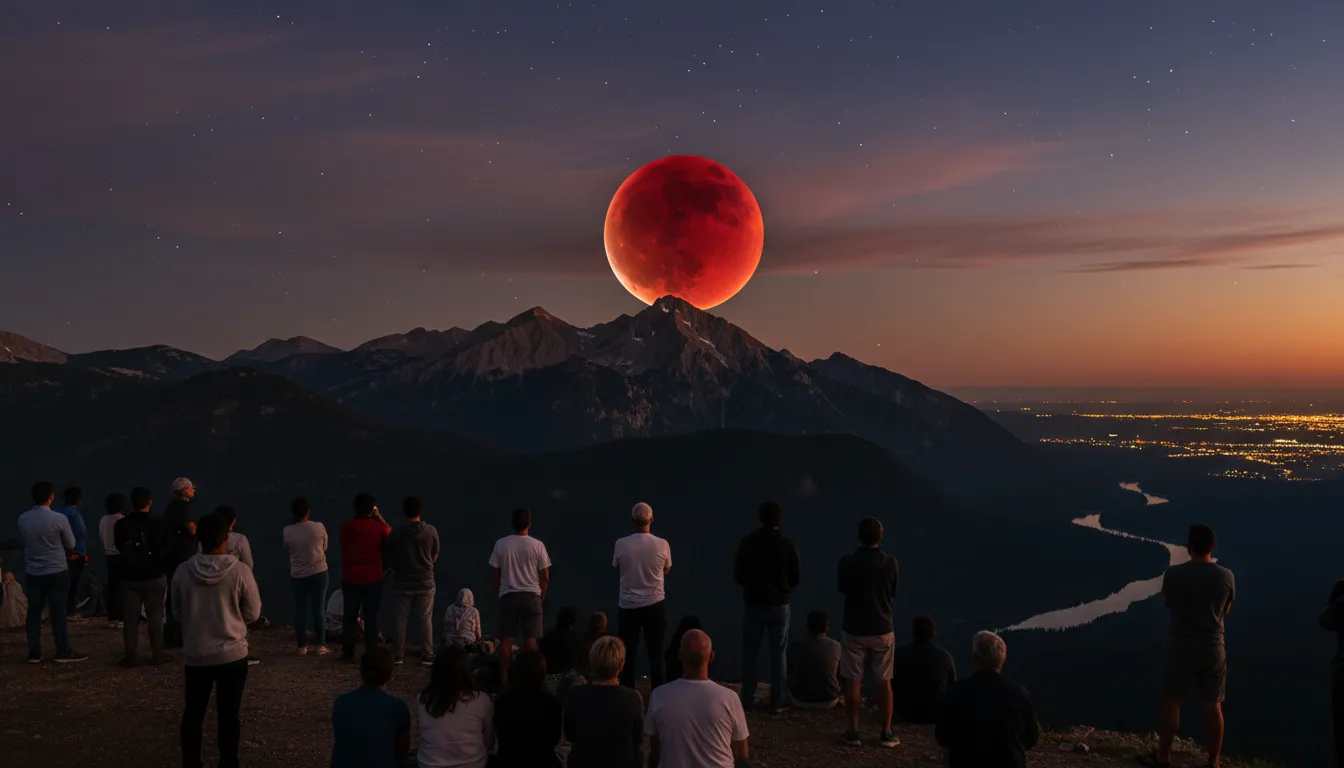
Two days from now, billions of people across the Pacific, the Americas, Australia, and eastern Asia will witness one of nature's most dramatic spectacles: a total lunar eclipse — commonly known as a blood moon. Occurring in the early hours of March 3, 2026, this event will be the last of its kind anywhere on Earth until New Year's Eve 2028, making it one not to miss.
What Exactly Happens
A total lunar eclipse occurs when Earth passes directly between the Sun and Moon, casting its full shadow — the umbra — across the lunar surface. The Moon does not go dark entirely; instead, it glows a deep copper-red. According to NASA, this is because sunlight refracts through Earth's atmosphere, scattering away blue wavelengths while bending red and orange light toward the Moon. The effect is as if every sunrise and sunset on Earth is simultaneously projected onto the lunar surface.
The magnitude of this eclipse measures 1.150, meaning the Moon will be fully immersed in Earth's darkest shadow, producing a vivid, saturated red display. Totality — the fully red phase — lasts 58 minutes and 18 seconds, beginning at 11:04 UTC and reaching its maximum at 11:33 UTC.
Who Can Watch
The event is accessible to a remarkable share of humanity. TimeandDate.com estimates that approximately 3.34 billion people can observe at least part of totality, with 2.5 billion able to see the full 58-minute red phase.
- Best views: Western North America, Hawaii (evening of March 2), the Pacific, New Zealand, Australia, Japan, and eastern Asia
- Partial views: Central Asia and much of South America
- Not visible: Africa, most of Europe (including the UK and western Russia), and western Asia
No telescope or special glasses are required — unlike a solar eclipse, a blood moon is entirely safe to observe with the naked eye. Binoculars will enhance the subtle color gradations across the lunar surface.
Why This One Matters
Total lunar eclipses are not vanishingly rare, but a gap of nearly three years between them is significant enough to prompt astronomers to flag this event urgently. As Space.com notes, after March 3 "our natural satellite will not fully disappear into Earth's shadow again for nearly three years." The next total lunar eclipse is scheduled for December 31, 2028, kicking off a rare cluster of three blood moons in 2028–2029.
The timing also situates this blood moon within a broader eclipse season: it follows an annular solar eclipse on February 17 and precedes a total solar eclipse in August 2026, an unusually active stretch for eclipse enthusiasts.
How to Prepare
For observers in North America, the blood moon peaks in the pre-dawn hours of March 3. Those on the US West Coast will see the reddest phase around 3–4 a.m. local time, while the East Coast catches the tail end of totality just before sunrise. In Japan and eastern Australia, the event unfolds conveniently in the evening hours.
EarthSky recommends finding a location away from city lights for the best contrast. Clear skies permitting, the Moon will appear near the star Regulus in the constellation Leo, offering a memorable framing for photographers. A bonus for skygazers: on March 8, Venus and Saturn will appear strikingly close together, extending the week's astronomical highlights.
Mark Your Calendar
For anyone who has ever wanted to witness a blood moon, the window on March 3 is both imminent and irreplaceable. With no total lunar eclipse on offer until the final hours of 2028, this celestial alignment represents a once-in-three-years opportunity — no equipment required, no ticket needed, just a clear night sky.