Poland Overtakes Spain: Tusk Declares 'We Are Among the Elite'
Poland has surpassed Spain in terms of per capita income based on purchasing power parity for the first time, a milestone hailed by Prime Minister Donald Tusk as entry into Europe's economic elite. However, the European Commission warns that the country's public debt could exceed 100% of GDP by 2036.
GDP per capita by PPP: Poland Takes the Lead
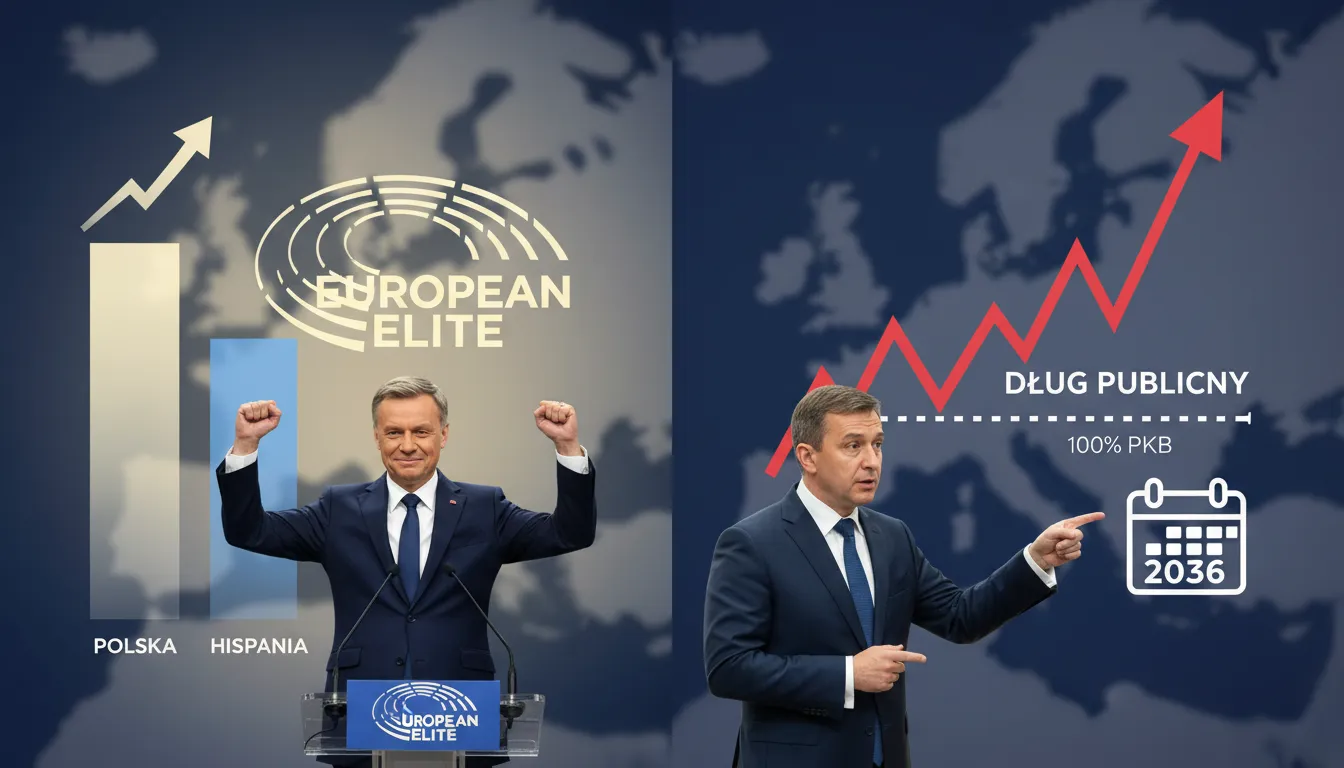
According to the latest data from the International Monetary Fund, Poland has overtaken Spain in terms of per capita income measured by purchasing power parity (PPP). Poland's value is approximately 49,650 euros per capita, while Spain reaches 49,465 euros. This is a small difference, but symbolically huge — Poland has for the first time surpassed one of the founding members of the European Union in this key indicator.
Prime Minister Donald Tusk did not hide his satisfaction.
"Poland has just overtaken Spain in terms of per capita income. We are now in the European economic elite,"the head of government declared, referring to IMF data. The Prime Minister's enthusiasm reflects a widespread feeling that Poland is entering a new phase of its economic development.
What is Purchasing Power Parity and Why Does it Matter?
The PPP indicator takes into account differences in price levels between countries — that is, how much you can actually buy with the money you earn. For Poland, where the cost of living is still lower than in Western Europe, this is an extremely favorable perspective. Economist Marek Zuber emphasizes that PPP "gives a fuller picture than GDP per capita alone" and shows that Poles are getting richer faster than Spaniards. However, he adds that this indicator does not tell the whole story: pensions, healthcare spending, and the accumulated wealth of citizens are areas where Poland still has a lot of catching up to do.
Polish Economy on the Offensive, United Kingdom Within Reach
The Polish economy is growing at a rate of approximately 3.6% of GDP per year, clearly outpacing Spain (2.8%) and Germany, which is struggling with stagnation. Poland has already reached about 87% of the UK's GDP per capita in PPP terms, and if current trends continue, IMF forecasts indicate that the country could catch up with the UK in just 5–6 years. Further IMF data suggest that by 2030, Poland may also surpass Japan and New Zealand in this indicator.
A stable labor market, the inflow of foreign investment, and EU funds are driving the expansion. Poland is now among the leaders in the European Union in terms of growth rate, as confirmed by forecasts from both the European Commission and the IMF.
A Shadow Over Success: Public Debt Raises Alarm
However, behind the euphoria lie serious fiscal risks. The European Commission, in its Debt Sustainability Monitor 2025 report, warns that Poland's public debt could increase from the current 58% of GDP to over 107% of GDP in 2036 if fiscal reforms are not implemented. This would mean Poland joining the group of the most indebted countries in the Union — ahead of it would be only Italy (149%), France (144%), Belgium (137%), and Spain (108%).
The main source of concern is structural budget deficits and the rising costs of debt servicing. The Commission estimates that Poland's annual borrowing needs could reach as high as 20% of GDP by 2036. Economist Andrzej Sadowski warns directly: "We have a direct example of a state bankruptcy within the EU — Greece. Membership in the Union does not protect against a debt crisis." To stabilize public finances, Poland should improve its primary balance by more than 5 percentage points of GDP before 2027.
Real Success, Real Challenge
Poland's advancement in per capita income rankings is a fact and deserves recognition — it is the result of decades of transformation, European integration, and the hard work of its citizens. The key question is whether the government will be able to maintain the momentum of growth while curbing the debt spiral. Prime Minister Tusk's euphoria is understandable, but the warnings of the European Commission and independent economists serve as a reminder that the road to lasting stability is still long.