Qatar LNG Blackout Sends Global Gas Prices Soaring
Iranian drone strikes on Qatar's LNG facilities triggered the biggest single-day gas price surge in years, exposing Europe and Asia's dangerous dependence on Gulf energy.
Drones Over Ras Laffan
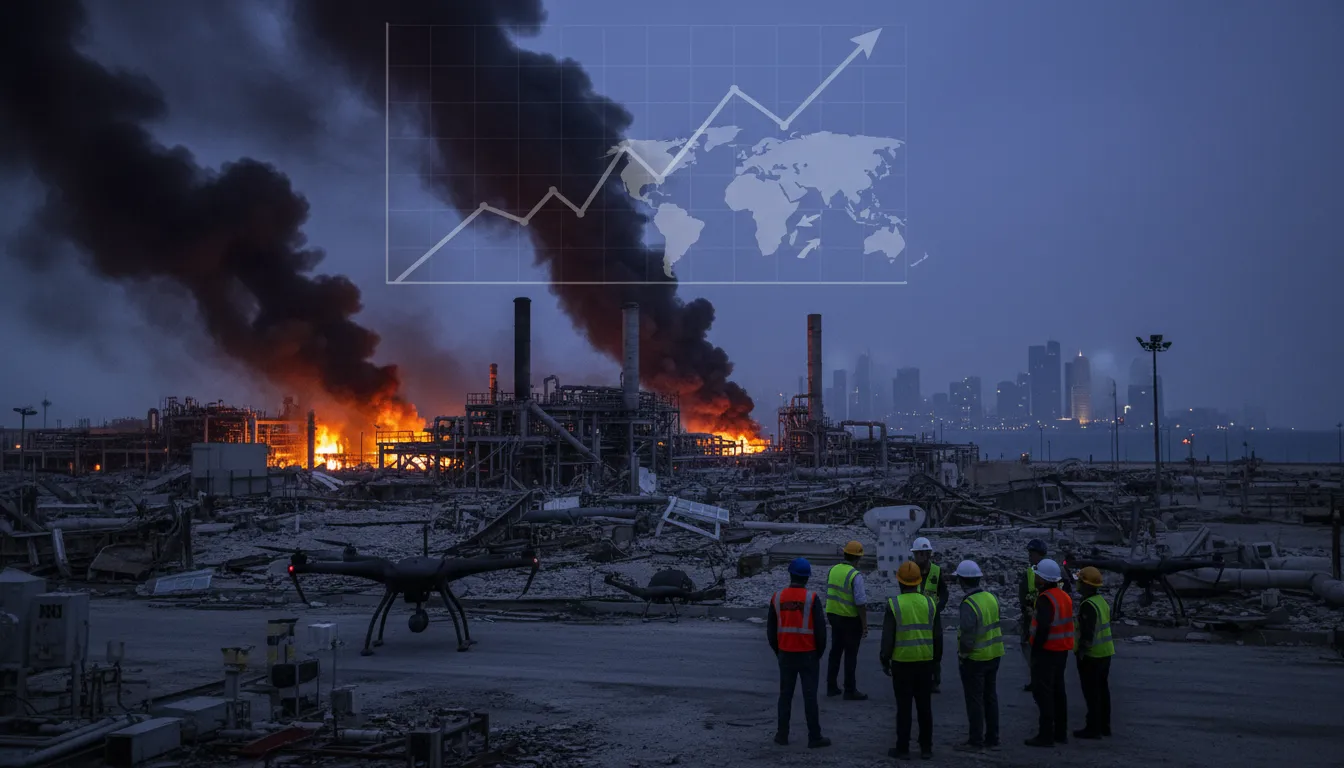
In the early hours of March 2, Iranian drones struck two facilities belonging to QatarEnergy — the world's largest exporter of liquefied natural gas — at Ras Laffan Industrial City and Mesaieed Industrial City on Qatar's northeastern coast. The state energy giant immediately suspended all LNG production and associated operations for safety reasons. The reverberations were felt within hours on every major gas trading floor on the planet.
A Fifth of the World's LNG, Gone
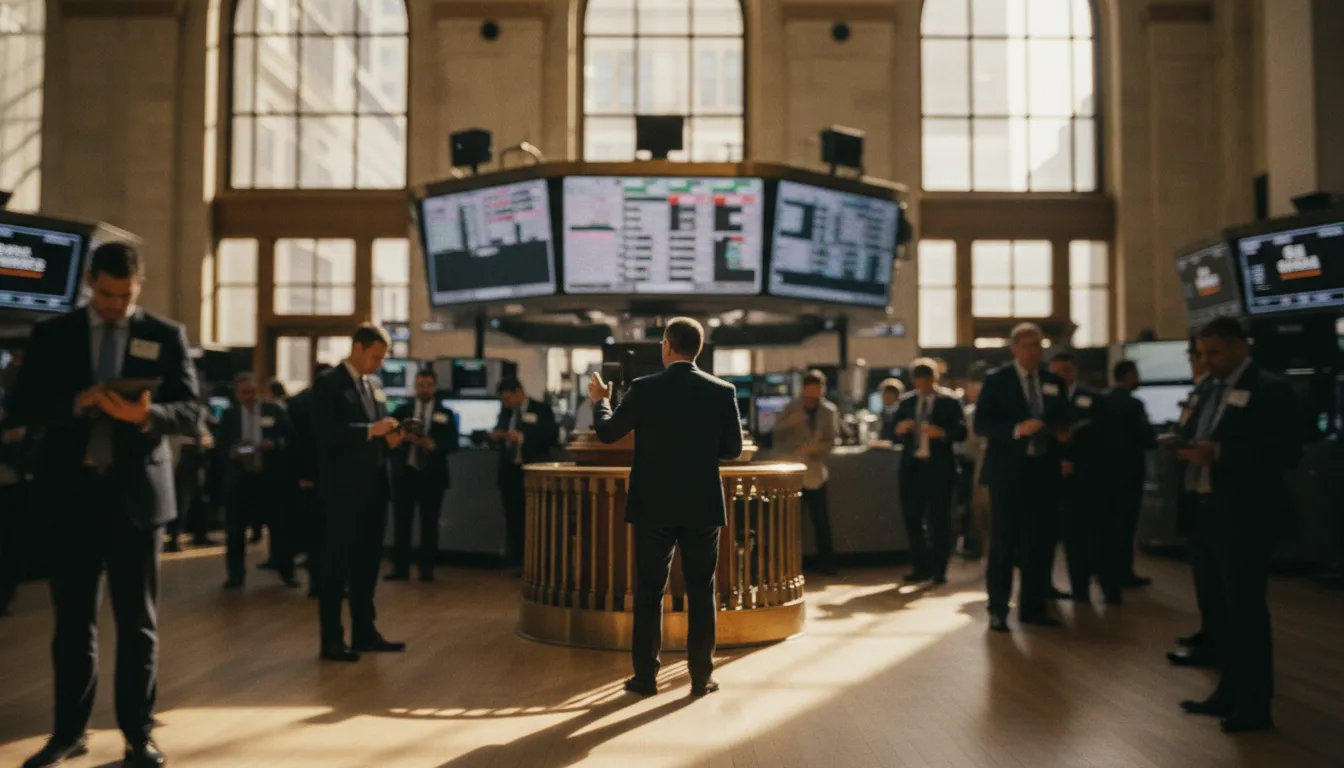
Qatar is not merely a large gas supplier — it is the single most important one. The country accounts for roughly 20% of global LNG exports, supplying customers from South Korea to Germany. When QatarEnergy went dark, the market response was swift and brutal: benchmark Dutch TTF gas futures surged nearly 45% in a single session to around €46 per megawatt-hour, while UK gas prices mirrored the jump. Asian LNG spot prices climbed nearly 39% over the same period, according to Al Jazeera reporting.
Goldman Sachs swiftly revised its April 2026 European gas price forecast upward — from €36 to €55 per megawatt-hour. Some analysts warned that if the shutdown extended four weeks or more, TTF could breach €74/MWh, more than double the pre-crisis level.
Europe in the Crosshairs
European gas storage entered March critically low. EU-wide inventories sat below 30% of capacity — with Germany at just 20.5% and France at 21% — after a colder-than-expected winter depleted reserves faster than anticipated. Under normal conditions, spring months are used to refill storage before the following winter. A prolonged LNG shortage now threatens to complicate that effort significantly.
Qatar supplies between 12% and 14% of Europe's LNG imports. While that share may seem modest, the indirect exposure is far greater: if Asian buyers lose Qatari supply, they begin competing fiercely on the spot market for every available LNG cargo worldwide, driving prices up globally. LNG liquefaction facilities elsewhere are already running near full capacity, leaving little slack in the system, as Euronews noted in its coverage of the crisis.
Asia Bears the Brunt
About 82% of QatarEnergy's long-term contracts are with Asian buyers. The countries facing the sharpest immediate disruption are Bangladesh, India, and Pakistan — all of which rely heavily on Qatari LNG for electricity generation and industrial use. China, the world's largest natural gas importer, sources most of its LNG from Australia, limiting its direct exposure — but Beijing is watching closely as spot prices spike.
Hormuz Compounds the Crisis
The production halt did not occur in isolation. Iran's Revolutionary Guard declared the Strait of Hormuz — through which roughly 20% of global seaborne oil and a large share of Gulf LNG flows — effectively closed to commercial shipping. Satellite data cited by Euronews showed oil tanker transit through the strait had fallen 86%, with more than 150 vessels anchored in holding patterns on either side of the chokepoint.
Even if QatarEnergy repairs its facilities quickly, the question of how to export any resumed production remains. Tankers cannot safely transit the strait while Iranian forces maintain their blockade posture.
How Long Will It Last?
The duration of the shutdown is the central unknown. An energy expert at Stanford, speaking to Marketplace, cautioned against assuming a replay of the devastating 2022 European gas crisis that followed Russia's invasion of Ukraine, noting that "the worst of the winter in Europe may be behind us." But the expert also acknowledged that if fighting in the Gulf persists for weeks, energy markets face a fundamentally new supply reality — one for which governments have few ready-made contingency plans.
For now, traders, governments, and consumers across three continents are watching a single industrial complex in eastern Qatar and wondering when — or whether — its gas will flow again.