Qatar LNG Shutdown Sends European Gas Prices Soaring
Iranian drone strikes on Qatar's Ras Laffan and Mesaieed industrial complexes forced QatarEnergy to halt all LNG production, triggering a 30–50% surge in European gas prices and raising fresh fears over energy security on the continent.
A Crisis That Shook Global Energy Markets
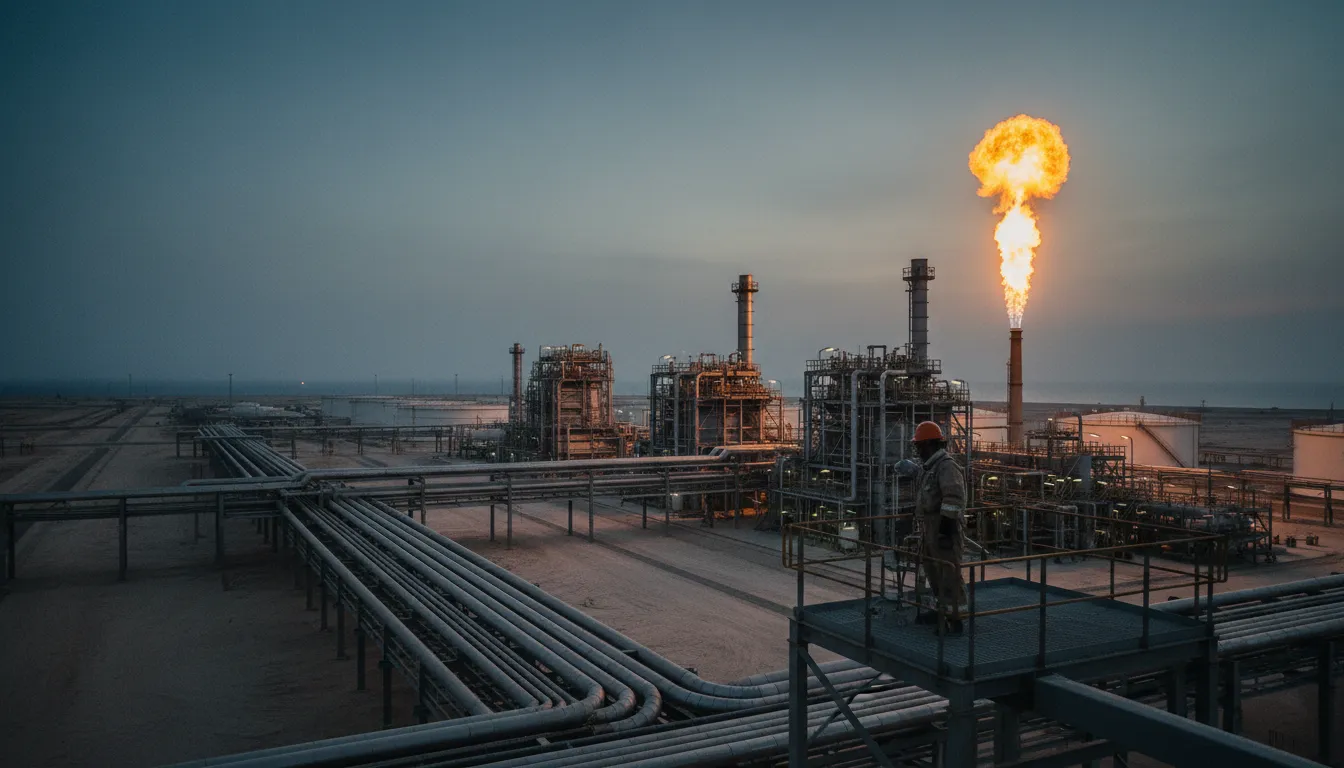
In the early hours of March 2, 2026, Iranian drones struck two of Qatar's most critical energy hubs — the Ras Laffan and Mesaieed industrial complexes — forcing state-owned QatarEnergy, the world's largest exporter of liquefied natural gas (LNG), to immediately suspend all production. The fallout was swift and brutal: European benchmark gas futures surged by 30 to 50 percent in a single session, marking one of the most violent repricing events in the history of the gas market.
The Attack: What Happened
Qatar's Defence Ministry confirmed that two Iranian drones struck its territory — one targeting a power plant in Mesaieed, another hitting an energy facility in Ras Laffan Industrial City, home to the world's largest LNG liquefaction complex. QatarEnergy announced a full halt to LNG production and associated outputs, citing safety procedures following the "military attacks on its operating facilities."
The strikes came in the context of a rapidly escalating Middle East conflict. Following joint US and Israeli military operations against Iran — which reportedly included the killing of Supreme Leader Ali Khamenei — Tehran launched retaliatory drone and missile strikes across Gulf states. Iran's Islamic Revolutionary Guard Corps (IRGC) also issued warnings threatening to block passage through the Strait of Hormuz, the vital maritime chokepoint through which Qatari LNG tankers must pass.
Europe's Gas Market in Freefall
The Dutch TTF contract — Europe's benchmark for natural gas — shot up more than 48 percent on March 2, briefly touching €47.70 per megawatt-hour. By mid-week, prices had climbed even further, reaching above €60/MWh — nearly double the previous week's levels, according to Bloomberg.
The timing could hardly be worse. Europe's gas storage inventories are unusually depleted heading into spring, meaning the continent must import large volumes of LNG over the coming months to refill reserves before next winter. Qatar supplies between 12 and 14 percent of Europe's total LNG imports — a share that has become strategically critical since Russia's pipeline supplies were cut following the invasion of Ukraine.
"The threat to security of supply is here and now. The extent of it will depend on the duration of the shutdown, but we are now into a new scenario," warned Simone Tagliapietra, energy analyst at the Brussels-based think tank Bruegel.
A One-Fifth Loss of Global LNG Supply
Qatar accounts for roughly 20 percent of global LNG exports. Halting its production effectively removed one-fifth of the world's LNG export capacity overnight. Asian LNG benchmark prices also jumped nearly 39 percent, underscoring the shock's global reach.
Goldman Sachs warned that if LNG flows through the Strait of Hormuz were completely halted for a full month, European TTF prices could rise toward €74/MWh — approximately 130 percent above pre-crisis levels. Analysts at Verisk Maplecroft described Iran's targeting of Gulf energy infrastructure as "a significant escalation."
Restart Timeline: Weeks Away
QatarEnergy provided no firm timeline for resuming output. Industry experts cited by Al Jazeera and gCaptain estimate the facility could remain offline for at least two weeks, with a further two weeks needed to safely ramp back up to full capacity. Any restart, they cautioned, would need to be "intentionally slow" to avoid equipment damage.
One silver lining, noted analysts, is that the worst of winter demand in Europe has passed. However, with storage at multi-year lows and geopolitical risk showing no sign of easing, the region faces a precarious path through spring and into the next heating season.
A New Phase of the Energy Crisis
Europe spent the last three years diversifying away from Russian gas — a costly but largely successful transition. The Qatar shutdown now exposes the next vulnerability: dependence on LNG from a region where military conflict is actively disrupting supply chains. Policymakers face renewed pressure to accelerate investments in alternative sources, storage capacity, and energy efficiency to buffer against an increasingly unstable global energy order.