Qatar LNG Shutdown Sends European Gas Prices Soaring 50%
Iranian drone strikes on Qatar's Ras Laffan industrial complex forced QatarEnergy to declare force majeure and halt all LNG production, sending European gas prices surging nearly 50% and exposing Europe's dangerous dependence on Gulf energy supplies.
The Attack That Shook Global Energy Markets
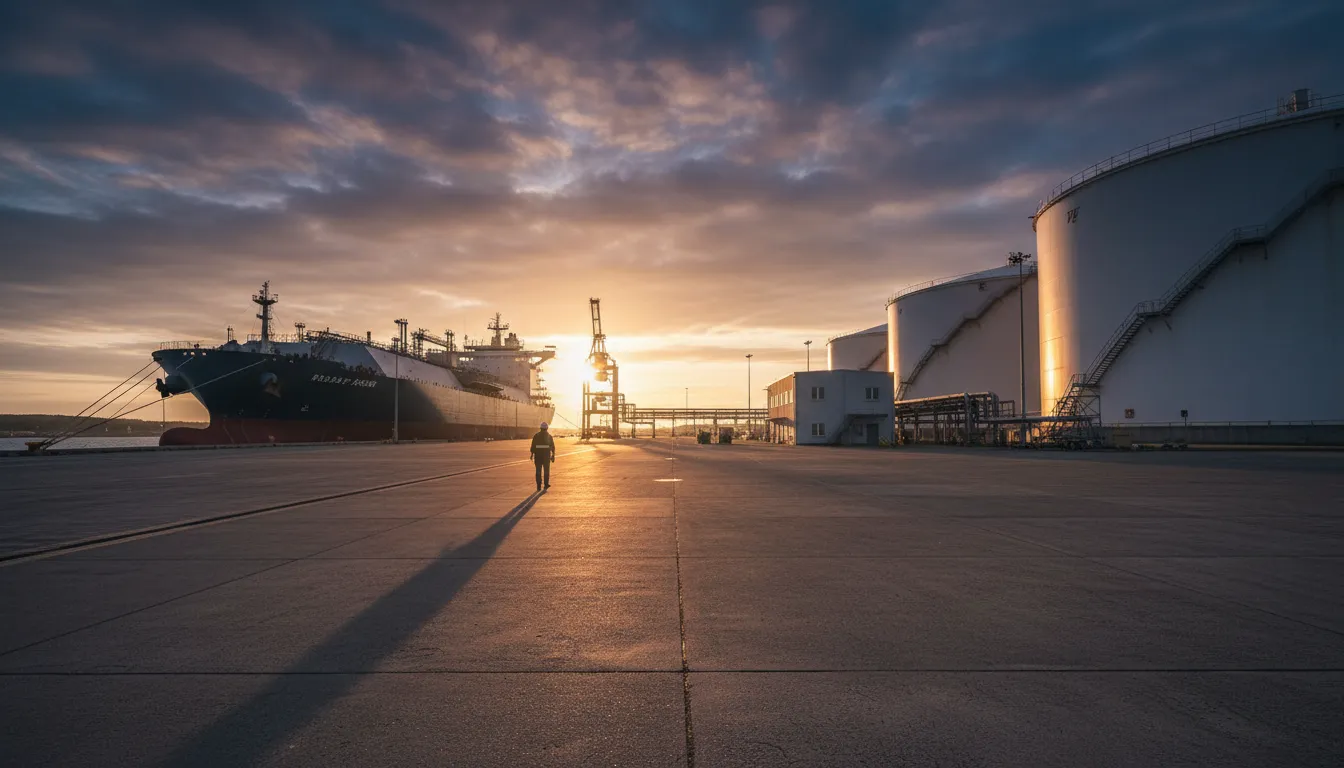
In the early hours of March 2, 2026, Iranian drones struck QatarEnergy's sprawling Ras Laffan Industrial City and Mesaieed facilities on Qatar's northeastern coast. No fatalities were reported, but the damage was severe enough to force the world's largest liquefied natural gas (LNG) exporter to shut down all production and invoke force majeure — the legal clause that releases a company from contractual obligations due to extraordinary circumstances beyond its control.
The consequences were immediate and global. Benchmark Dutch TTF gas prices — Europe's primary natural gas reference — surged by nearly 50% within hours of the announcement. Asian spot LNG prices jumped almost 39%. In one morning, the international energy order was violently repriced.
Why Qatar Matters So Much
Qatar supplies roughly 20% of the world's LNG, making QatarEnergy's Ras Laffan complex the single most important LNG facility on the planet. When production stopped, approximately 10.2 billion cubic feet per day of supply was wiped from the global market — nearly a fifth of all seaborne LNG trade.
The disruption extended well beyond gas itself. Bloomberg reported that QatarEnergy also halted production of downstream industrial products including urea, polymers, methanol, and aluminum, cascading the shock into fertilizer, chemical, and metals supply chains worldwide.
Qatar's Energy Minister Saad al-Kaabi warned the Financial Times that even under the most optimistic scenarios, restoring normal deliveries would take "weeks to months" — and only after the broader regional conflict subsides enough to guarantee safe vessel transit through the Strait of Hormuz, which Iran effectively closed on the same day.
Europe Caught in a Double Trap
For Europe, the timing could hardly be worse. After Moscow cut off pipeline gas supplies following the 2022 invasion of Ukraine, the continent spent years painfully rebuilding its energy security around LNG imports — with Qatar becoming a critical pillar of that new architecture.
Now that pillar has collapsed, simultaneously with the Hormuz closure. EU gas storage stands at below 30% capacity as the winter heating season winds down — roughly 10 percentage points lower than at the same point last year, according to Euronews. Goldman Sachs revised its April 2026 European gas price forecast sharply upward, to €55 per megawatt-hour from €36 previously. Some analysts warn prices could more than double if the shutdown extends beyond two months.
Shell, the world's largest LNG trader, quickly declared its own force majeure on Qatari LNG cargoes it had contracted for resale, in a sign of how deeply integrated Qatar is into the global supply chain. Think tank Bruegel noted that Europe's exposure stems not merely from direct Qatari imports — which represent about 7% of EU LNG supply — but from the competitive displacement effect: as Asian buyers scramble to replace lost Qatari volumes, they outbid European utilities on alternative cargoes from the US and Australia, tightening the entire market.
Industrial Sectors Under Unprecedented Pressure
The shock is already reverberating through energy-intensive industries. Fertilizer producers, which rely on natural gas for roughly 70–80% of ammonia synthesis costs, face production shutdowns across Europe. Chemical plants, steel mills, and glass manufacturers are calculating emergency energy budgets. Morgan Stanley warned that a prolonged Qatari outage could erase the anticipated 2026 LNG supply surplus that had been expected to keep global prices moderate through the year.
A Crisis With No Easy Exit
The 2026 Hormuz crisis is already being compared in scale to the 1970s oil shocks. Brent crude surpassed $100 per barrel on March 8, peaking near $126, according to CNBC. But the gas dimension may prove more structurally damaging for Europe, which lacks the infrastructure to rapidly substitute lost LNG volumes.
Qatar's energy minister did not mince words: an extended Iran war, he told Fortune, "could bring down the global economy." With Ras Laffan dark, Hormuz closed, and European storage depleted, the world is discovering — once again — how thin the margin of energy security truly is.