SCOTUS Strikes IEEPA Tariffs; Trump Pivots to 15% Rate
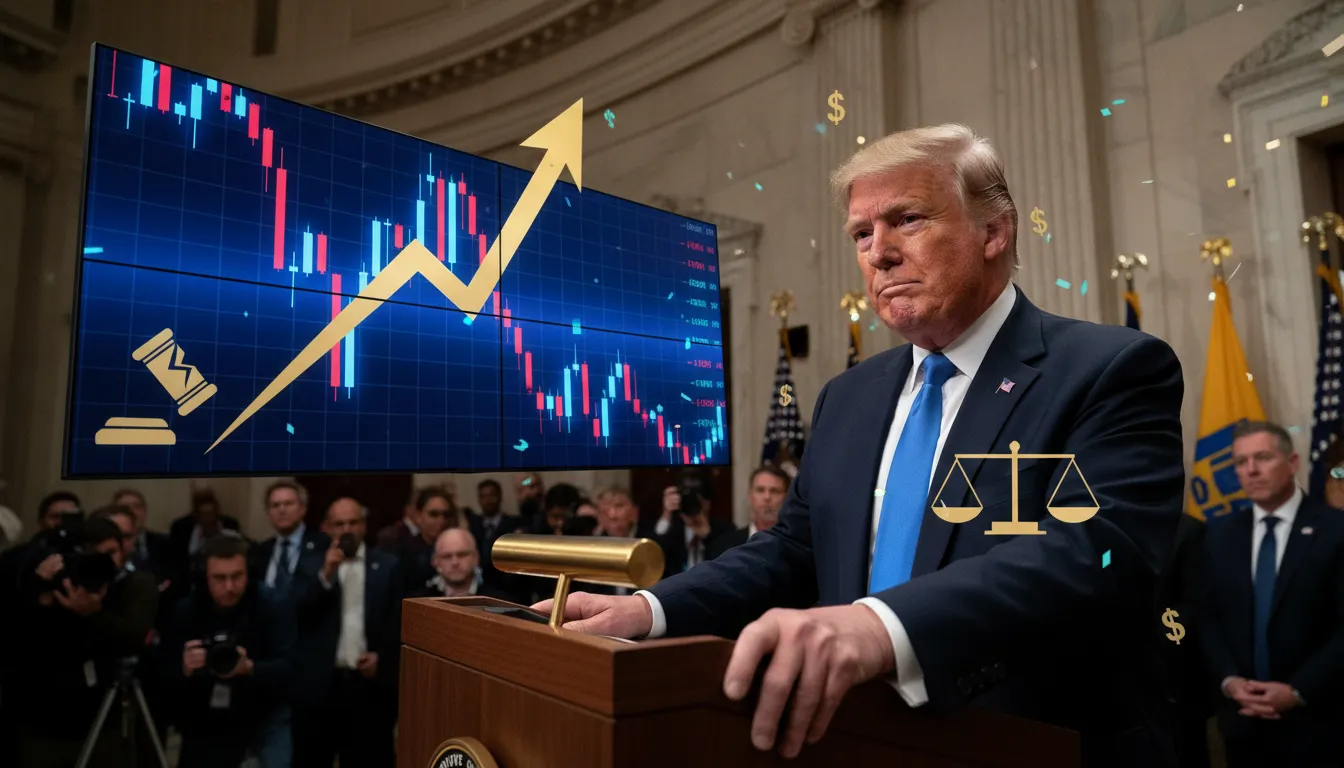
The U.S. Supreme Court struck down Trump's IEEPA-based tariffs 6-3, ruling the 1977 law does not authorize presidential tariff powers. Trump immediately invoked Section 122 of the Trade Act of 1974 to impose a 15% global levy, sending stock markets lower and gold above record highs.
A Landmark Ruling Upends Trade Policy
In a 6-3 decision handed down on February 20, 2026, the U.S. Supreme Court dealt a sweeping blow to President Donald Trump's trade agenda, ruling that the International Emergency Economic Powers Act (IEEPA) does not grant the executive branch authority to impose tariffs. Chief Justice John Roberts, writing for the majority and joined by Justices Sotomayor, Kagan, Gorsuch, Barrett, and Jackson, held that the tariffs — which covered goods from nearly every country in the world — exceeded the powers Congress delegated under the 1977 statute. Justices Thomas, Kavanaugh, and Alito dissented.
The ruling invalidated what analysts at the Yale Budget Lab estimated could have generated $1.4 trillion in federal revenue over the next decade. It also raised immediate questions about refunds for the more than $200 billion in tariff payments already collected from U.S. importers, a question the Court declined to resolve.
Trump's Immediate Counter-Move
The White House wasted no time. Within hours of the ruling, Trump announced a new 10% universal tariff under Section 122 of the Trade Act of 1974, a provision allowing the president to impose temporary surcharges for up to 150 days to address balance-of-payments emergencies. By Saturday, he had raised that rate to 15%, effective immediately, framing the move as a necessary defense of American industry.
Legal experts at Holland & Knight noted that Section 122 is a narrower and more time-limited authority than IEEPA, capping the surcharge period and setting procedural requirements that could constrain the administration's flexibility. The industry-specific Section 232 tariffs on steel and aluminum remain unaffected by the Court's decision.
Markets React Sharply
Global financial markets absorbed the double shock — a historic legal reversal followed by a fresh broad tariff — with considerable unease. On the trading day after the ruling, widely dubbed the "Monday Disaster" by analysts, the Dow Jones Industrial Average dropped roughly 822 points, or 1.66%, while the S&P 500 shed approximately 1% and the Nasdaq Composite fell 1.13%, according to CNBC market data.
Safe-haven assets surged. Gold futures climbed above $5,100 per ounce — and later reached $5,163 — extending a historic rally driven by tariff uncertainty, central bank buying, and geopolitical risk, according to CNBC and Fortune. The CBOE Volatility Index spiked to 21.5, signaling heightened investor anxiety.
Europe Hits the Brakes
The turbulence reverberated across the Atlantic. The European Parliament postponed — for the second time — a scheduled vote on ratifying the EU-US trade deal reached the previous summer, which had set a 15% tariff rate on most EU exports to the United States. EU trade committee chair Bernd Lange stated bluntly that Washington had "really made a breach of this deal several times," according to CNBC. The committee convened an emergency session, and legislative work was placed "on hold" pending clarity on the new tariff framework.
Euronews reported that Italy and several other member states called for restraint, urging Brussels not to trigger retaliatory measures before the legal situation in Washington stabilized.
What Comes Next
The 15% Section 122 tariff is, by law, temporary — but the administration has signaled it intends to push for permanent replacements through legislative channels. Importers who paid IEEPA-based tariffs face a legal limbo over potential refund claims, which courts and Congress will now need to address. With the EU deal in limbo, global trade architecture built over the past year remains deeply uncertain — and investors, for now, are pricing in the risk accordingly.