US-Iran Nuclear Talks End Without Deal, Vienna Next
A third round of indirect US-Iran nuclear negotiations in Geneva concluded without agreement, but mediator Oman reported significant progress. Technical talks will continue in Vienna as Trump's diplomatic deadline approaches.
No Deal, But Talks Continue
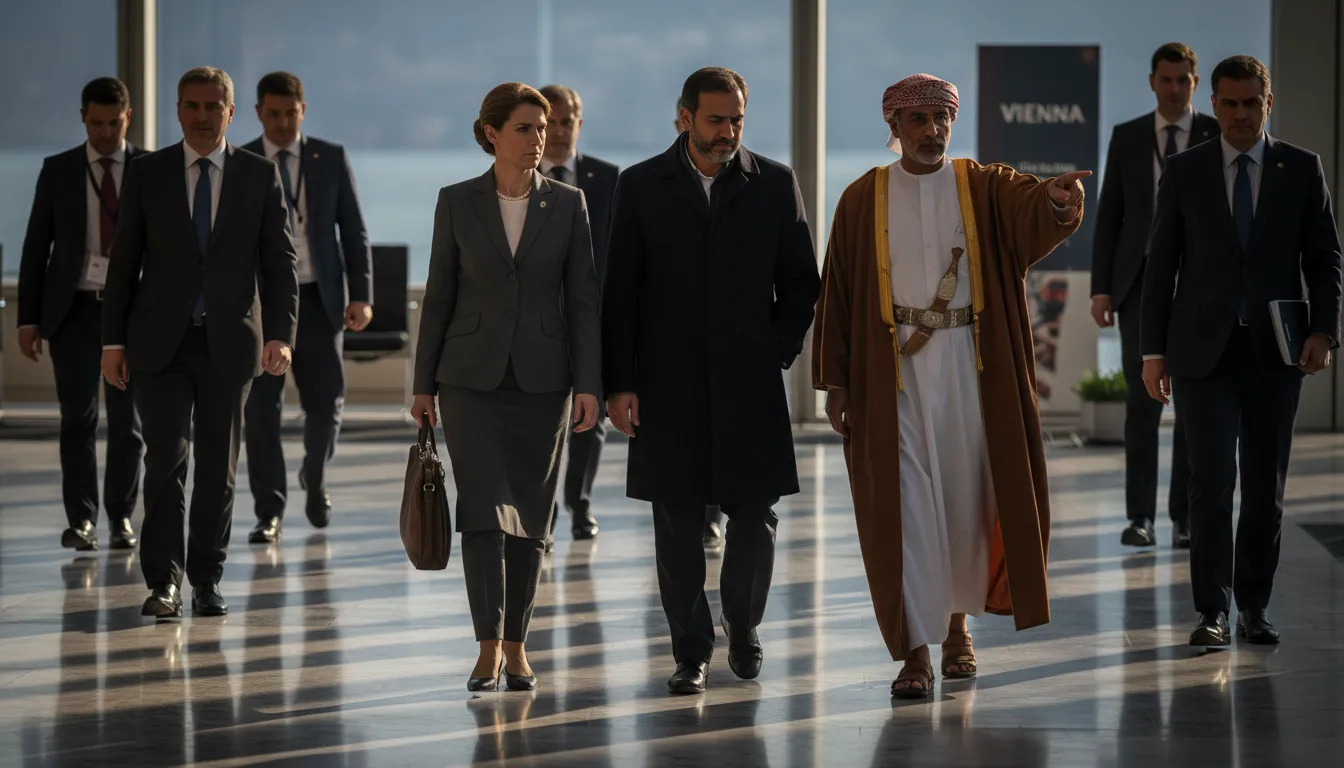
A third round of indirect nuclear negotiations between the United States and Iran concluded in Geneva on February 26 without a formal agreement, leaving the risk of a wider Middle East conflict unresolved. Despite the impasse, Oman's Foreign Minister Badr al-Busaidi, who served as mediator, described "significant progress in the negotiation" and confirmed that both sides had agreed to move discussions to a technical level in Vienna.
Iranian Foreign Minister Abbas Araghchi called the Geneva sessions the "most intense and longest rounds of negotiations" held so far, a characterization that underscored both the stakes and the persistent gap between the two parties. Speaking after the talks, Araghchi warned that failure to reach a deal would carry severe consequences: "There would be no victory for anybody — it would be a devastating war."
The Core Dispute
The central disagreement remains uranium enrichment. The Trump administration, represented by Special Envoy Steve Witkoff and presidential son-in-law Jared Kushner, demands that Iran completely halt all uranium enrichment — a red line Tehran flatly refuses to accept. Iran insists enrichment is its sovereign right and that its nuclear program serves only peaceful purposes.
Iran's counteroffer includes reducing its uranium stockpile to low-enrichment levels under the supervision of the International Atomic Energy Agency (IAEA), while retaining its enrichment infrastructure. Tehran also rejected proposals to physically transfer its uranium stockpiles out of the country or to dismantle its nuclear facilities — conditions Washington has reportedly sought as part of any agreement.
Beyond the nuclear file, the US has pressed Iran to curtail its ballistic missile program and cut support for armed groups across the region, including Hamas and Hezbollah. Iran has refused to discuss these issues as part of the nuclear negotiations, insisting that sanctions relief must come first.
Military Pressure Looms Large
The diplomatic talks are unfolding against a backdrop of sharp military escalation. The Trump administration has overseen what officials describe as the largest American military buildup in the Middle East since the Iraq War, deploying two aircraft carrier strike groups, dozens of warships, and hundreds of warplanes to the region.
Witkoff has signaled he aims to finalize an agreement within 60 days — a deadline that adds urgency to the already fraught process. Secretary of State Marco Rubio separately raised alarms, stating that the US has seen evidence Iran is attempting to rebuild a nuclear weapons capability. Iran denies pursuing nuclear arms.
Vienna: The Next Step
Both sides agreed that technical teams will convene at the IAEA headquarters in Vienna in the coming days. Araghchi indicated that Washington and Tehran had "identified the main elements of a potential agreement," suggesting that while top-line political disagreements persist, lower-level experts may be able to narrow the gaps on specific technical questions.
Oman, which has historically served as a quiet diplomatic channel between Iran and Western powers, will continue its mediation role. Gulf states and European governments have watched the talks closely, anxious about the region's stability if diplomacy collapses and military options come into play.
A Narrow Window
The Geneva talks mark a rare moment of direct engagement between Washington and Tehran. Yet the structural gap — the US demanding zero enrichment, Iran insisting on keeping its program — is enormous. With Trump's self-imposed deadline ticking and two carrier groups anchored off Iran's coasts, the coming weeks in Vienna may determine whether diplomacy holds or gives way to conflict.