Pakistan Declares 'Open War' on Taliban-Run Afghanistan
Pakistan launched Operation Righteous Fury — airstrikes on Kabul, Kandahar, and Paktia — after Afghanistan mounted a cross-border offensive along the Durand Line, triggering urgent ceasefire calls from the UN, China, Iran, and Russia as the region braces for further escalation.
Airstrikes and Open War
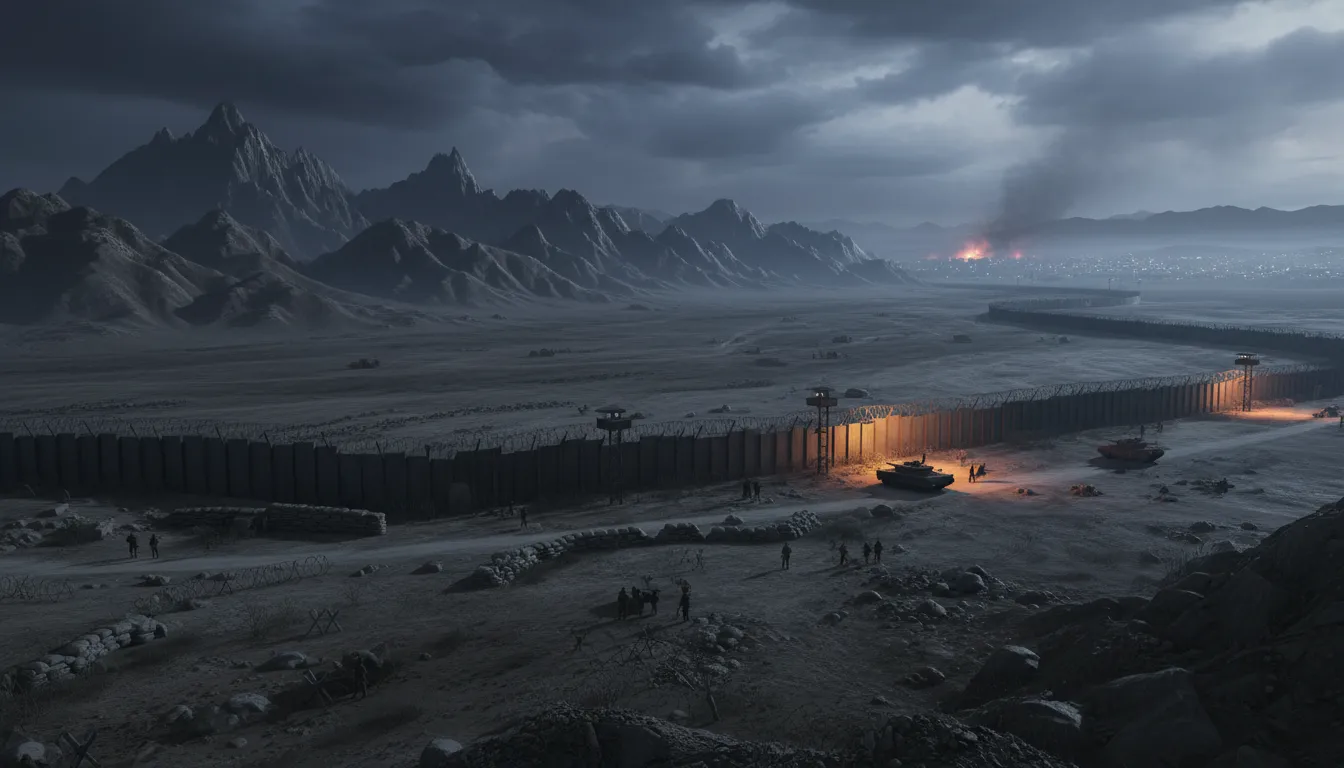
Pakistan declared 'open war' with Afghanistan on February 27, 2026, after its air force struck Kabul, Kandahar, and the southeastern province of Paktia — the most serious military escalation between the two neighbors since the Taliban seized power in August 2021. The operation, dubbed Ghazab Lil Haq ('Righteous Fury'), marked a dramatic rupture in a relationship already defined by deep hostility and mistrust.
The strikes came hours after Afghanistan launched what its government called 'large-scale offensive operations' against Pakistani military positions along the contested Durand Line. Pakistan's Defence Minister declared the country's patience had 'run out,' framing the campaign as a response to years of cross-border militant attacks originating from Afghan soil.
Conflicting Casualty Claims
Both sides have issued sharply diverging casualty figures, making independent verification difficult. Pakistan's military claimed it killed 274 Afghan Taliban fighters and wounded 400 more, while destroying 73 border posts and capturing over a dozen additional positions. Afghanistan's government acknowledged 13 soldiers killed and 22 wounded in the Pakistani strikes.
Taliban spokesman Zabiullah Mujahid countered that Afghan forces had killed 55 Pakistani soldiers and destroyed 19 military outposts. Unconfirmed reports also emerged that senior Taliban figures — potentially including supreme leader Hibatullah Akhundzada, believed to reside in Kandahar — may have been killed in the strikes, claims that could not be independently verified.
Roots of a Colonial Border Dispute
The conflict is rooted in one of South Asia's most enduring territorial disputes. The Durand Line — the 2,611-kilometre border drawn by British colonial authorities in 1893 — has never been formally recognized by Afghanistan, which argues it artificially divided ethnic Pashtun communities. This unresolved grievance has fuelled bilateral animosity for over a century.
Pakistan's immediate trigger was the Tehreek-e-Taliban Pakistan (TTP). Islamabad has repeatedly accused the Afghan Taliban of allowing TTP militants to use Afghan territory as a launching pad for attacks inside Pakistan. A suicide bombing at a Shiite mosque in Islamabad that killed 36 people in February, and a checkpoint attack in Bajaur that killed 11 soldiers, served as proximate catalysts for Operation Righteous Fury.
Global Alarm and Divided Reactions
The international community responded swiftly, though not uniformly. UN Secretary-General António Guterres issued an urgent call for an immediate ceasefire. China declared itself 'deeply concerned,' urging both sides to 'remain calm and exercise restraint.' Russia demanded a halt to cross-border attacks. Iran's Foreign Minister Abbas Araghchi invoked the holy month of Ramadan, calling on both countries to resolve differences 'within the framework of good neighbourliness and through dialogue' — and offering Tehran as a mediator.
The United States struck a notably different note, with the State Department voicing support for Pakistan's 'right to defend itself' against Taliban attacks — a position that drew sharp criticism from Kabul and injected a great-power dimension into an already volatile standoff.
A Regional Crisis in the Making
Analysts warn the conflict risks destabilising one of the world's most volatile corridors — the crossroads of South Asia, Central Asia, and the Middle East. China's massive investments in Pakistan through the China-Pakistan Economic Corridor, India's warming ties with Kabul, and the continued circulation of American weaponry through Afghan arsenals all amplify the geopolitical stakes.
A prolonged conflict could trigger a humanitarian catastrophe, massive refugee flows into already-strained neighbouring states, and broader economic disruption across the region. With both governments under intense domestic pressure to project strength — and the Taliban's political legitimacy already tenuous at home and abroad — diplomatic off-ramps remain dangerously narrow.