America Mourns Jesse Jackson, Civil Rights Giant
Rev. Jesse Jackson Sr., who died on February 17 at age 84 after a long battle with a rare neurological disorder, is being honored in cross-country memorial services this week. Thousands of mourners gathered in Chicago as services began at the Rainbow PUSH Coalition headquarters he founded.
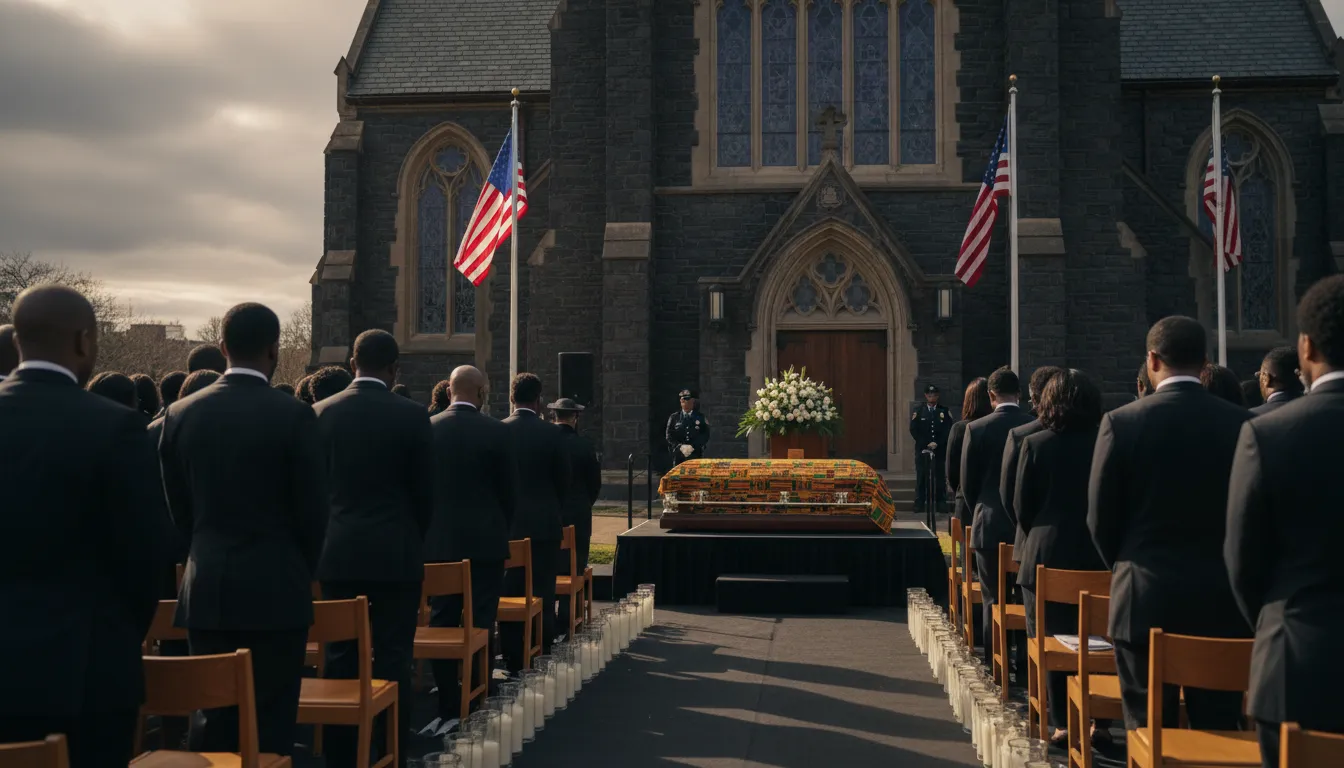
A Nation Says Goodbye
Thousands of mourners filed past the casket of the Rev. Jesse Jackson Sr. at the Rainbow PUSH Coalition headquarters on Chicago's South Side on Thursday, launching a week of cross-country memorial services honoring one of America's most consequential civil rights leaders. Chicago Mayor Brandon Johnson and the Rev. Al Sharpton stood alongside the Jackson family to receive mourners — a fitting scene at the very institution Jackson built into a national force for racial and economic justice.
Jackson died on February 17, 2026, at the age of 84, after years of declining health caused by progressive supranuclear palsy (PSP), a rare and incurable neurological disorder that progressively stripped away his mobility and speech. He had been initially diagnosed with Parkinson's disease in 2015 before the PSP diagnosis was confirmed. The man who had once mesmerized millions with his oratory had spent his final years largely unable to speak.
From Selma to the Rainbow Coalition
Jackson's six-decade career placed him at the center of nearly every major chapter of American civil rights history. A protégé of the Rev. Martin Luther King Jr., he marched in the 1965 Selma-to-Montgomery campaign and was present in Memphis when King was assassinated in 1968. That experience transformed him into one of the movement's most tireless standard-bearers.
In 1971, Jackson founded Operation PUSH (People United to Save Humanity) in Chicago, leveraging consumer boycotts and corporate negotiations to open economic doors for Black workers and businesses. He later founded the National Rainbow Coalition in 1984 — a broad political alliance spanning African Americans, Latinos, women, working-class whites, and the LGBTQ+ community. The two organizations merged in 1996 to form the Rainbow PUSH Coalition, which remains active today.
Historic Presidential Campaigns
Jackson's two Democratic presidential campaigns rewrote what Americans believed was politically possible. In 1984 he earned more than 3 million primary votes; in 1988 he captured nearly 7 million votes — roughly 29% of the Democratic primary total — winning 13 primaries and caucuses. Those bids were the most successful by an African American candidate until Barack Obama's historic 2008 election. President Bill Clinton awarded Jackson the Presidential Medal of Freedom in 2000.
Jackson also extended his reach well beyond U.S. borders, repeatedly using his moral authority to negotiate the release of American prisoners abroad — from Cuba to Yugoslavia — and meeting with heads of state on multiple continents, functioning as an unofficial diplomat for the dispossessed worldwide.
A Week of National Tribute
Memorial services will span the country over the coming days. After the Chicago viewing, Jackson will lie in honor at the South Carolina Statehouse in Columbia — he was born in Greenville, South Carolina — followed by a formal service in Washington, D.C. Every living former U.S. president has been invited to attend the final homegoing service in Chicago. A request for Jackson to lie in honor at the U.S. Capitol rotunda was denied by House Speaker Mike Johnson, drawing sharp criticism from civil rights advocates.
"Dr. King's dream and Jesse Jackson's mission now falls on our shoulders," Sharpton told mourners gathered in Chicago. As tributes pour in from political leaders across the spectrum, the nation confronts a sobering question: who carries the torch in an America more fractured than the one Jackson spent his life trying to heal.