Slovakia: 100% Russian Gas Amidst Iranian Crisis
Slovenský plynárenský priemysel (SPP) will cover 100% of its gas supplies from Russian sources from April 2026, a dramatic increase from 33% last year. The decision comes in the context of the war in Iran, which closed the Strait of Hormuz and raised European gas prices by tens of percent.
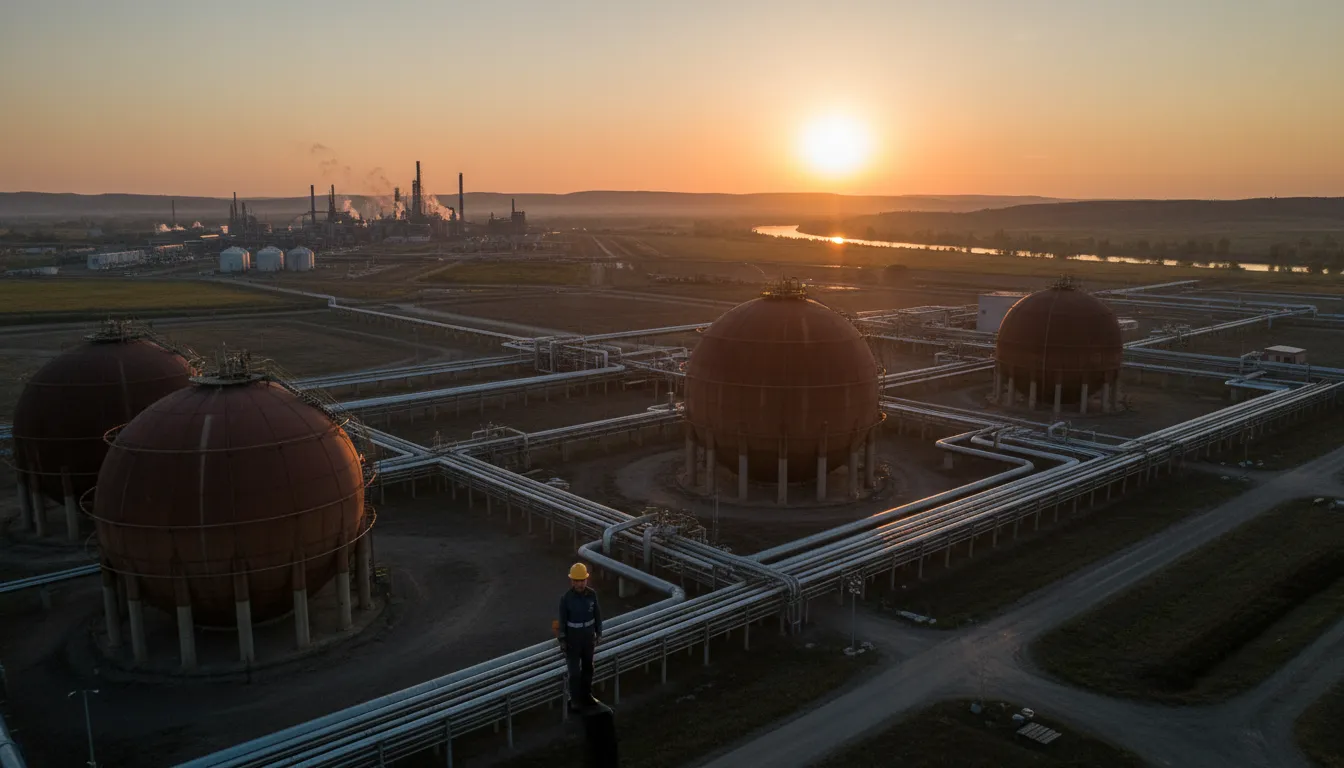
SPP to Cover Entire Consumption with Russian Gas from April
Slovenský plynárenský priemysel (SPP), the largest state-owned natural gas supplier in Slovakia, will cover 100% of its customers' needs with Russian gas from April 2026. This is a dramatic turnaround from last year, when Russian supplies accounted for only a third of the company's portfolio. The decision was confirmed by Bloomberg, citing an amendment to an existing contract with Russia's Gazprom, concluded in March 2026.
SPP's intention is not only part of a long-term strategy for cheaper raw materials — it is a direct response to the war in Iran, which has shaken global energy markets.
Iranian War Hits European Energy Markets
Since the outbreak of the conflict in Iran in late February and early March 2026, shipping through the Strait of Hormuz — a strategic corridor through which approximately one-fifth of the world's liquefied natural gas (LNG) trade passes — has almost completely frozen. Qatar was forced to halt LNG production after Iranian drone attacks, which temporarily reduced global supply by almost a fifth, according to CNBC.
Natural gas prices in Europe reacted immediately. The European benchmark market — the Dutch TTF contract — almost doubled in a single week: from just under 32 euros per megawatt-hour to more than 60 euros. According to Euronews, this is one of the most significant price shocks in the European gas market in recent years. Slovak Economy Minister Denisa Saková confirmed that gas prices had risen by 60 to 70 percent in connection with the conflict.
Analysts from the Bruegel Institute warn of further price increases if the crisis situation persists. Europe entered 2026 with historically low gas reserves — only 46 billion cubic meters compared to 60 billion in 2025 — which further increases its vulnerability.
Russian Gas as a Pragmatic Response
SPP justifies the increase in the volume of Russian supplies with economic logic. Russian pipeline gas remains significantly cheaper for Slovakia than LNG imported via German, Austrian or Czech terminals. According to available estimates, switching to alternative sources would cost Slovakia an additional 70 to 90 million euros annually in transport fees alone, according to Reuters. SPP has a long-term contract with Gazprom valid until 2034 and, under a transitional EU exemption, can draw Russian gas from long-term contracts until September 2027.
Fico versus Brussels: Lawsuit and "Energy Suicide"
Prime Minister Robert Fico used the war crisis to intensify pressure against the European plan to end Russian gas imports. According to SME daily, he consulted the situation by telephone with German Chancellor Friedrich Merz, with both addressing the impact of the proposed termination of all Russian gas supplies from January 2028.
The EU approved the ban on Russian gas imports in December 2025 by a qualified majority — despite opposition from Bratislava and Budapest. According to Euronews, short-term contracts will be banned from spring 2026, long-term pipeline contracts until September 2027. Fico called the decision ideologically motivated and likened it to "energy suicide." Slovakia and Hungary have announced their intention to file a lawsuit with the EU Court of Justice.
Short-Term Pragmatism with Long-Term Risks
The Iranian crisis paradoxically strengthens the arguments of Fico's government — the increase in LNG prices makes Russian gas even more attractive in the short term. However, analysts warn that deep dependence on a single supplier brings geopolitical risks that are difficult to predict in an unstable world. While Brussels insists on energy diversification as a strategic necessity, Slovakia is betting on the certainty of existing contracts. The outcome of this conflict of interest will be definitively decided as the European ban in 2027 approaches.