Trump's Tariff Blitz Hits China, Canada and the World
New U.S. tariffs targeting China and Canada took effect on March 4, 2026, as President Trump wields a rarely-used trade law to impose a 15% universal global surcharge — the biggest American tax hike since 1993.
A New Escalation in the Global Trade War
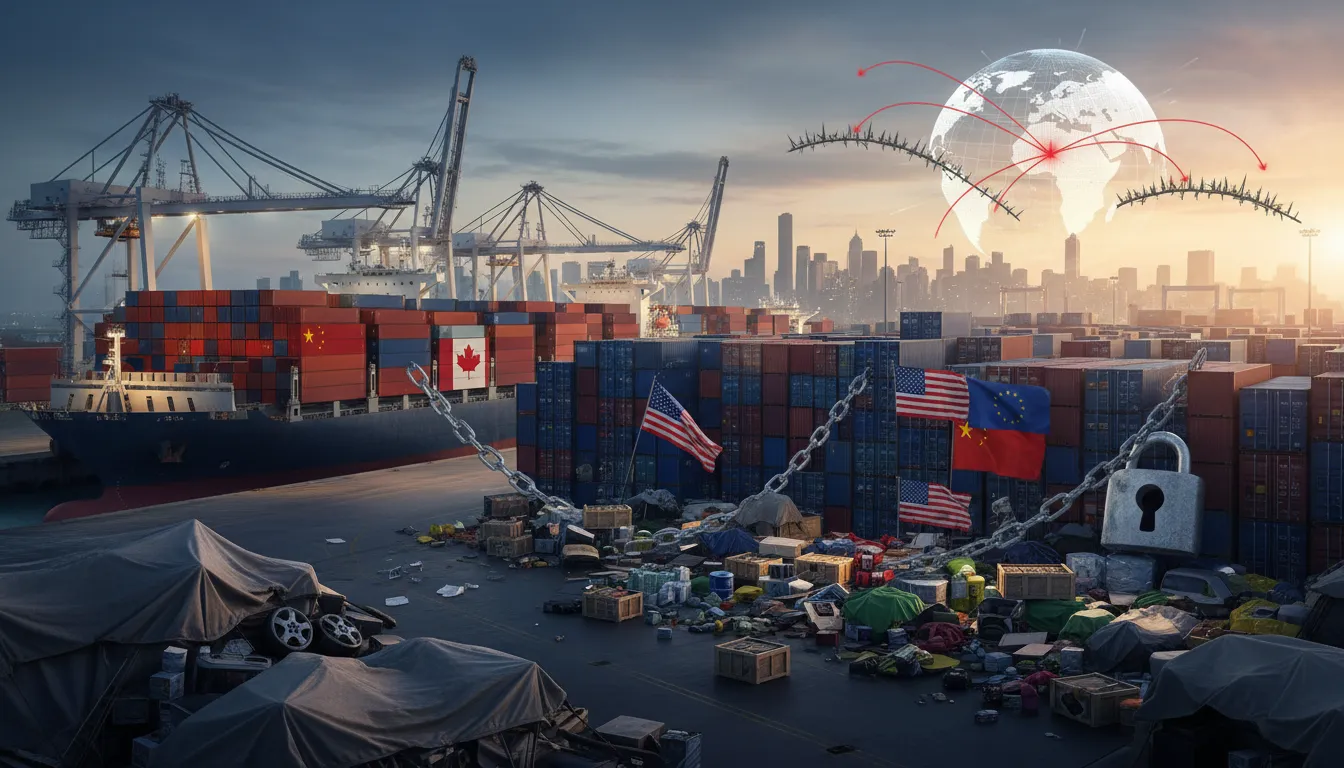
A sweeping new round of American tariffs took effect on March 4, 2026, shaking global markets and triggering retaliatory responses from Washington's largest trading partners. President Donald Trump imposed an additional 10 percent levy on Chinese imports and restored 25 percent tariffs on Canadian goods, escalating a trade conflict that analysts are calling the most consequential since the early 1990s.
From IEEPA to Section 122: A Constitutional Pivot
The tariff surge follows a landmark legal defeat. On February 20, 2026, the U.S. Supreme Court ruled 6–3 that Trump's earlier tariffs, imposed under the International Emergency Economic Powers Act (IEEPA), exceeded presidential authority. Within hours, the White House pivoted to a little-used legal vehicle: Section 122 of the Trade Act of 1974.
Section 122 allows the president to impose a temporary import surcharge of up to 15 percent to address "fundamental international payments problems" — specifically, large balance-of-payments deficits. Unlike IEEPA, it requires no interagency process, only a presidential determination. Trump signed an executive order invoking the provision to impose a 10 percent baseline global tariff, later raised to 15 percent — the statutory maximum — making this the first time Section 122 has ever been used, according to Global Trade Alert.
There is a critical catch: Section 122 tariffs automatically expire after 150 days unless Congress votes to extend them, limiting their long-term reach.
The Economic Toll: $1,500 Per Household
The Tax Foundation estimates that the combined tariff package represents the largest U.S. tax increase as a share of GDP since 1993, adding an average burden of $1,500 per American household annually. The universal surcharge alone covers approximately $1.2 trillion worth of imports — about 34 percent of all U.S. annual imports.
While energy products, some agricultural goods, pharmaceuticals, and select electronics received exemptions, the sweeping scope of the measures leaves most consumer goods exposed to higher prices.
Beijing and Ottawa Hit Back
The response from targeted nations was swift. China, already subject to cumulative tariffs reaching historic highs, announced counter-tariffs on select American goods. Canada, whose exports face a 25 percent levy — with USMCA-covered goods and auto imports temporarily exempted until April — moved to impose reciprocal measures of its own, according to NBC News.
Ottawa's retaliation prompted Trump to threaten doubling steel and aluminum tariffs to 50 percent, before backing away from the escalation the same day — a sign of the volatile, day-by-day nature of the current trade standoff.
Markets Rotate, Not Crash
Global equity markets responded with a notable sector rotation rather than a broad collapse. Technology stocks, particularly multinationals with China-dependent supply chains, fell sharply — the Nasdaq dropped more than 2.6 percent in the days surrounding the announcements. Apple alone disclosed absorbing up to $1.1 billion in quarterly tariff costs.
Meanwhile, domestic energy and industrial stocks surged. ExxonMobil, Chevron and U.S. steel producers — largely exempted or advantaged by the new trade barriers — gained ground, reflecting investor bets on a domestically reoriented economy, as reported by Financial Content Markets.
A 150-Day Clock
The long-term durability of Trump's new tariff architecture remains uncertain. Legal challenges are already mounting, with critics arguing that Section 122's balance-of-payments rationale does not legally justify a sweeping universal import tax. Foreign Policy has called the approach constitutionally dubious.
With a 150-day expiry clock ticking and no clear congressional appetite for extension, the current tariff regime faces an uncertain future — even as its immediate economic impact ripples across global supply chains, boardrooms, and kitchen tables alike.