Tusk: Poland to Mine Border with Russia Within 48 Hours
Prime Minister Donald Tusk announced Poland's readiness to rapidly mine its eastern border within 48 hours of withdrawing from the Ottawa Treaty and urged Poles to immediately leave Iran due to the threat of armed conflict.
End of the Ottawa Treaty Era for Poland
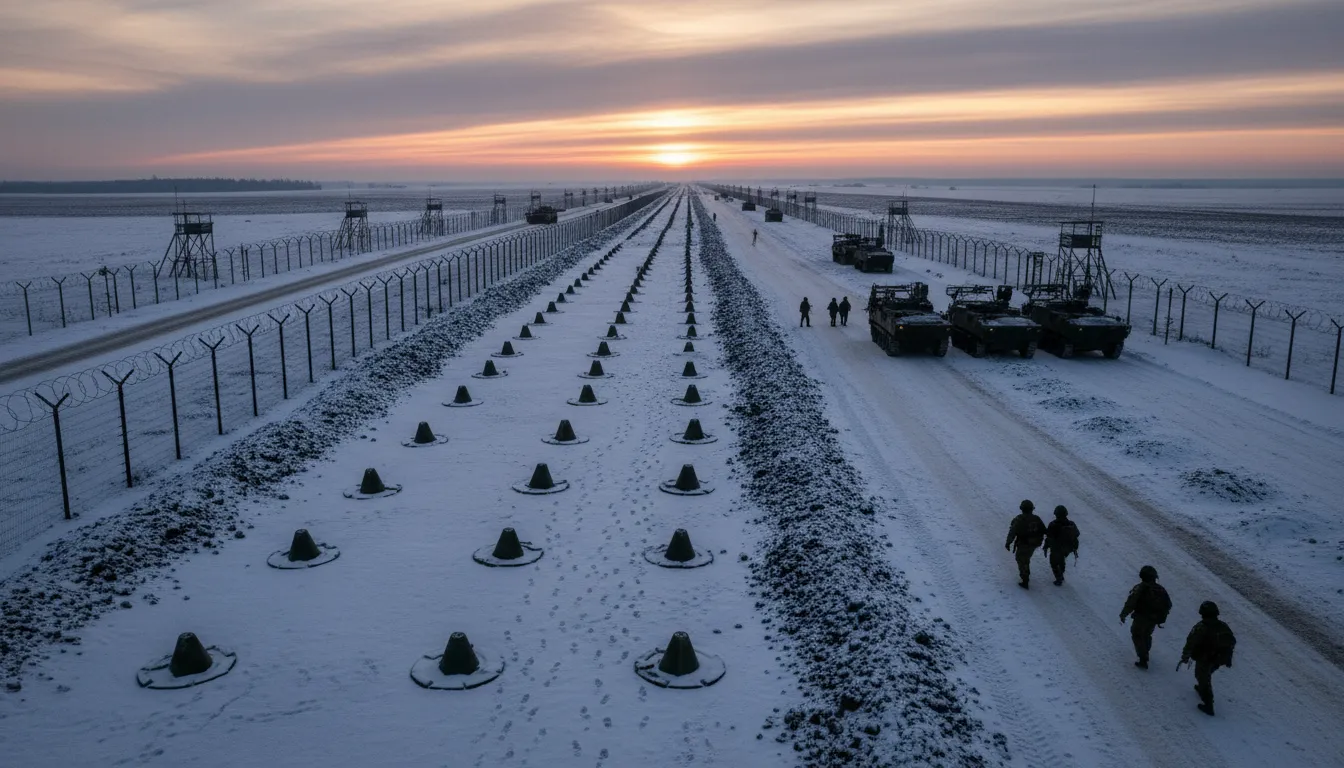
Prime Minister Donald Tusk announced on February 19, 2026, that Poland is capable of mining its eastern border – with Russia and Belarus – in just 48 hours from the moment a threat emerges. The statement came a day before Poland's official withdrawal from the Ottawa Treaty, which prohibits the production and use of anti-personnel mines. Poland signed this agreement in 1997 and ratified it in 2012, but the changed security conditions in the region have prompted the government to revise its commitments. The six-month notice period, which began in August 2025, ended on February 20, 2026.
Shield East: NATO's Eastern Flank Arms Itself
The decision is part of the implementation of the Shield East program, which involves a comprehensive strengthening of the protection of Polish borders with Belarus and the Russian Kaliningrad Oblast. Previously, similar steps were taken by Finland, Lithuania, Latvia, and Estonia – all of which withdrew from the convention in 2025. Poland is thus joining a group of NATO countries on the eastern flank that have recognized that the existing treaty restrictions are not suited to the current nature of threats from Russia.
Defense Minister Władysław Kosiniak-Kamysz emphasized that the mines will serve only a defensive function. "They will only be used if someone acts unwisely and wants to test our capabilities," the minister said. Prime Minister Tusk added that Poland has moved from buying foreign weapons to producing competitive defense technologies on its own market, which he described as a "technological leap" towards security.
Bluszcz and Baobab-K: Polish Technical Ingenuity in the Service of Defense
Tusk presented two key systems that will enable the rapid mining of the border. Bluszcz is an advanced, unmanned-manned vehicle for laying mines, developed by a consortium of Polish institutions – the Military Institute of Armored and Automotive Technology and STEKOP S.A. It enables precise and automated creation of minefields from a safe distance.
The second system – Baobab-K – is a self-propelled engineering-mining machine from the Polish Armaments Group, designed for the rapid deployment of anti-tank barriers. The state-owned company Belma is expected to produce up to 1.2 million mines per year, and some of the products may go to Ukraine. Demand for Polish weapons systems – such as the Borsuk infantry fighting vehicle or the Piorun missile – already exceeds the capacity of the domestic industry.
Urgent Appeal Regarding Iran: Hot Conflict Very Real
In parallel with the announcements regarding the border, Tusk issued an urgent appeal to Polish citizens staying in Iran. "I ask you to leave Iran immediately and under no circumstances travel to that country," the Prime Minister said, warning that the possibility of a hot conflict in the region is "very real." He noted that the evacuation of citizens may become impossible in a few or several hours.
The appeal is directly related to the escalation of tensions between the United States and Iran – President Donald Trump has repeatedly threatened Iran with military intervention, and the US has strengthened its military presence in the Middle East. The Polish embassy in Tehran is constantly monitoring the situation, although its staff is not being reduced for the time being.
Poland Strengthens its Position on NATO's Eastern Edge
Both decisions confirm Poland's active role in shaping the collective security of the Alliance. Warsaw is investing in the domestic defense industry and is responding rapidly to global hotspots. In an era of hybrid aggression by Russia and destabilization of the Middle East, Poland is consistently strengthening its position as NATO's eastern flank.