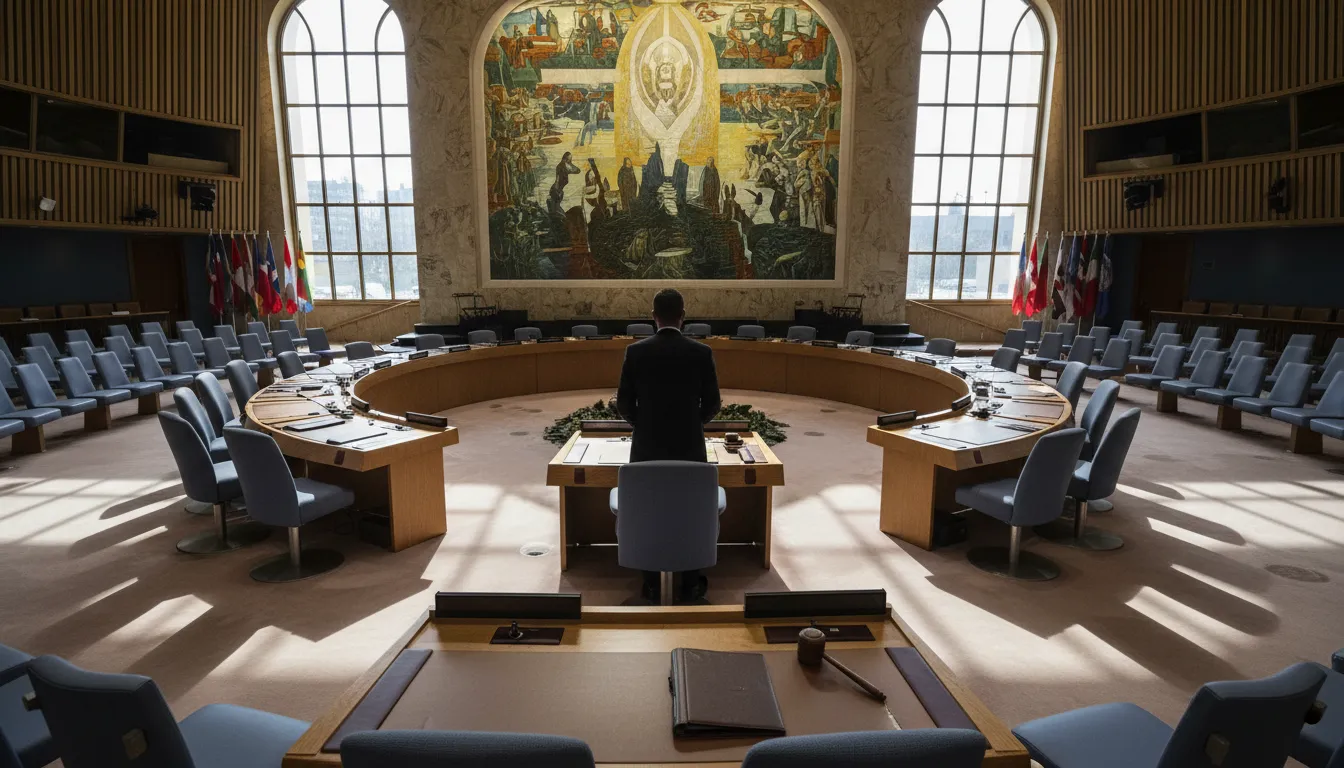
US and Israel Launch Joint Military Strikes on Iran
The United States and Israel launched coordinated military strikes against Iran on February 28, 2026, with President Trump announcing 'major combat operations' targeting Tehran and Iran's nuclear and missile infrastructure.
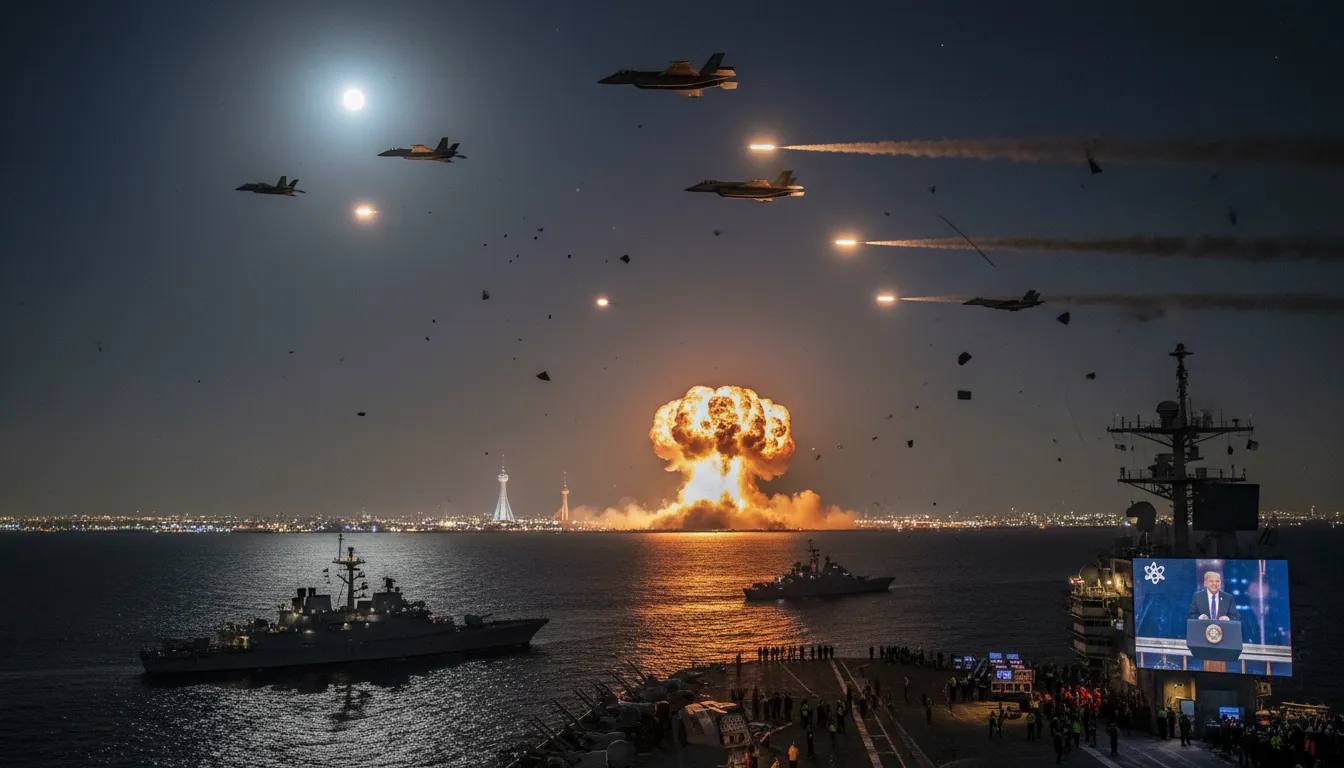
Operation Epic Fury Begins
In one of the most dramatic military escalations in decades, the United States and Israel launched coordinated strikes against Iran on Saturday, February 28, 2026. President Donald Trump announced that "the United States military has begun major combat operations in Iran," stating the operation's objective was to defend the American people by eliminating "imminent threats from the Iranian regime."
The U.S. designated its operation Operation Epic Fury, while Israel launched a parallel campaign called The Roar of the Lion. Israeli Defense Minister Israel Katz characterized the strikes as a "preemptive attack" designed to remove threats to the State of Israel, including the country's nuclear ambitions.
Targets Across Iran
Explosions rocked multiple Iranian cities simultaneously. In Tehran, missiles struck the Jomhouri district and University Street, with one cluster of strikes landing near the offices typically associated with Supreme Leader Ayatollah Ali Khamenei — who, according to reports, had been moved to a secure location before the attacks began. Additional strikes were reported in Isfahan, home to major nuclear facilities, as well as in Qom, Karaj, Kermanshah, Lorestan, and Tabriz.
Trump stated the operation aimed to "destroy their missiles and raze their missile industry" and prevent Iran from ever obtaining a nuclear weapon. According to the Institute for Science and International Security, the joint strikes effectively dismantled Iran's centrifuge enrichment program, though a full damage assessment remains ongoing.
Iran Retaliates, Israel Declares Emergency
Iran's Islamic Revolutionary Guard Corps (IRGC) responded swiftly, launching what it described as the first wave of retaliatory missile and drone strikes toward Israel. Air raid sirens sounded across Israel as the government declared a 48-hour national emergency and shut civilian airspace. The Israeli military said it had pre-warned the public to prepare for incoming missiles.
Inside Iran, authorities imposed a near-total internet blackout, with connectivity dropping to approximately 4% of normal levels, making independent verification of damage difficult. U.S. embassies in Qatar and Bahrain ordered staff to shelter in place. Airlines including Germany's Lufthansa suspended flights to Tel Aviv, Beirut, and Oman through at least March 7.
Divided Goals, International Alarm
The operation has exposed a rift within the U.S. administration itself. Vice President JD Vance insisted, "We are not at war with Iran — we are at war with Iran's nuclear programme," while Trump's public statements called on Iranian civilians to overthrow the regime, saying: "When we are finished, take over your government. It will be yours to take."
Netanyahu, for his part, described Iran as the "head of the octopus" coordinating proxy forces across Lebanon, Yemen, Iraq, and Syria, framing the strikes as long overdue. Democratic opposition was swift. Senator Ruben Gallego called the action "illegal," warning that Americans "should not pay the ultimate price for regime change."
A World Watching Nervously
The strikes mark the most significant direct U.S. military engagement in the Middle East since the 2003 Iraq war. With Iran retaliating and both nations on high alert, regional governments are bracing for prolonged conflict. Oil markets, global shipping routes, and diplomatic channels face severe disruption as the world watches whether this escalation can be contained — or whether it spirals further.