NASA Overhauls Artemis: Moon Landing Pushed to 2028
NASA has radically restructured its Artemis lunar program, redesignating Artemis III as an Earth-orbit practice run and pushing the first actual crewed moon landing to Artemis IV in 2028 — deliberately mirroring the step-by-step cadence of the Apollo era.
A Major Course Correction
NASA has unveiled a sweeping restructuring of its Artemis lunar program, delaying a crewed moon landing by at least one year and redesigning its mission sequence to more closely resemble the methodical, step-by-step approach that put humans on the moon during the Apollo era.
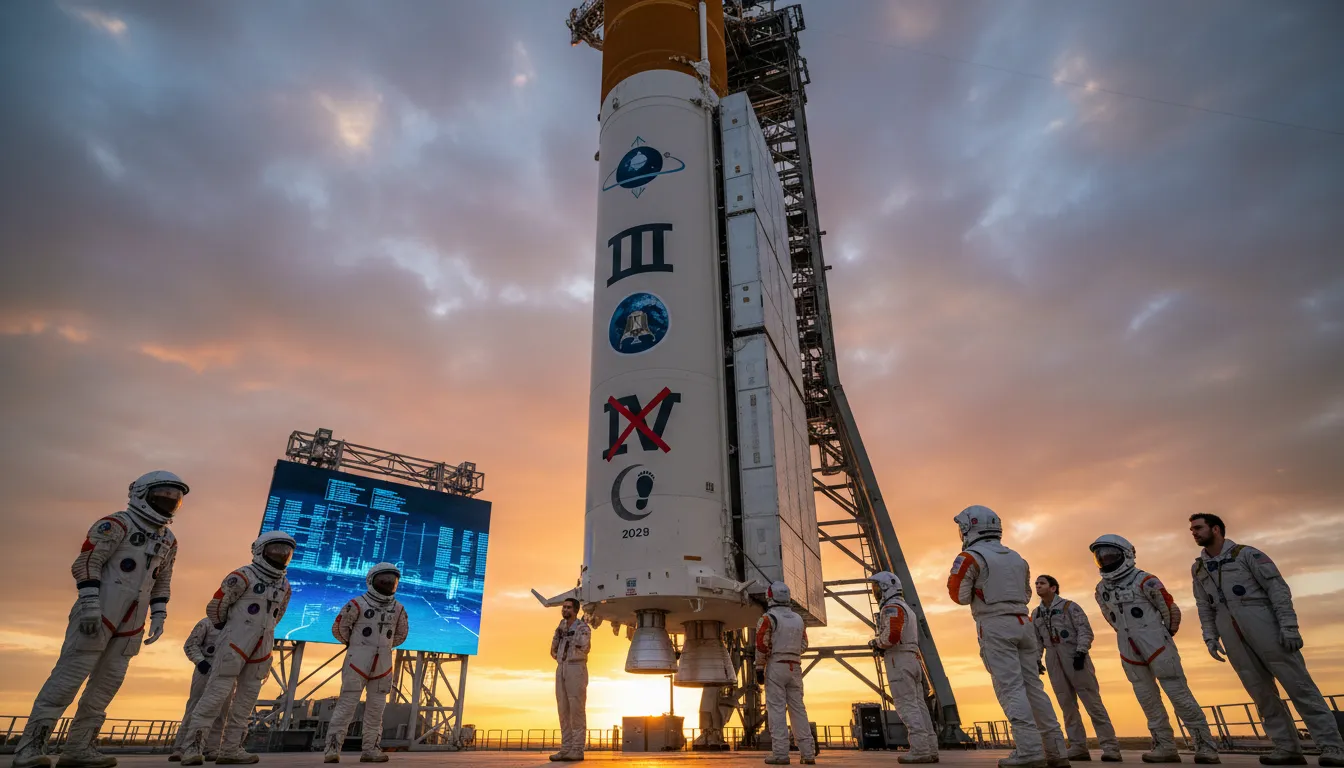
Under the new plan announced Thursday, Artemis III — previously slated to carry astronauts to the lunar surface — will instead serve as an orbital shakedown mission in low Earth orbit. The first actual surface landing will not occur until Artemis IV, now targeted for 2028.
Why the Reset?
NASA Administrator Jared Isaacman, the commercial astronaut tapped by the Trump administration to lead the agency, was blunt about the program's shortcomings. "Three years between flights is unacceptable," he said, referring to the gap between the unmanned Artemis I flight in November 2022 and the long-delayed Artemis II crewed fly-around, now targeted for no earlier than April 2026.
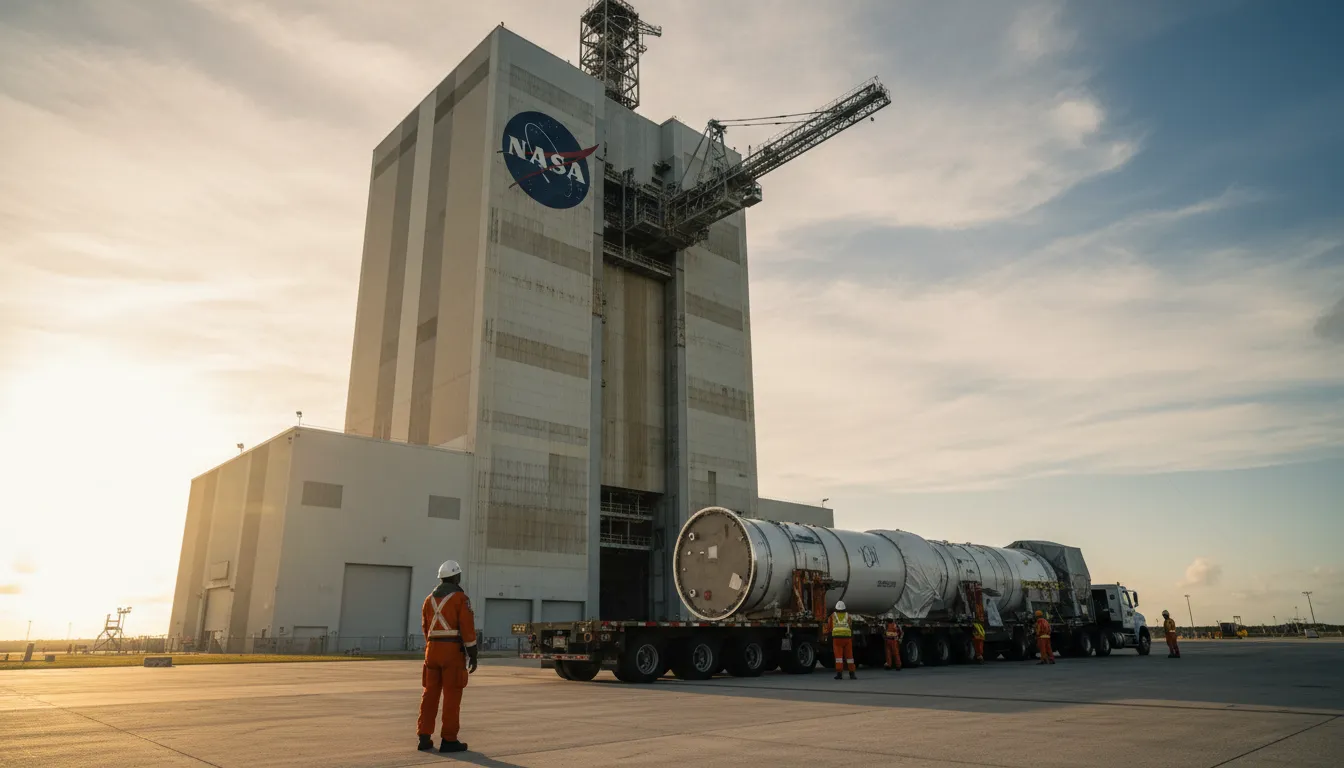
Technical failures have compounded the delays. The Space Launch System (SLS) rocket has suffered repeated helium pressurization issues and hydrogen leaks, forcing hardware back into the Vehicle Assembly Building at Kennedy Space Center for repairs. An independent Aerospace Safety Advisory Panel had already urged NASA to "revise its objectives for Artemis III given the demanding mission goals," citing concerns about the readiness of commercial lunar landers and next-generation moonwalking suits.
The Apollo Blueprint
Isaacman's new architecture deliberately echoes Apollo's rapid mission cadence. During the original moon race, NASA launched missions just months apart, progressively testing systems before the historic Apollo 11 landing in July 1969. All told, 24 astronauts flew to the moon and 12 walked on its surface between 1969 and 1972 — a pace NASA now aims to replicate.
Under the revised roadmap, Artemis III (2027) will practice rendezvous and docking maneuvers in Earth orbit with commercial lunar landers developed by SpaceX and Blue Origin. Artemis IV will then attempt the actual landing. Isaacman is targeting a cadence of one launch every ten months, eventually reaching one lunar surface landing per year. To enable this pace, NASA is standardizing the SLS in its current "Block 1" configuration — prioritizing reliability over upgrades.
Racing Against China
The restructuring comes against the backdrop of intensifying geopolitical competition. Beijing has publicly committed to landing its own astronauts on the moon before 2030, putting direct pressure on Washington to accelerate. Any further Artemis slippage risks ceding a symbolic and strategic milestone to a rival superpower — a prospect U.S. officials have repeatedly flagged as unacceptable.
NASA associate administrator Amit Kshatriya framed the technical standardization as a matter of "system reliability and crew safety," but the competitive context looms large over every scheduling decision.
What Comes Next
Artemis II, if it launches successfully in April, will send four astronauts on a loop around the moon — the first crewed deep-space flight since Apollo 17 in December 1972. Its success is non-negotiable: further anomalies could cascade through the entire restructured timeline. For now, NASA is betting that turning Artemis III into a practice run will allow the program to sprint forward. Whether that gamble pays off will define the next chapter of human space exploration.