US Sanctions Rwanda's Army for Backing M23 Rebels in Congo
The Trump administration sanctioned Rwanda's Defence Force and four senior commanders for supporting M23 rebels in eastern DRC, defying the Washington Accords peace deal signed in December 2025 and deepening a humanitarian catastrophe displacing millions.
Washington Punishes Kigali Over Congo Conflict
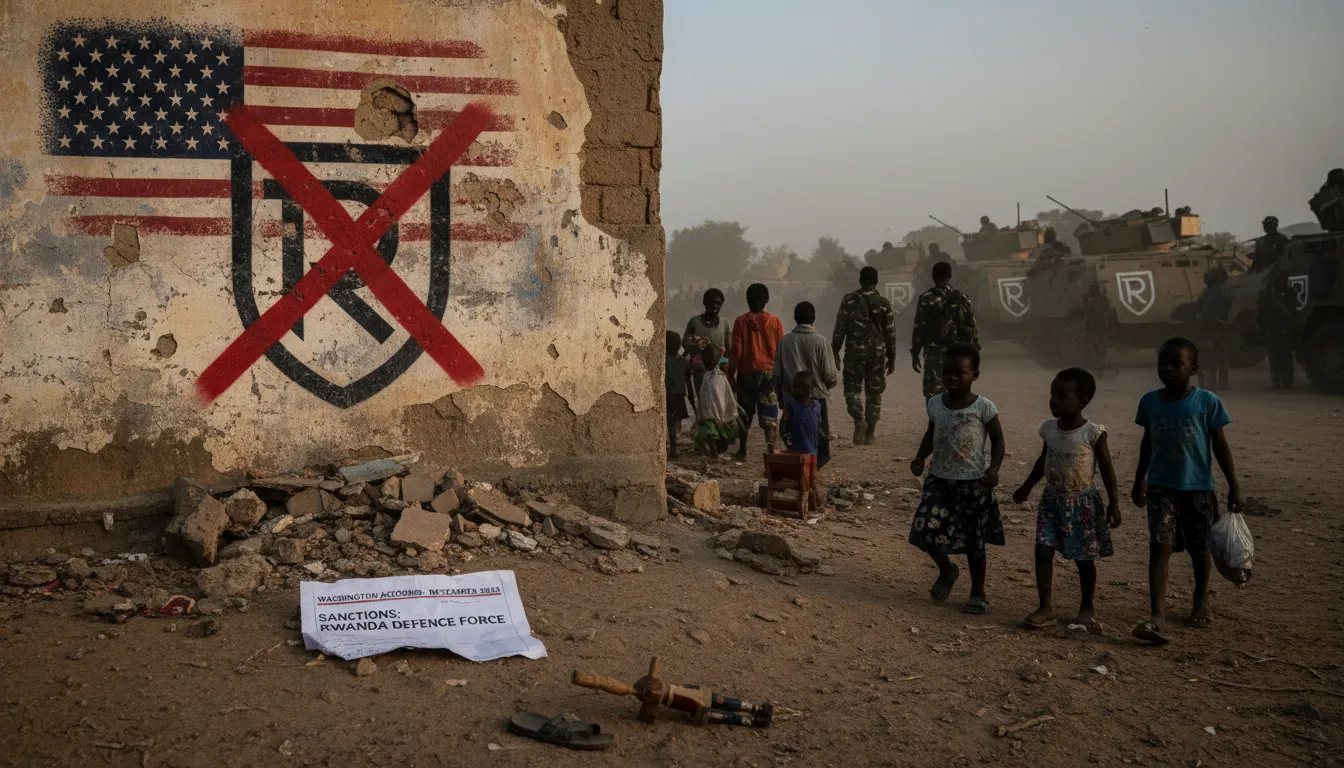
The United States sanctioned Rwanda's entire Defence Force and four of its top military commanders on Monday, accusing Kigali of fueling one of Africa's most devastating conflicts in brazen defiance of a Trump-brokered peace deal.
Sanctions and Their Targets
The Treasury Department's Office of Foreign Assets Control designated the Rwanda Defence Force (RDF) as a sanctioned entity alongside four of its senior leaders: Chief of Defence Staff Mubarakh Muganga, Army Chief of Staff Vincent Nyakarundi, 5th Infantry Division Commander Major General Ruki Karusisi, and Special Operations Force Commander Stanislas Gashugi.
According to the State Department, the RDF has deployed thousands of troops across eastern Democratic Republic of Congo, where they fight alongside the March 23 Movement (M23) — a rebel group itself under US sanctions since 2013. Rwandan forces have introduced GPS jamming systems, drones, and air defense equipment to the battlefield, and have trained M23 fighters at military centers inside Rwanda.
A Peace Deal Broken
The sanctions came just weeks after President Trump personally presided over the signing of the Washington Accords for Peace and Prosperity in December 2025 — a landmark agreement between DRC President Félix Tshisekedi and Rwandan President Paul Kagame. Within days of that White House ceremony, Rwanda-backed M23 forces captured the Congolese city of Uvira, signaling the deal had already collapsed on the ground.
"Treasury will use all tools at its disposal to ensure that the parties to the Washington Accords uphold their obligations," said Treasury Secretary Scott Bessent, demanding the immediate withdrawal of Rwandan troops, weapons, and equipment from eastern DRC.
M23 has since expanded its grip over eastern Congo, seizing the provincial capitals of Goma and Bukavu, along with strategic mining sites rich in gold and coltan — minerals critical to the global electronics supply chain.
Humanitarian Catastrophe
The conflict has created one of the world's most acute humanitarian emergencies. More than seven million people have been displaced across the DRC, according to the UN refugee agency. The World Food Programme estimates that over 25 million Congolese face acute food insecurity. Mass graves containing 171 bodies were recently discovered near Uvira following M23's advance into the city.
Kigali Pushes Back, Kinshasa Cheers
Rwanda's government swiftly rejected the sanctions. Spokesperson Yolande Makolo called the measures "unjust" and accused Washington of distorting the facts of the conflict, arguing that Congo had itself violated agreements through drone attacks. Yet Rwanda's own ambassador had previously acknowledged "security coordination" with M23, complicating Kigali's denials.
The Congolese government welcomed the move as "a strong signal in support of respect" for its territorial integrity and sovereignty.
A Rare and Forceful Step
Sanctioning an entire national defense force — rather than only individual bad actors — is an unusually severe diplomatic measure. It places Rwanda in a category typically reserved for pariah regimes, potentially freezing significant assets, restricting arms transfers, and isolating Kigali from Western military partnerships. Analysts see the move as Washington signaling it will deploy coercive economic tools in Africa after years of disengagement — but whether the pressure shifts conditions on the ground for millions of displaced Congolese remains an open and urgent question.