What Is DRS in F1 and Why Was It Scrapped?
For 15 seasons, Formula 1's Drag Reduction System gave chasing drivers a speed boost to aid overtaking — but critics called it artificial. Here's how DRS worked, why it was controversial, and what replaced it.
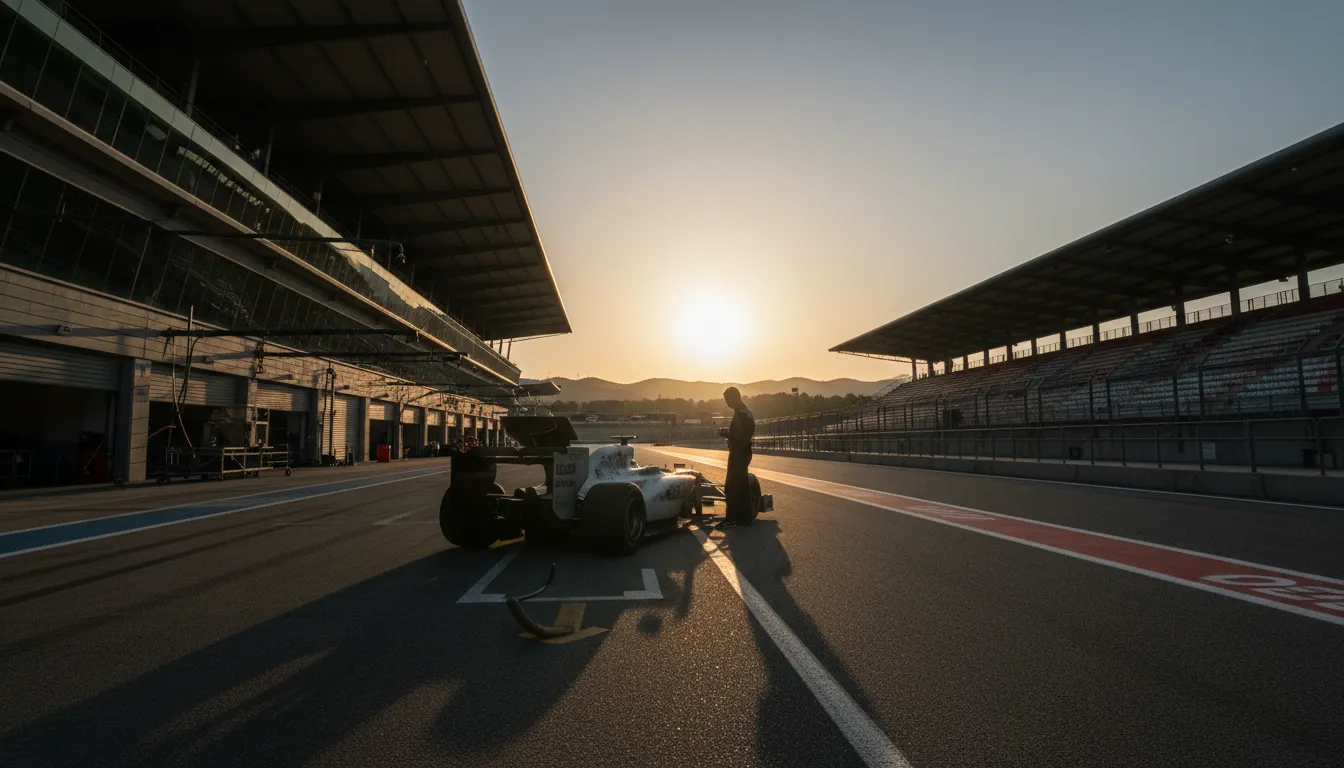
The Little Flap That Changed Formula 1
For more than a decade, one of the most recognizable sounds in Formula 1 was the faint click of a rear wing opening at 300 km/h — the Drag Reduction System, better known as DRS, kicking in. Introduced in 2011, DRS became one of the sport's most debated features: loved by fans who craved overtaking, loathed by purists who felt it cheapened the racing. After 15 seasons, Formula 1 finally retired it in 2026. Here is what it was, how it worked, and why it became so divisive.
How DRS Works
At its core, DRS is elegantly simple. An adjustable flap on the car's rear wing can be opened by the driver pressing a button on the steering wheel. When opened, the wing's angle decreases sharply, slashing aerodynamic drag — the air resistance that slows the car on straights. The result: a speed gain of roughly 10–12 km/h on a straight, enough to pull alongside a rival and complete a pass.
The physical mechanism relies on a hydraulic or pneumatic actuator mounted inside the rear wing. A signal from the driver's button travels to the FIA-standard electronic control unit, which triggers the actuator to rotate the upper wing element to a pre-set open position. When the driver brakes for a corner or the system detects a limit, the flap snaps shut — restoring downforce for cornering stability.
Critically, the system does not increase engine power. It purely reduces drag, making the car more aerodynamically slippery for straight-line speed.
The Rules Around Using It
DRS is not a free-for-all. The FIA defines specific DRS zones at each circuit — typically long straights — and a detection point located before the zone. A driver may only activate DRS if two conditions are met:
- They are within one second of the car ahead at the detection point.
- They are inside an officially designated DRS zone.
During qualifying, DRS is open to any driver at any time, since the goal is maximum speed rather than overtaking. In the race, it is disabled in the first two laps and in wet or safety-car conditions.
Why It Was Introduced
DRS was a direct response to a crisis of on-track action. Modern F1 cars generate enormous amounts of aerodynamic turbulence — dirty air — which destabilizes any car that follows closely. By the late 2000s, passing had become so rare that many races felt processional.
The tipping point came at the 2010 Abu Dhabi Grand Prix, where Fernando Alonso spent virtually the entire race trapped behind the slower Renault of Vitaly Petrov, unable to pass, and lost the world championship as a result. That race crystallized the overtaking problem, and the FIA introduced DRS for 2011 alongside the return of KERS (kinetic energy recovery), aiming to inject wheel-to-wheel racing back into the sport, according to Formula 1's official explainer.
The Controversy: Artificial Overtaking?
DRS achieved its goal — overtaking numbers rose significantly — but the debate never went away. Critics argued the system was a band-aid over a structural problem rather than a genuine fix.
The central complaint: the defending driver cannot use DRS while being attacked, turning what should be a battle into a foregone conclusion. On circuits with long DRS zones, the chasing car would simply blast past before the braking zone — no outbraking manoeuvre, no skill, no drama. Fans began calling these moves "drive-bys."
A second problem was the so-called "DRS train" — a line of cars all within one second of each other, each held back by the turbulent air in front, unable to pass even with the system active. DRS solved individual battles but could not break the fundamental dirty-air problem.
Drivers themselves were divided. Some welcomed the ability to attack; others, particularly those defending, resented feeling powerless, as documented extensively in Wikipedia's analysis of the system.
What Replaced DRS: Active Aerodynamics
Formula 1's sweeping 2026 technical regulations abolished DRS and replaced it with a fully active aerodynamics system. For the first time, F1 cars can dynamically adjust both front and rear wing angles depending on where they are on track — not just in fixed zones.
The system operates in two modes: Z-Mode (cornering), where wings close to maximize downforce, and X-Mode (straights), where both wings open to reduce drag. Crucially, unlike DRS, any driver can activate X-Mode on straights — not just those within one second of the car ahead. A separate Overtake Mode delivers extra electrical power to drivers running within one second of a rival, replacing DRS's overtaking function with a more sophisticated energy-based boost, as detailed by Sky Sports F1 and Motorsport.com.
A System That Defined an Era
Whatever its flaws, DRS fundamentally shaped Formula 1 for a generation. It prolonged careers, altered team strategies, influenced car design philosophies, and sparked arguments that filled paddock press conferences for 15 years. Its retirement marks a genuine turning point — Formula 1 betting that smarter aerodynamics can deliver the same excitement without the artificial shortcut. Whether that wager pays off will be tested on tracks around the world.