What Is Kharg Island and Why It Controls Iran's Oil
A 22-square-kilometre coral outcrop in the Persian Gulf handles roughly 90% of Iran's crude oil exports. Here is how Kharg Island works, why it became indispensable, and what its destruction would mean for global energy markets.
A Coral Outcrop With Outsized Power
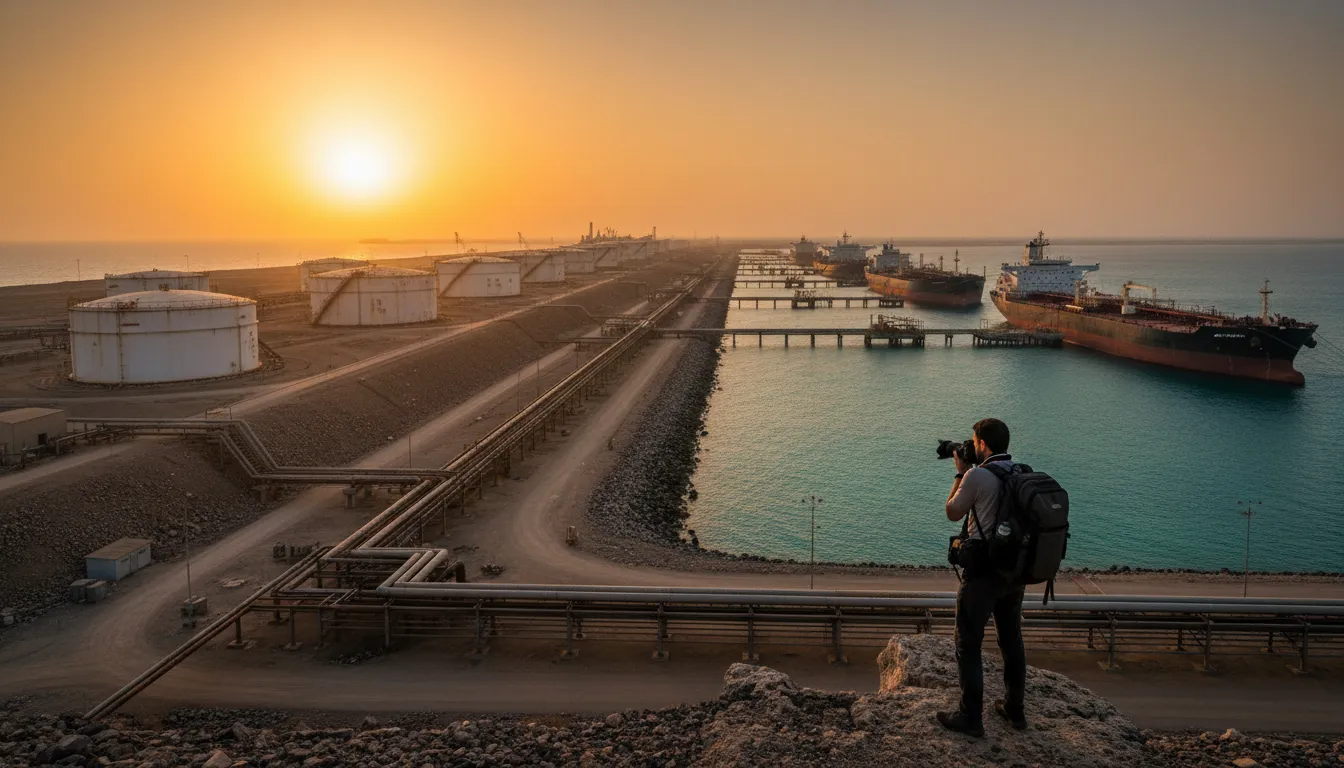
Roughly 25 kilometres off Iran's southwestern coast, a coral island sits in the northern Persian Gulf — just 22 square kilometres in area, with no major city and a modest population. Yet Kharg Island processes approximately 90% of Iran's crude oil exports, handling around 950 million barrels every year. Few pieces of geography this small carry such outsized weight in the global economy.
Why Kharg Became Irreplaceable
Iran's oil fields are located far inland, and most of the country's coastline is too shallow for the massive supertankers — formally called Very Large Crude Carriers (VLCCs) — that ferry oil to global markets. Kharg is a rare exception: deep water surrounds the island, allowing VLCCs carrying up to two million barrels to berth directly at the terminal's jetties.
Crude oil from three major offshore fields — Aboozar, Forouzan, and Dorood — arrives via subsea pipelines, is processed on the island, then stored in tank farms holding up to 31 million barrels. At peak capacity, the facility can load 10 supertankers simultaneously and push roughly 7 million barrels per day into the market. Few oil terminals anywhere in the world match that throughput.
From Prison Island to Energy Hub
Kharg's strategic value predates oil. The Portuguese seized it during their colonial expansion, followed by the Dutch East India Company, which built a fort there in 1752. Local forces expelled the Dutch in 1766. In the 20th century, Reza Shah Pahlavi used the isolated island as a place of political exile. Its transformation into an oil hub began in 1958, when the terminal was first commissioned.
After Iran's 1979 Islamic Revolution, Kharg's role became even more central. With pipeline routes through neighboring countries deemed politically unreliable, Tehran concentrated almost all its seaborne export infrastructure on a single island — a decision driven by geopolitics but one that created a structural vulnerability that has never been fully resolved.
Attacked Before — and Still Standing
During the Iran-Iraq War (1980–1988), Iraqi aircraft repeatedly bombed Kharg in an effort to cut off Iran's oil revenues and cripple its war economy. The strikes caused serious damage. Iran's response was improvised but ingenious: it constructed floating offshore loading platforms — nicknamed "Sea Island" terminals — further south in the Gulf, allowing tankers to load crude from a safer distance.
The war demonstrated both the island's vulnerability and Iran's determination to protect its export capacity at almost any cost. Today, Kharg is heavily militarized and operated under the oversight of the Islamic Revolutionary Guard Corps.
Is There a Backup?
Iran has invested in one significant alternative: the Jask terminal, located on the Gulf of Oman south of the Strait of Hormuz, which Iran completed in 2021. The advantage is strategic — oil exported from Jask bypasses the Strait of Hormuz entirely, removing a potential choke point. But Jask's capacity tops out at roughly 300,000 barrels per day, a fraction of what Kharg handles daily. For the foreseeable future, no realistic substitute exists.
The Global Stakes
Most of Iranian crude is sold to China, which purchases it at a discount despite Western sanctions. Kharg is the funnel through which that revenue — tens of billions of dollars annually — flows into the Iranian state budget.
Analysts estimate that knocking Kharg offline could push global oil prices to $150 per barrel or beyond — a level that would inflict severe economic pain on energy-importing nations worldwide. This creates a strategic paradox: the island's very importance may offer it a measure of protection, since any aggressor must weigh the global economic shock that would follow its destruction.
A Single Point of Failure
What distinguishes Kharg from the infrastructure of other major oil producers is its extreme concentration of risk. Saudi Arabia splits exports between Ras Tanura and Yanbu. Russia ships from Novorossiysk and Primorsk. Iraq operates Basra Oil Terminal separately from onshore loading points. Iran's near-total dependence on one small island is an anomaly among major producers — the product of sanctions, regional wars, and decades of underinvestment in diversified infrastructure.
For anyone trying to understand how the global oil market works, Kharg Island is a striking reminder that the flow of energy — still the lifeblood of the modern economy — can hinge on a single coral outcrop, its pipelines, and its jetties in the Persian Gulf.