What Is the Druzhba Pipeline and Why Europe Depends on It
The Druzhba pipeline is the world's longest oil pipeline network, stretching 4,000 km from Russia into Central Europe. Built in the Soviet era, it still shapes European energy policy, sanctions debates, and geopolitics today.
A Soviet Relic at the Heart of European Energy
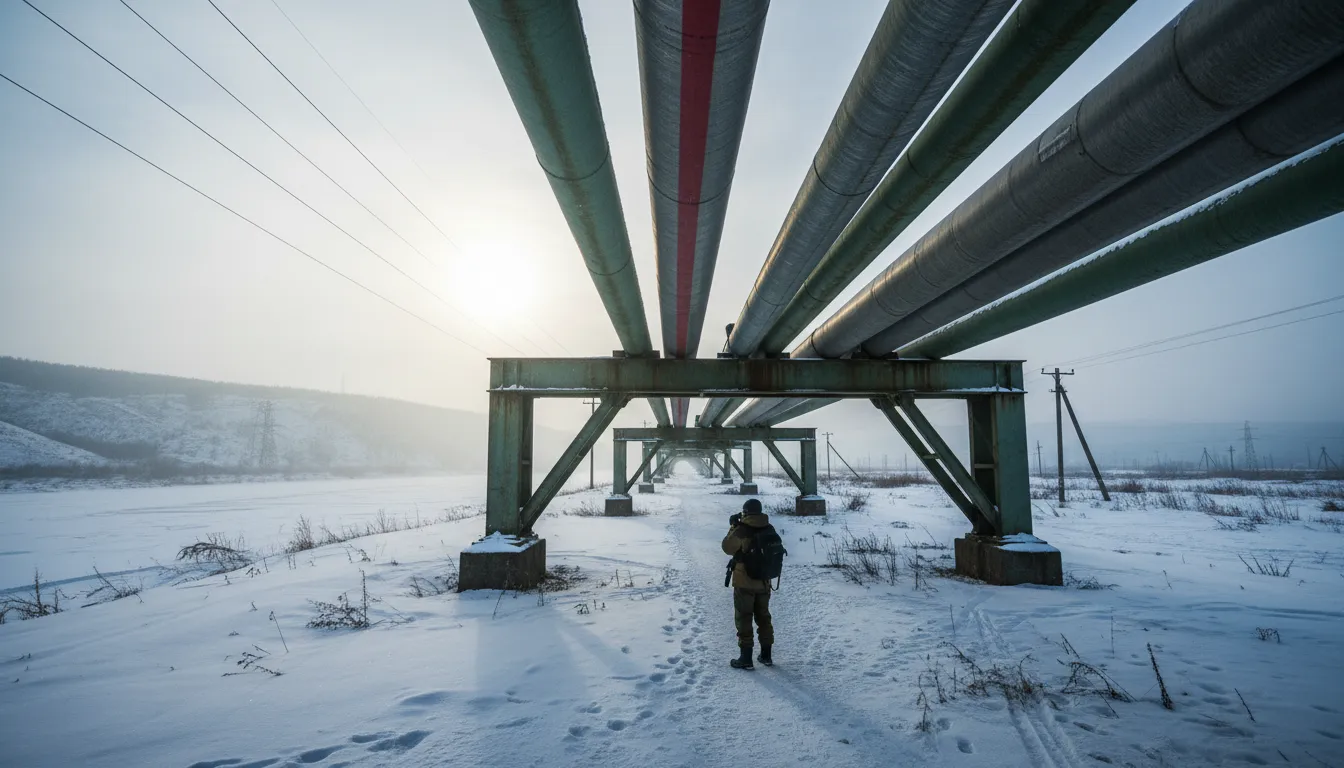
Few pieces of infrastructure carry as much geopolitical weight as a network of rusting Soviet-era pipes. The Druzhba pipeline — whose name means "friendship" in Russian — stretches roughly 4,000 kilometres from the oil fields of Tatarstan and Western Siberia all the way into the heart of Central Europe. Built during the Cold War to bind the Soviet bloc together through shared energy, it remains one of the most consequential oil arteries on the planet.
How the Pipeline Was Built and Why
Construction of Druzhba began in 1960, following an agreement signed in December 1958 among the USSR, Poland, Czechoslovakia, East Germany, and Hungary. The pipeline was conceived as economic infrastructure for the Council for Mutual Economic Assistance (Comecon) — the Soviet-led trading bloc — and its first full section entered operation in October 1964.
The rationale was straightforward: the USSR was sitting on vast oil reserves, and its satellite states needed cheap, reliable energy to fuel their industrialisation. Rather than shipping crude oil by rail or sea, Moscow invested in a dedicated overland pipeline that would deliver Ural crude directly to Eastern European refineries. Those refineries were subsequently engineered specifically to process heavy, high-sulphur Urals-grade crude — a deliberate design choice that locked recipient countries into the system for decades.
The Route: Two Branches, Many Destinations
The pipeline originates in Almetyevsk, Tatarstan, where oil from Western Siberia, the Urals, and the Caspian basin is collected. It then runs westward before splitting at Mozyr in Belarus into two main branches:
- Northern branch: Runs through Belarus and Poland into Germany, with a capacity of approximately 490,000 barrels per day.
- Southern branch: Traverses Ukraine to supply Hungary, Slovakia, and the Czech Republic, handling around 245,000 barrels per day.
At peak operation, the entire network pumped over 1.2 million barrels per day — equivalent to roughly 1 percent of total global oil supply at the time. Even today, despite years of partial rerouting and diversification, the southern branch supplies an estimated 60–70 percent of Hungary's and Slovakia's total oil needs.
Why Some Countries Cannot Simply Switch
The dependency on Druzhba is not merely political — it is engineering reality. Hungary's MOL refinery and Slovakia's Slovnaft plant were both designed and calibrated specifically to process Urals crude. Switching to lighter North Sea or Middle Eastern grades requires costly retrofits. Both countries are also landlocked, meaning they have no direct access to seaborne oil imports. The closest viable alternative is the Adria pipeline running north from the Croatian port of Rijeka — a route that exists but has limited capacity and would require significant investment to scale up.
The Czech Republic offers a useful contrast. Prague gradually diversified away from Druzhba after 2022, importing Norwegian crude via the Italian port of Trieste and sourcing oil from Azerbaijan. By 2025, Russian oil had fallen from roughly 50 percent of Czech supply to under 10 percent — achieved through sustained investment and political will.
The Sanctions Problem
When the European Union imposed sweeping sanctions on Russian oil following the full-scale invasion of Ukraine in 2022, the Druzhba pipeline became a major sticking point. The EU's sixth sanctions package banned seaborne Russian oil imports — but carved out an explicit exemption for pipeline deliveries to landlocked member states. This exemption had no defined end date and was primarily designed to protect Hungary and Slovakia.
The exemption has had far-reaching consequences. Because EU sanctions require unanimity, Hungary — led by Prime Minister Viktor Orbán, who has maintained close ties with Moscow — has repeatedly used the pipeline issue as leverage to block or water down measures against Russia. In early 2026, Hungary and Slovakia vetoed both the EU's 20th sanctions package and a €90 billion loan to Ukraine, citing the disruption of Druzhba flows as justification.
Transit Fees and the Ukraine Factor
Ukraine sits directly in the path of the southern branch and has historically earned transit fees from Russian oil moving through its territory. The revenue disparity, however, has been stark: Russia earned roughly $6 billion annually from oil sold through the Ukrainian section, while Ukrtransnafta — Ukraine's state pipeline operator — received only around $240 million in transit fees. That imbalance fed recurring disputes over tariff rates long before the war began.
Since Russia's full-scale invasion, infrastructure along the route has been repeatedly struck. Ukrainian authorities have blamed Russian drone attacks for damaging pumping stations; Russia has blamed Ukrainian military operations. Either way, the pipeline has become a hostage of the conflict, with supply interruptions in 2025 and 2026 plunging Slovakia and Hungary into acute energy tensions with Kyiv.
What Comes Next
The European Commission has proposed a regulation targeting a complete halt to Russian oil imports by the end of 2027, including pipeline deliveries. Whether that deadline holds depends largely on how quickly Hungary and Slovakia can build alternative supply infrastructure — and on the political will of their governments to prioritise EU solidarity over cheaper Russian crude. The Adria pipeline through Croatia is the most credible short-term alternative, but expanding it to cover full demand would take years and significant capital investment.
For now, Druzhba remains what it has always been: a physical embodiment of Europe's unresolved relationship with Russian energy — built to create dependency, and proving remarkably difficult to escape.