What Is Indian Wells and Why It's Tennis's Fifth Grand Slam
The BNP Paribas Open at Indian Wells is the most prestigious tennis tournament outside the four Grand Slams — a two-week desert spectacle with a 16,100-seat stadium, massive prize money, and a history as dramatic as any Major.
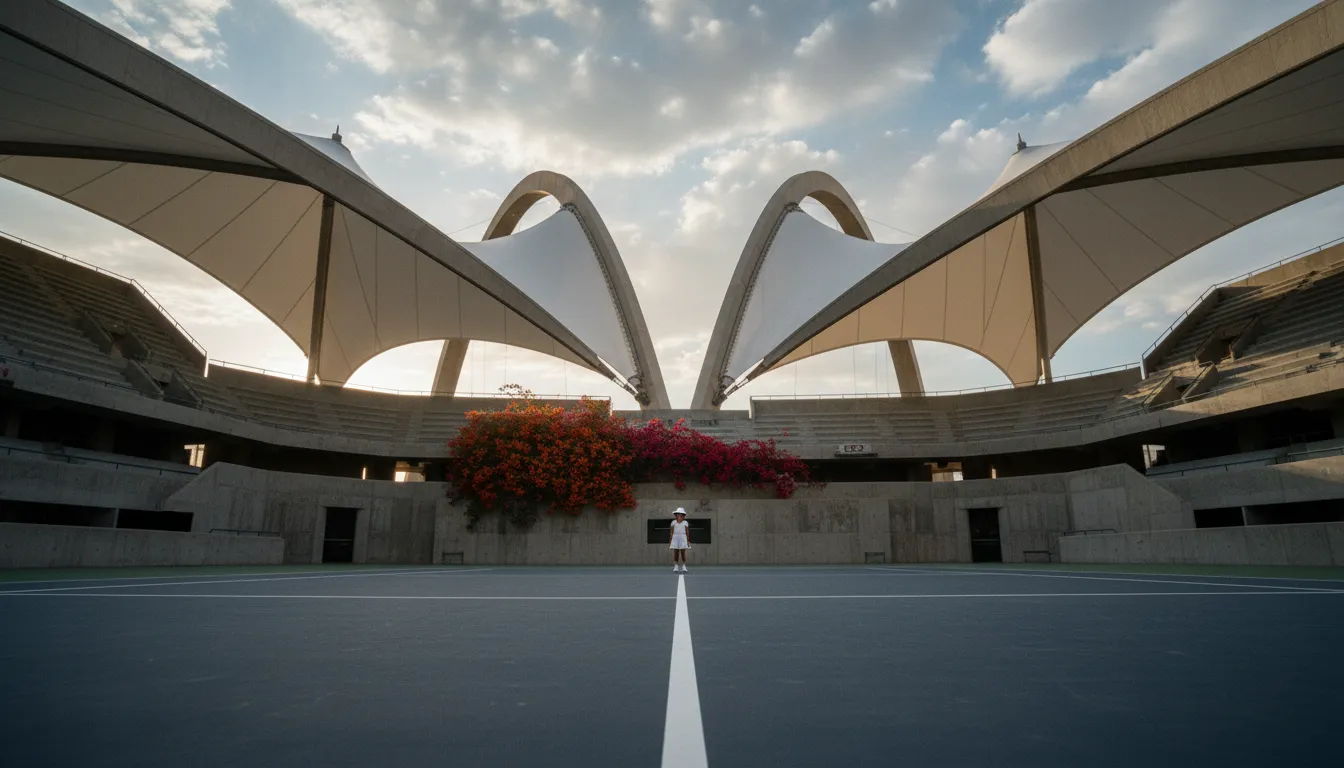
A Tennis Oasis in the California Desert
Every March, the tennis world migrates to the Coachella Valley — a sun-scorched expanse of palm trees and mountains east of Los Angeles — for what many consider the sport's unofficial fifth Grand Slam. The BNP Paribas Open at Indian Wells is not a Major in the formal sense, but in terms of prestige, attendance, prize money, and sheer spectacle, it stands apart from every other tournament that is not one of the four Slams.
The question people most often search is simple: what exactly is Indian Wells, and why does it matter so much? The answer is rooted in a gamble taken in the California desert decades ago — and in the sport's evolving relationship with money, gender equality, and even racial justice.
Origins: 88 Acres of Sand and Ambition
The tournament traces its origins to 1974, but its modern identity began when former professional player Charlie Pasarell and his partners purchased 88 acres of raw desert land in Indian Wells, near Palm Springs. Critics were skeptical: every other major tournament in the world is anchored to a metropolis — New York, London, Paris, Melbourne. A luxury sports destination in the middle of the Sonoran Desert seemed far-fetched.
Pasarell proved the doubters wrong. The Indian Wells Tennis Garden opened with a 16,100-seat Stadium 1 — the second-largest outdoor tennis stadium in the world, surpassed only by Arthur Ashe Stadium at the US Open. In total, the complex spans 29 courts across a meticulously maintained grounds that players routinely call their favourite stop on tour.
What Makes It a "Fifth Grand Slam"?
Indian Wells earns the informal title through a combination of factors that set it far above a standard Masters 1000 event:
- Scale of the draw: Both the men's ATP and women's WTA fields feature 96-player draws — unusually large for non-Slam events — and the tournament runs for two full weeks, matching the Grand Slam calendar.
- Combined event: Since 2000, Indian Wells has been one of the very few tournaments to run the men's and women's competitions simultaneously under one roof, creating an atmosphere that rivals any Major.
- Attendance: The 2024 edition drew over 493,000 spectators — more than any tennis tournament outside the four Grand Slams.
- Prize money: The 2026 total purse stands at over $9.4 million, with the singles champion pocketing more than $1.1 million. Since BNP Paribas became title sponsor in 2009, prize money has grown by more than 138%.
- Equal pay: Indian Wells began offering identical prize money to men and women in 2012, ahead of many Slams in formalising that commitment.
The Controversy That Defined a Generation
No account of Indian Wells is complete without its most painful chapter. In 2001, Venus Williams withdrew from a semifinal against her sister Serena minutes before the scheduled start, citing injury. The packed crowd, given no advance warning, turned hostile. When a 19-year-old Serena took the court for the final — which she won — she was met with sustained booing. Their father, Richard Williams, reported hearing racial slurs from the stands.
The sisters boycotted Indian Wells for 13 years. Serena finally returned in 2015, describing the decision as an act of personal forgiveness; the crowd greeted her with a standing ovation. Venus returned in 2016. The episode remains one of professional tennis's most sobering reminders that elite sport does not exist in a social vacuum.
Why Players Love It
Beyond the history and the drama, Indian Wells has cultivated a reputation as one of the most player-friendly stops on tour. The desert air is dry and clear, conditions are consistently fast, and the facilities — from practice courts to player lounges — are widely praised. The tournament also introduced a mixed doubles exhibition, the Eisenhower Cup, in 2024, adding another layer of novelty to an already packed programme.
For fans, Indian Wells offers something the Grand Slams cannot always guarantee: accessibility. Tickets, while in demand, are obtainable; the grounds are walkable; and the backdrop of the Santa Rosa Mountains provides a setting unlike any other in sport.
Where It Sits in the Tennis Calendar
Indian Wells opens the hard-court swing that defines the early season. It arrives after the Australian Open and before the European clay season, meaning the world's best players arrive fresh and motivated. Winning here carries enormous ranking points — 1,000 for both ATP and WTA — and counts as one of the most coveted titles outside a Grand Slam. Champions like Roger Federer (five titles), Novak Djokovic, Rafael Nadal, and Carlos Alcaraz have all treated their Indian Wells trophies with the reverence ordinarily reserved for Majors.
The "fifth Grand Slam" label is unofficial, but it is honestly earned. In the Coachella Valley's desert light, surrounded by mountains and 16,000 cheering fans, it is easy to forget the distinction matters at all.