What Is the House of Lords and How Does It Work?
The House of Lords is the unelected upper chamber of the UK Parliament. It scrutinises legislation, holds the government to account, and can delay — but not permanently block — laws passed by elected MPs.
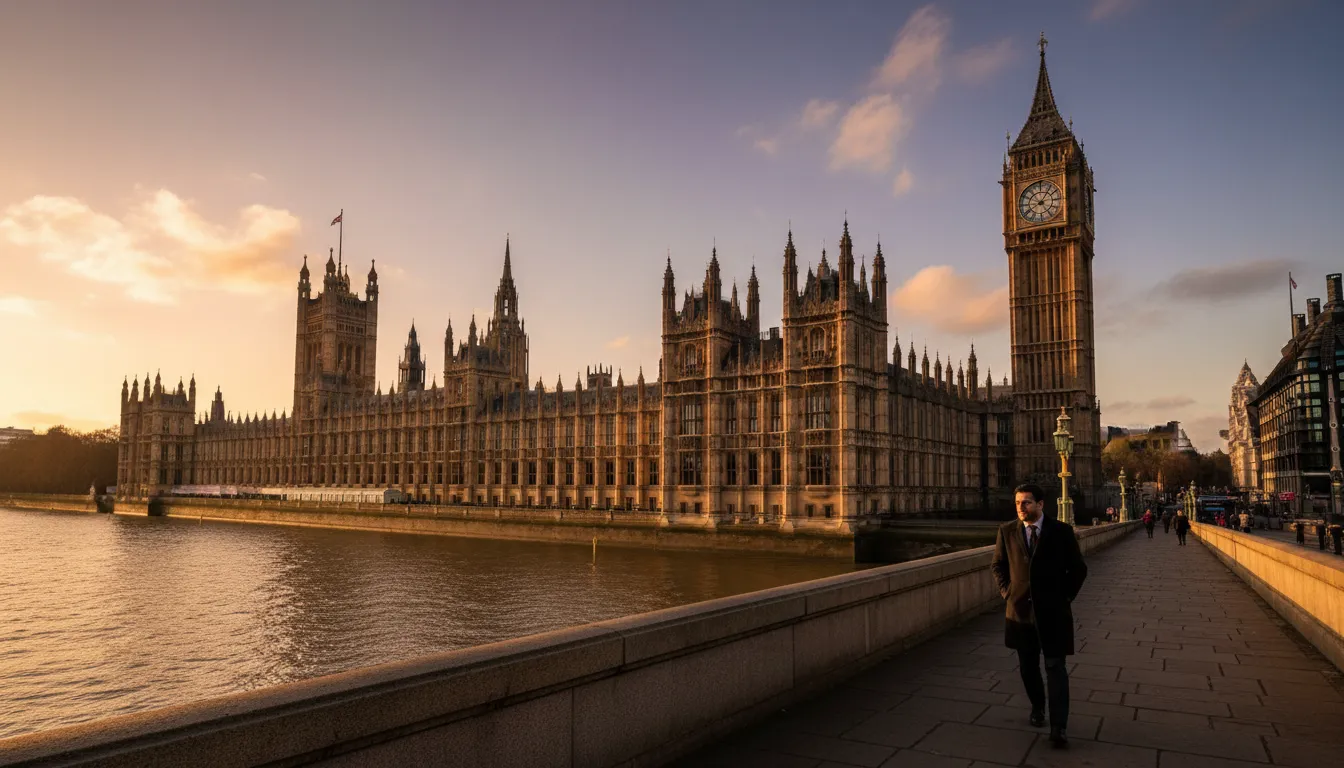
Britain's Unelected Chamber
Most democracies have two houses of parliament. In the United Kingdom, one of them — the House of Lords — has no elected members at all. Its roughly 800 members are appointed, inherited their seats by birth, or hold them by virtue of being senior Church of England clergy. It is one of the oldest legislative bodies in the world, and one of the most debated.
Far from being a rubber stamp, the Lords plays a genuine constitutional role: revising legislation, scrutinising executive power, and — within strict limits — slowing down laws it considers flawed. Understanding how it works helps explain why British governments sometimes struggle to pass even their own flagship bills.
A Brief History
The House of Lords traces its roots to the 11th century, when Anglo-Saxon kings consulted councils of religious leaders and powerful nobles. By the 13th and 14th centuries, these councils had evolved into a recognisable Parliament with two distinct chambers. For most of its history, the Lords was the more powerful of the two — until industrialisation and democratic reform shifted authority toward the elected Commons.
The Parliament Act of 1911 was the turning point. Passed after the Lords repeatedly blocked the Liberal government's budget, it stripped the upper house of the power to veto most legislation. Instead, the Lords could only delay bills — originally for up to two years, then reduced to one year by the Parliament Act of 1949. Since then, the Lords has been constitutionally subordinate to the Commons.
Who Sits in the House of Lords?
The Lords has three main categories of member:
- Life peers — the largest group, nearly 700 people appointed by the monarch on the advice of the Prime Minister. Appointments are for life and the title does not pass to children.
- Hereditary peers — lords whose right to sit derived from an inherited title. The House of Lords Act 1999 reduced their number from several hundred to just 92, chosen by election among all hereditary peers. A 2024–25 reform bill subsequently removed even these remaining 92, ending centuries of birthright membership.
- Lords Spiritual — 26 senior Church of England bishops and archbishops, including the Archbishop of Canterbury and Archbishop of York.
Unlike elected MPs, peers are not paid a salary. They receive a daily attendance allowance and are expected to contribute expertise rather than represent a constituency.
What Does the House of Lords Actually Do?
The Lords divides its time roughly 60/40 between legislation and scrutiny.
Revising Laws
Every bill passed by the House of Commons must also pass through the Lords before it can become an Act of Parliament. Peers examine bills line by line, often catching technical errors, unintended consequences, or civil liberties concerns that busy MPs missed. Because many life peers are former ministers, judges, scientists, or senior professionals, this expertise can genuinely improve legislation.
Delaying and Amending
If the Lords disagrees with a bill, it can send it back to the Commons with amendments, triggering a process known as ping-pong — the bill bounces between chambers until both agree. If the Lords refuses to pass a bill at all, the Parliament Acts allow the Commons to override the Lords after one year, bypassing the upper house entirely. This nuclear option is rarely used: since 1949 it has been invoked only four times.
The Salisbury Convention
An important constitutional convention further constrains the Lords. Under the Salisbury Convention, the upper house should not defeat legislation at second or third reading if it was explicitly promised in the governing party's election manifesto. This unwritten rule preserves electoral legitimacy — a government with a Commons majority cannot be indefinitely blocked by an unelected chamber.
Scrutiny and Committees
About 40% of the Lords' time is spent questioning ministers and investigating public policy through committees. In a single year, Lords committees can publish dozens of reports — on topics ranging from water regulation and artificial intelligence to defence and education — and hear thousands of witnesses from outside Parliament.
The Reform Debate
Critics argue that an appointed, unelected chamber is incompatible with modern democracy. Defenders counter that precisely because peers do not depend on votes, they can scrutinise legislation more independently than career politicians. Proposals for a fully elected second chamber have circulated for decades but have never passed — partly because an elected Lords might claim a democratic mandate to rival the Commons, creating gridlock.
The removal of hereditary peers in 2024–25 is the most significant structural change since 1999, but reformers argue it is only a first step. Debates about size, appointments process, and whether the chamber should eventually be elected continue to define British constitutional politics.
Why It Matters Beyond Britain
The House of Lords matters as a case study in upper-chamber design. Many democracies wrestle with the same question: how do you create a revising body that adds expertise and prevents hasty law-making without undermining the primacy of elected representatives? Britain's answer — imperfect, centuries old, and still evolving — offers lessons for constitutional designers everywhere.