WHO Seeks $1 Billion as Health Crises Outpace Funding
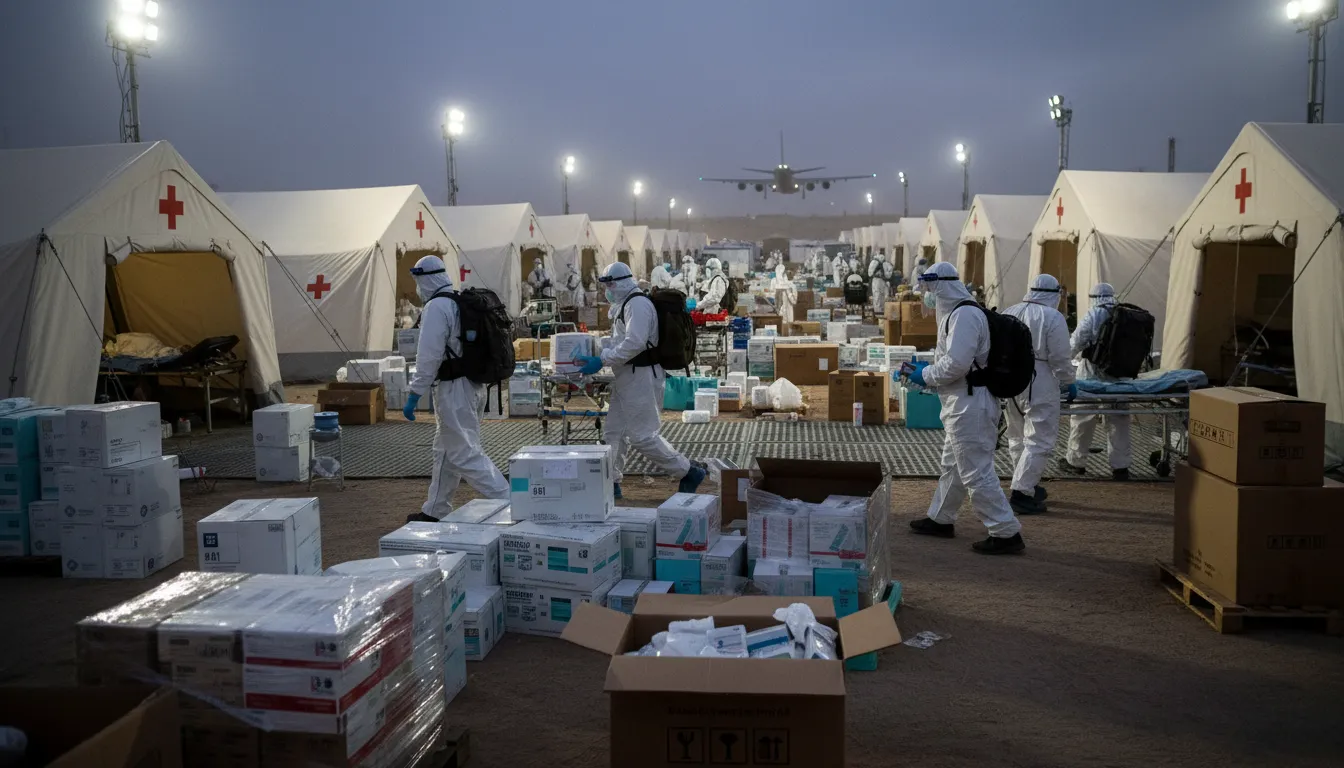
The World Health Organization launched a nearly $1 billion appeal for 2026 to address 36 emergencies worldwide, warning that shrinking aid budgets and rising global threats are leaving billions without essential healthcare.
A Scaled-Back Appeal in an Era of Growing Need
The World Health Organization on February 3 launched its 2026 global health emergency appeal, seeking nearly $1 billion to respond to 36 crises across the globe. The figure represents a stark one-third reduction from the $1.5 billion the agency requested in 2025 — a concession to the harsh reality that donors contributed only $900 million last year.
Among the 36 emergencies, 14 are classified as Grade 3 — the highest severity level in WHO's system — requiring maximum organizational response. Priority settings include Sudan, Gaza, Afghanistan, Haiti, the Democratic Republic of the Congo, Ukraine, Yemen, Somalia, South Sudan, Syria, and Myanmar, alongside ongoing cholera and mpox outbreaks.
"This appeal is a call to stand with people living through conflict, displacement and disaster — to give them services and confidence that the world has not abandoned them," said WHO Director-General Tedros Adhanom Ghebreyesus, who described 2025 as one of the organization's most difficult years.
Funding Collapse Meets Escalating Demand
The appeal arrives amid what WHO calls the sharpest decline in humanitarian and health financing in a decade. In 2025, global humanitarian funding fell below 2016 levels, leaving the organization able to reach only one-third of the 81 million people originally targeted for health assistance.
The funding squeeze has had devastating consequences on the ground. According to WHO data, approximately 6,700 health facilities across 22 humanitarian settings closed or reduced services in the past year, cutting off an estimated 53 million people from care.
The United States' formal withdrawal from WHO on January 22 has further complicated the financial picture. While the U.S. was not the primary contributor to the emergency appeal specifically, its departure from the broader WHO budget — which is shrinking from $5.3 billion to $4.2 billion — reverberates across all operations. The European Union, Saudi Arabia, and Germany now lead contributions to the emergency appeal.
Billions Still Without Basic Health Services
Beyond acute emergencies, WHO's appeal underscores a deeper global health crisis. An estimated 4.6 billion people still lack access to essential health services, while 2.1 billion face financial hardship due to healthcare costs. An estimated 239 million people worldwide require humanitarian assistance in 2026.
Tedros placed the figures in pointed context, noting that global defense spending now exceeds $2.5 trillion annually — dwarfing the sums needed for health emergency response. Meanwhile, antimicrobial resistance is worsening, with one in six bacterial infections now resistant to antibiotics, and a projected global shortage of 11 million healthcare workers looms by 2030.
Doing More With Less
WHO emergency chief Chikwe Ihekweazu said the organization is "focusing on those most in need, where we can save the most lives." Rather than withdrawing from crisis zones entirely, WHO plans to maintain presence across all 36 emergency settings but at reduced capacity, hyper-prioritizing the highest-impact services while scaling back lower-priority activities.
Despite the constraints, the 2025 record shows what emergency funding can achieve: WHO and partners supported 30 million people, vaccinated 5.3 million children, facilitated 53 million health consultations, kept more than 8,000 health facilities running, and deployed 1,370 mobile clinics.
"Solidarity is the best immunity," Tedros said, urging donors to view health investment not as charity but as shared security. With pandemic risks undiminished and fragile health systems under mounting pressure, the question facing the international community is whether that solidarity can survive an era of tightening budgets and geopolitical fragmentation.