Mumbai Hosts Inaugural Summit on Multipolar Economics
The first Global Economic Cooperation summit opens in Mumbai on February 17-19, convening senior policymakers, CEOs, and investors to forge new economic partnerships amid slowing global growth and rising trade uncertainty.
A New Forum for a Shifting World
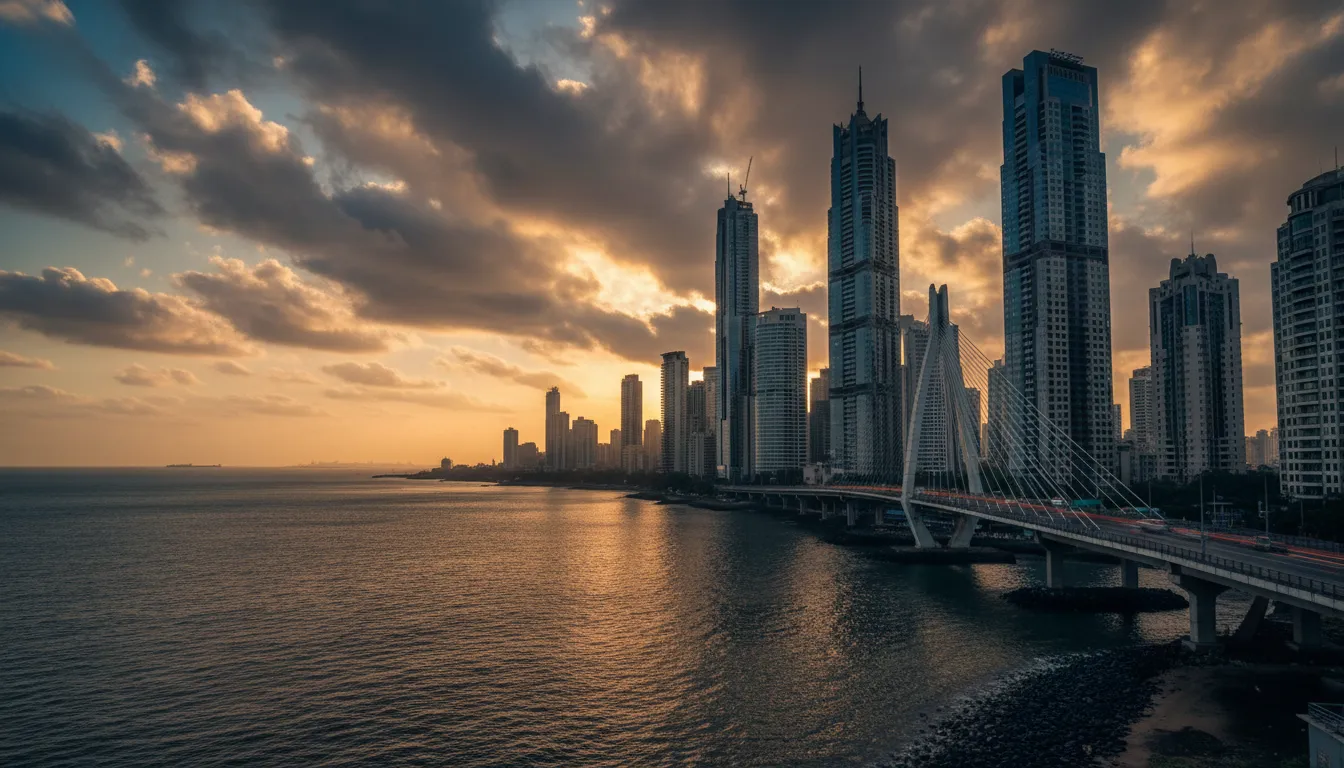
Mumbai is playing host this week to the inaugural Global Economic Cooperation 2026 (GEC), a high-level, invitation-only forum that has drawn senior policymakers, global CEOs, sovereign investors, and leaders of multilateral institutions from across the world. Running from February 17 to 19, the summit aims to redefine economic cooperation for an increasingly multipolar era.
The event is convened by the Future Economic Cooperation Council (FECC), a non-profit platform, in partnership with India's Ministry of External Affairs and the Government of Maharashtra. Maharashtra Chief Minister Devendra Fadnavis serves as Chief Patron of the forum, with directors Vijay Chauthaiwale and Priyam Gandhi-Mody shaping the agenda.
Beyond Traditional Trade
GEC 2026 is designed to move beyond conventional trade-centric engagement. Its high-level plenaries and closed-door dialogues focus on economic corridors, infrastructure financing, digital connectivity, ESG frameworks, advanced manufacturing, energy transitions, and resilient supply chains — areas the organizers see as central to economic sovereignty and global stability.
"The global economy is entering a decisive decade where economies need to protect themselves against fragmentation, protectionism and uncertainty," said Priyam Gandhi-Mody, the summit's curator and founder of the Vishwamitra Research Foundation. Vijay Chauthaiwale emphasized that "economic engagement is inseparable from geopolitics," pointing to India's commitment to rules-based economic frameworks.
The forum brings together ministerial leadership alongside CEOs from critical sectors including infrastructure, logistics, ports, clean energy, AI, fintech, and advanced manufacturing.
A Sobering Economic Backdrop
The summit convenes against a challenging global economic landscape. According to the World Bank's January 2026 Global Economic Prospects report, global growth is projected to ease to 2.6% in 2026 before edging up to 2.7% in 2027. If these forecasts hold, the 2020s will be the weakest decade for global growth since the 1960s.
The World Bank noted that while the global economy has proven more resilient than anticipated despite persistent trade tensions and policy uncertainty, the tailwinds from 2025 are expected to fade as trade and domestic demand soften. About one in four developing economies still has lower per capita incomes than in 2019, underscoring the uneven nature of the recovery.
The IMF's January 2026 outlook offered a slightly more optimistic projection of 3.3% global growth, supported by technology investment and accommodative financial conditions. Yet both institutions flagged fiscal strains and trade fragmentation as persistent risks.
India's Strategic Positioning
By hosting GEC 2026, India is positioning itself as a convening power in global economic diplomacy. The summit coincides with India's 2026 BRICS+ presidency, reinforcing its ambition to serve as a bridge between emerging and advanced economies. India's recent conclusion of a free trade agreement with the EU — creating a zone spanning $24 trillion in combined GDP — further underscores its growing economic heft.
The forum will also launch the Emerging Leaders Circle on its final day, a platform developed in collaboration with the Indian Institutes of Management and Columbia University. The initiative aims to draw young business leaders and future policymakers into structured discussions on global economic innovation — a signal that the organizers view this forum as a long-term institution, not a one-off event.
Outlook
Whether GEC 2026 produces concrete commitments or remains a talking shop will depend on the depth of its closed-door negotiations. But its very existence — a major economic forum launched from India rather than Davos or Washington — reflects the ongoing redistribution of global economic influence. As trade tensions persist and growth slows, the demand for new platforms of cooperation is clear.