171 Bodies Found in Mass Graves After DRC Rebel Retreat
Authorities in the Democratic Republic of Congo have discovered two mass graves containing at least 171 bodies on the outskirts of Uvira, a city recently vacated by the M23 rebel group, deepening concerns about atrocities in one of the world's worst humanitarian crises.
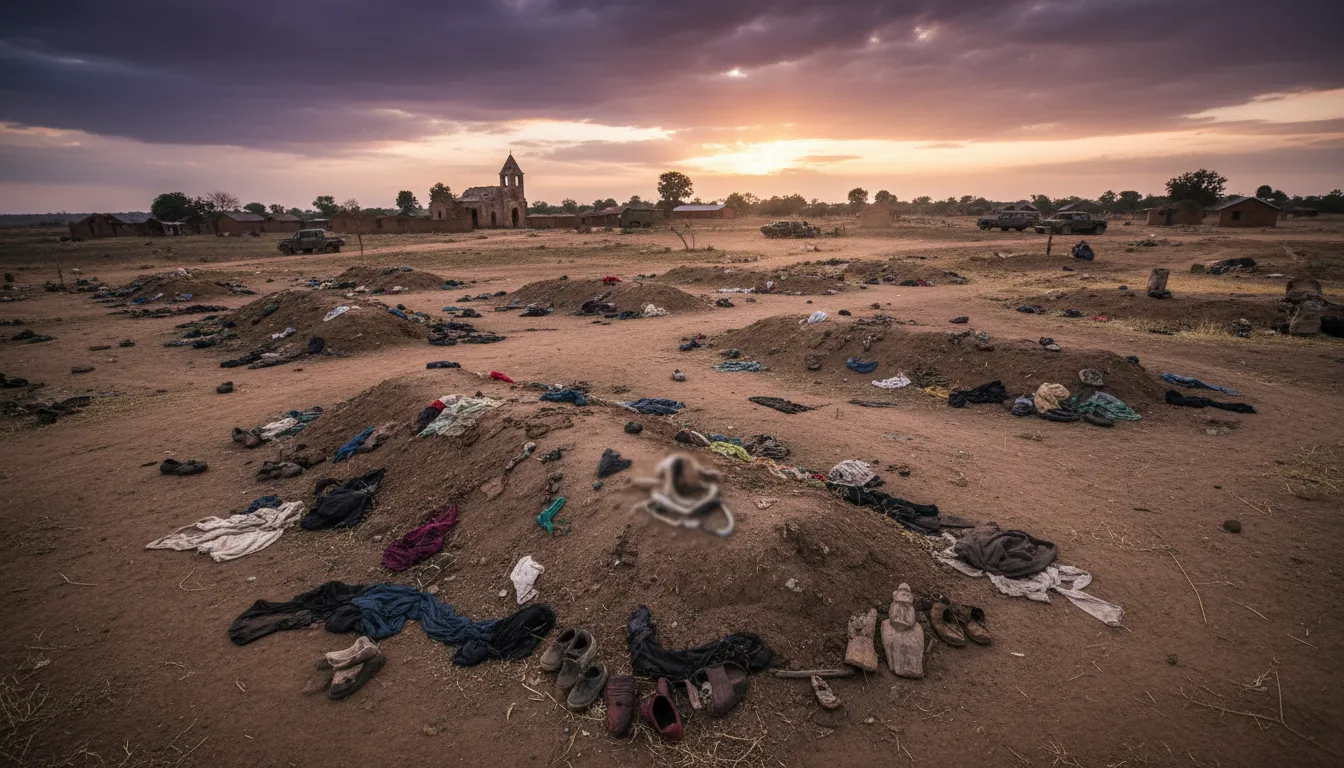
A City Vacated, a Horror Revealed
When M23 rebels announced their withdrawal from the eastern Congolese city of Uvira last week, they called it a "unilateral trust-building measure" aimed at facilitating a U.S.-mediated peace process. What they left behind told a different story. Congolese authorities have now discovered two mass graves on the city's outskirts containing at least 171 bodies — the latest evidence of systematic violence in a conflict that has already shattered millions of lives.
What the Graves Revealed
South Kivu Governor Jean-Jacques Purusi announced the discovery on Friday, February 27. The graves were found in the Kiromoni and Kavimvira neighbourhoods on the fringes of Uvira — a port city on the northwestern shore of Lake Tanganyika, near the Burundian border.
Approximately 30 bodies were recovered from the Kiromoni site. The second grave, in Kavimvira, held 141 victims. According to the governor and local civil society groups, the dead were targeted by M23 fighters who suspected them of being members of the Congolese army or affiliated pro-government militias.
The Executive Secretariat of the Local Network for the Protection of Civilians, a regional monitoring group, also documented the findings — though its representatives were prevented by Congolese military from physically accessing the burial sites. Independent verification of M23's direct responsibility remains ongoing.
A Pattern of Violence in South Kivu
The M23 rebel group, backed by Rwanda according to United Nations experts and Western governments, has conducted an accelerating campaign of territorial conquest across eastern DRC. After seizing Goma — the capital of North Kivu province — in January 2025, and Bukavu, the South Kivu capital, the following month, M23 swept into Uvira in December 2025. That offensive alone killed more than 1,500 people and forced roughly 300,000 residents to flee, according to regional authorities.
The rebels' stated withdrawal from Uvira was framed as a gesture toward peace. In practice, the pullback has exposed what was happening inside the city during their occupation.
The Broader Humanitarian Catastrophe
The mass graves are the latest chapter in what the United Nations has called one of the world's most severe humanitarian emergencies. The conflict in eastern DRC has displaced more than seven million people — a figure that rivals the displacement crises created by the wars in Sudan and Syria. Thousands have been killed. Aid access remains critically constrained across multiple provinces.
Peace talks, brokered in part by Washington, have produced ceasefires that neither side has consistently respected. The discovery of the graves complicates diplomatic efforts and raises urgent questions about accountability for alleged war crimes.
International Pressure Intensifies
Human rights organizations have long documented abuses by both M23 and Congolese government-aligned forces. The scale of the Uvira graves, however, is likely to renew calls for an independent international investigation. The African Union and the United Nations have both called for an end to hostilities, but enforcement mechanisms remain weak.
For millions of Congolese civilians, the mass graves are a grim reminder that political negotiations and symbolic withdrawals mean little when the evidence of atrocities continues to surface in the soil beneath their feet.


