Trump's Tariffs Face 2,000 Lawsuits After Court Blow
The U.S. Supreme Court's 6-3 ruling striking down Trump's IEEPA tariffs has triggered over 2,000 corporate lawsuits seeking refunds on $133 billion already collected—while Trump responds by raising new tariffs to 15% under a different legal authority.
Supreme Court Deals Major Blow to Trump's Trade Agenda
In a watershed ruling on February 20, the U.S. Supreme Court voted 6-3 to strike down President Donald Trump's sweeping import tariffs, declaring that his use of the International Emergency Economic Powers Act (IEEPA) exceeded presidential authority. Chief Justice John Roberts was unequivocal: "IEEPA contains no reference to tariffs or duties… It does not." The decision, in Learning Resources, Inc. v. Trump, reaffirmed that tariff powers belong to Congress—not the Oval Office.
The ruling invalidated duties that had been imposed on imports from China, Canada, Mexico, and dozens of other trading partners under the banner of national emergency. It left untouched, however, tariffs imposed under other statutes—including Section 232 national-security levies on steel and aluminum, and Section 301 duties targeting China for trade violations.
2,000 Lawsuits and $133 Billion on the Line
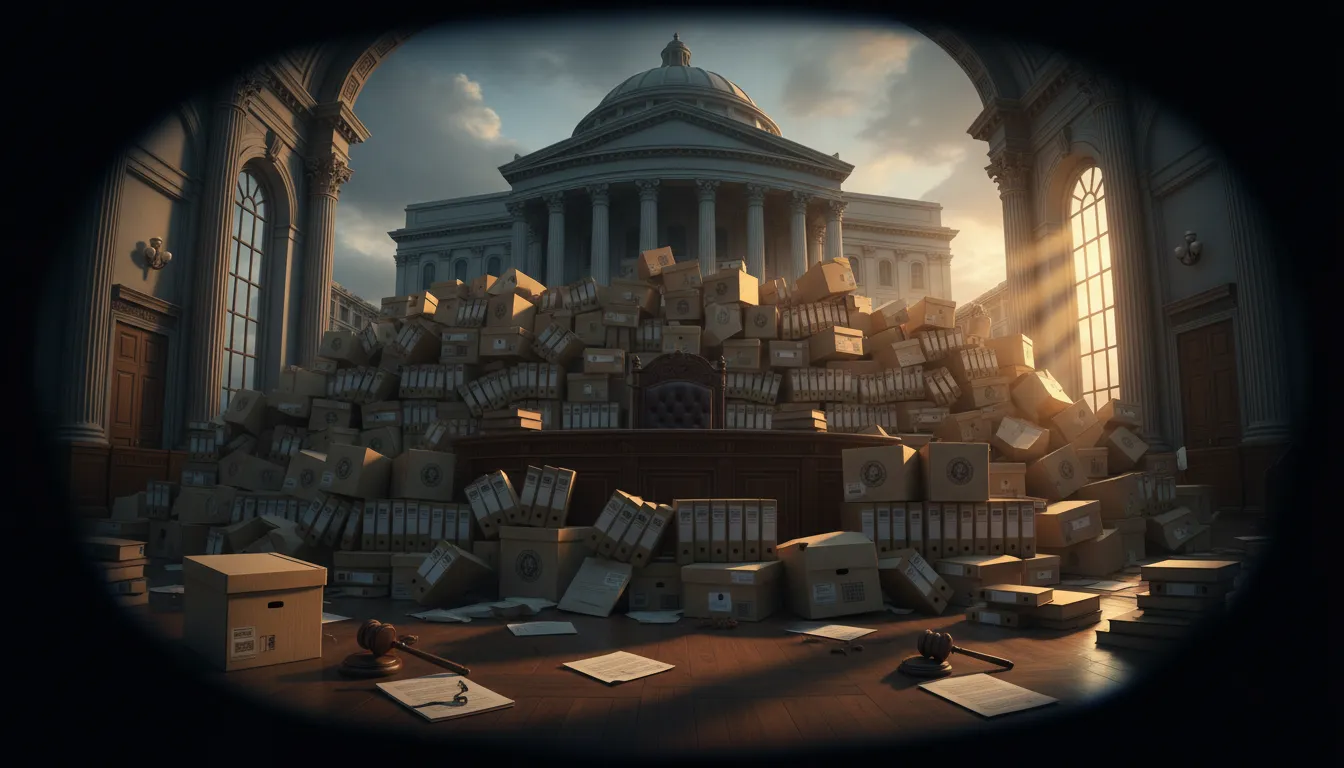
The ruling immediately opened the floodgates to litigation. According to Bloomberg, more than 2,000 lawsuits have now been filed by importers seeking refunds on duties already paid. Federal data shows the U.S. Treasury had collected over $133 billion in IEEPA tariffs before the ruling.
High-profile plaintiffs include FedEx, Dyson, Dollar General, Bausch & Lomb, Brooks Brothers, L'Oréal, shoe brands On Holding and Skechers, and Sol de Janeiro USA. The volume of claims underscores deep corporate anxiety that the administration will resist returning billions in collected revenue. Processing the refunds alone could take months, analysts warn.
Trump Pivots—and Escalates
Rather than retreat, Trump moved within hours of the decision. He invoked Section 122 of the Trade Act of 1974—a seldom-used provision allowing a president to impose tariffs when the U.S. faces "fundamental international payments problems"—and immediately slapped a fresh 10% global tariff on all imports, effective through July 24, 2026. Days later, he announced an increase to 15%, effective immediately.
Legal experts at the Council on Foreign Relations cautioned that the Section 122 move faces its own vulnerabilities: the statute's "fundamental payments problems" threshold is difficult to meet under modern floating exchange rates, setting up another potential court challenge.
Global Markets and Allies Reassess
The ruling sent ripples across trading partners already navigating months of tariff uncertainty. According to Al Jazeera, China stands to see its average U.S. tariff rate drop from roughly 36% to 21%—partial relief for an economy under pressure. Beijing described the situation as an opportunity to reset relations ahead of Trump's planned April visit.
The European Union, which struck a trade deal with Washington last August capping exports at 15%, pushed back sharply on the escalation. "A deal was a deal," EU officials said, demanding full clarity. South Korea and India, both in the middle of bilateral trade negotiations, recalibrated their strategies. Canada welcomed the ruling but noted that Section 232 duties on steel, aluminum, and automobiles remain fully in force.
A New Legal Battlefield
The ruling does more than invalidate one set of tariffs—it reconfigures the entire landscape of U.S. trade law. CNBC analysis notes that 18 existing trade agreements built around IEEPA leverage are now legally unstable, reducing Washington's negotiating power. Meanwhile, as NPR reported, Trump's willingness to raise the new tariff from 10% to 15% within 24 hours signals that the White House intends to test Congress's patience and the courts' tolerance for executive trade action under alternative authorities.
With thousands of refund claims pending, allies renegotiating deals, and a second round of legal challenges already forming, the trade war's most consequential chapter may be just beginning.