Baden-Württemberg Election: Hagel and Özdemir in Neck-and-Neck Race
Around 8.5 million eligible voters in Baden-Württemberg will decide on the new state parliament on March 8, 2026 — a close two-way battle between the CDU and the Greens, which also serves as the first major test of Chancellor Friedrich Merz's popularity.
A Historic Election in the Southwest
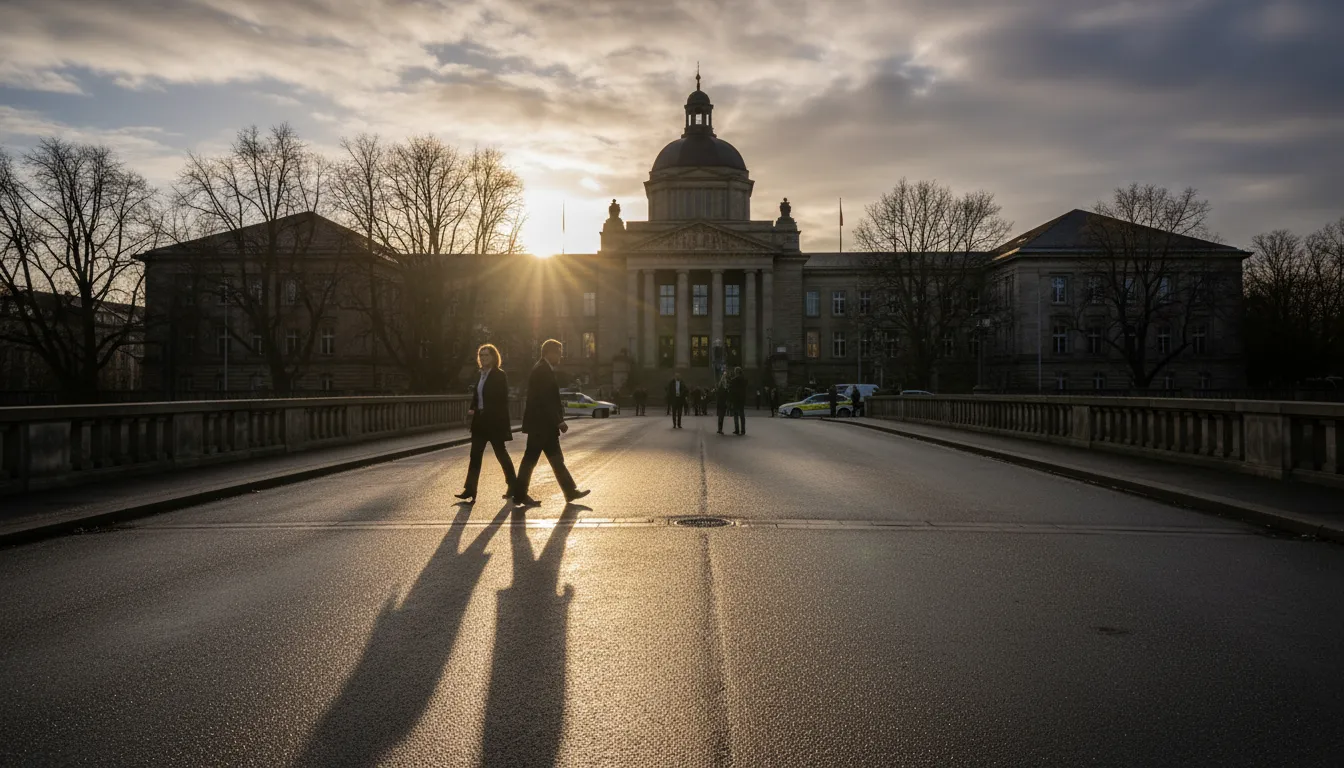
Baden-Württemberg is voting. This Sunday, March 8, 2026, around 8.5 million eligible voters are called upon to elect the 18th state parliament. The election is exceptional in several respects: For the first time, incumbent Winfried Kretschmann is not running after 15 years as Minister President — and for the first time, a new electoral law applies, with a second vote for state lists and a voting age of 16.
Tight Duel: Hagel vs. Özdemir
The latest polls paint a very close picture. According to the ZDF-Politbarometer Extra, the CDU and the Greens are tied at 28 percent each. Other institutes, such as INSA, recently saw the CDU under top candidate Manuel Hagel at 27 percent and the Greens with Cem Özdemir at 24 percent. The AfD follows in third place with around 18 to 20 percent, followed by the SPD with about nine percent, and the FDP and Left party, who are struggling to enter the state parliament.
Noteworthy is the difference between party and personal approval ratings: When asked about the preferred Minister President, Cem Özdemir is far ahead with 47 percent, compared to CDU candidate Manuel Hagel with 24 percent. Özdemir is considered by many observers to be an ideal successor to Kretschmann — down-to-earth, pragmatic, and able to connect across party lines.
Kretschmann's Legacy and the Coalition Question
With Kretschmann's departure, a political era comes to an end. The long-serving Minister President continuously led the state government since 2011 — initially in a Green-Red coalition, then for many years in a Green-Black coalition. This so-called "Kiwi Coalition" is likely to continue according to the current situation, as the numbers are lacking for other majorities. However, it is crucial which of the two major parties provides the head of government.
The Federal Agency for Civic Education (bpb) points out that the election is difficult to predict also because of the new electoral law: With the introduction of a second vote, voters could for the first time specifically distinguish between direct candidates and party lists — with potentially significant effects on the distribution of seats.
Mood Test for Chancellor Merz
The focus nationwide is on Stuttgart, as the election is considered the first major test of public sentiment for the new Black-Red federal government under Chancellor Friedrich Merz. He himself admitted that the race would be "tighter than we thought." A strong performance by the Greens would fuel the opposition dynamics in Berlin and put pressure on the federal government — also with regard to the composition of the Federal Council.
Political scientists emphasize that a victory for the Greens in Baden-Württemberg would be symbolically enormous: It would be the first time in decades that the Union would have to hand over the Minister President to another party in its traditional heartland.
Result Expected in the Evening
The polling stations close at 6:00 p.m. Initial projections and the preliminary official result are expected for late Sunday evening. Germany is watching the southwest with anticipation — for a result that could set a new course not only in Stuttgart, but also in Berlin.