Blood Moon on March 3: Last Total Lunar Eclipse Until 2029
A total lunar eclipse – a 'blood moon' – will occur on the night of March 2-3, 2026, visible from Asia, Australia, and the Americas. The total phase will last 59 minutes, and it will be the last such eclipse until New Year's Eve 2028.
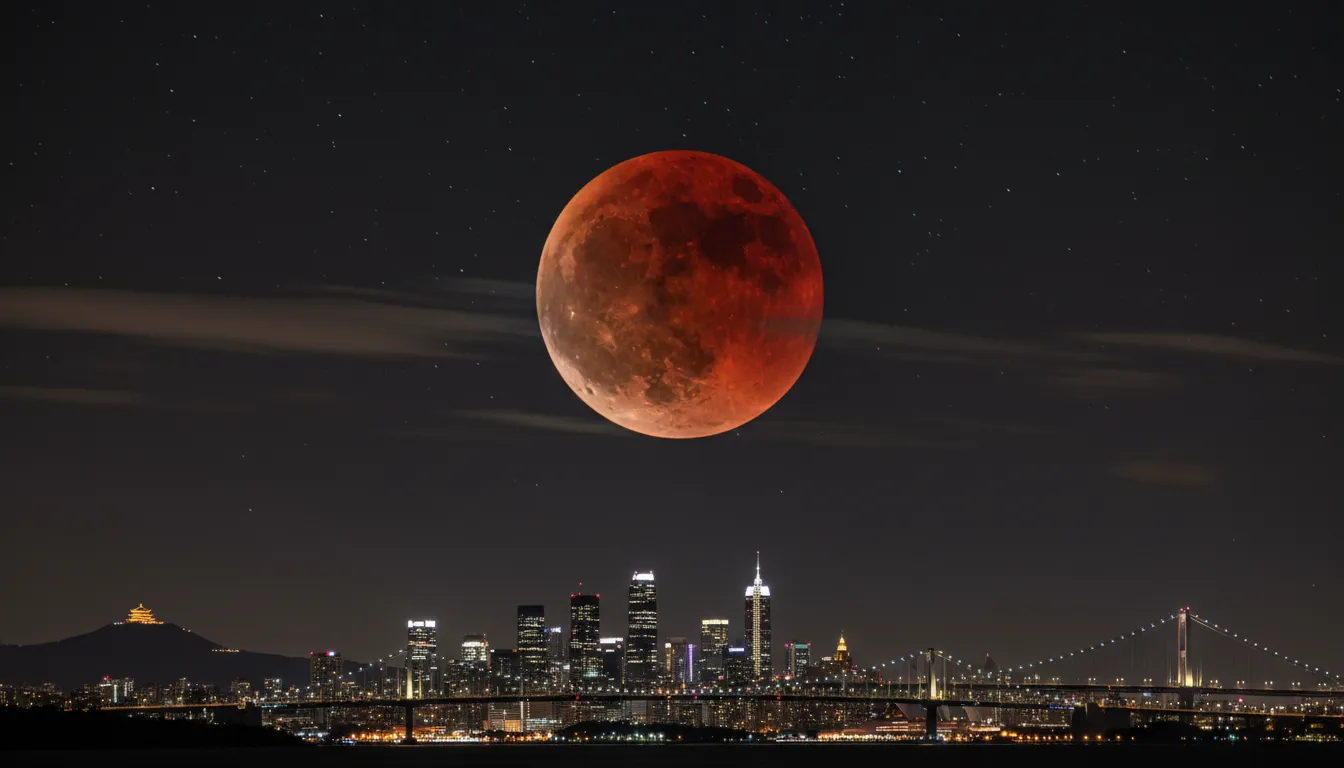
On the night of March 2-3, 2026, one of the most spectacular astronomical events of the year will occur: a total lunar eclipse. Due to the rich red color that the lunar disk takes on during totality, this phenomenon is called a blood moon. It is also the last such opportunity for several years – the next blood moon will not occur until the turn of the year 2028 and 2029. Observers in Asia, Australia, and the Americas can look forward to an unforgettable celestial spectacle.
When will the peak occur and how long will it last?
The total phase of the eclipse begins at 11:04 UTC and ends at 12:03 UTC – lasting 59 minutes. The peak will occur at 11:33 UTC. The entire phenomenon, from the Moon's first contact with the Earth's penumbra to its complete exit, lasts almost 5 hours and 40 minutes. At that time, the Moon is located in the constellation Leo, near the bright star Regulus. The eclipse belongs to the Saros cycle 133 – specifically, it is the 27th eclipse out of 71 in this series.
Where will the eclipse be visible?
The best views will be for observers in East Asia, Australia, New Zealand, and the Pacific Ocean – where the total phase will occur in the evening hours of local time. North and Central America will witness the phenomenon in the early morning hours of March 3. Residents of the western part of South America will catch at least part of the totality just before dawn. According to the TimeAndDate portal, almost 3.3 billion people will have a direct view of the total phase.
Europe, including Slovakia, will have to wait for the blood moon. During the entire totality, the Moon will be below the horizon, so observers from our territory will not see the phenomenon directly. Those interested can search for live broadcasts organized by planetariums and astronomical societies from around the world.
Why is the Moon red?
The cause of the coloring is the physics of light scattering in the Earth's atmosphere. When the Earth gets exactly between the Sun and the Moon, the sun's rays pass through the edge of the Earth's atmosphere and refract. Blue wavelengths scatter more and do not reach the Moon, while red and orange wavelengths penetrate deeper and fall on the lunar surface. It is this filtered light that gives the Moon its typical rusty-red to copper coloring.
NASA describes this phenomenon poetically: during totality, the Moon is illuminated by all the sunrises and sunsets of the Earth at once. The intensity of the red color depends on the amount of dust and clouds in the Earth's atmosphere – the more aerosols, the darker and more dramatic the shade.
Last Total Eclipse Until the End of the Decade
The March blood moon is also exceptional for its rarity. According to the EarthSky and NASA, it is the last total lunar eclipse until December 31, 2028, when another blood moon will occur precisely on New Year's Eve. For astronomy enthusiasts in Asia and America, it is an opportunity they will not have again for almost three years.
No special protective equipment is needed for observation. Unlike solar eclipses, looking at the blood moon with the naked eye is completely safe. Binoculars or a small telescope will greatly enrich the experience, but are not a requirement.