Cuba Kills Four on Florida Speedboat, Tensions Spike
Cuban border guards shot and killed four people aboard a Florida-registered speedboat on February 25, dramatically escalating an already volatile standoff between Washington and Havana amid a U.S. oil blockade and regime-change rhetoric from the Trump administration.
A Deadly Encounter Off Cuba's Northern Coast
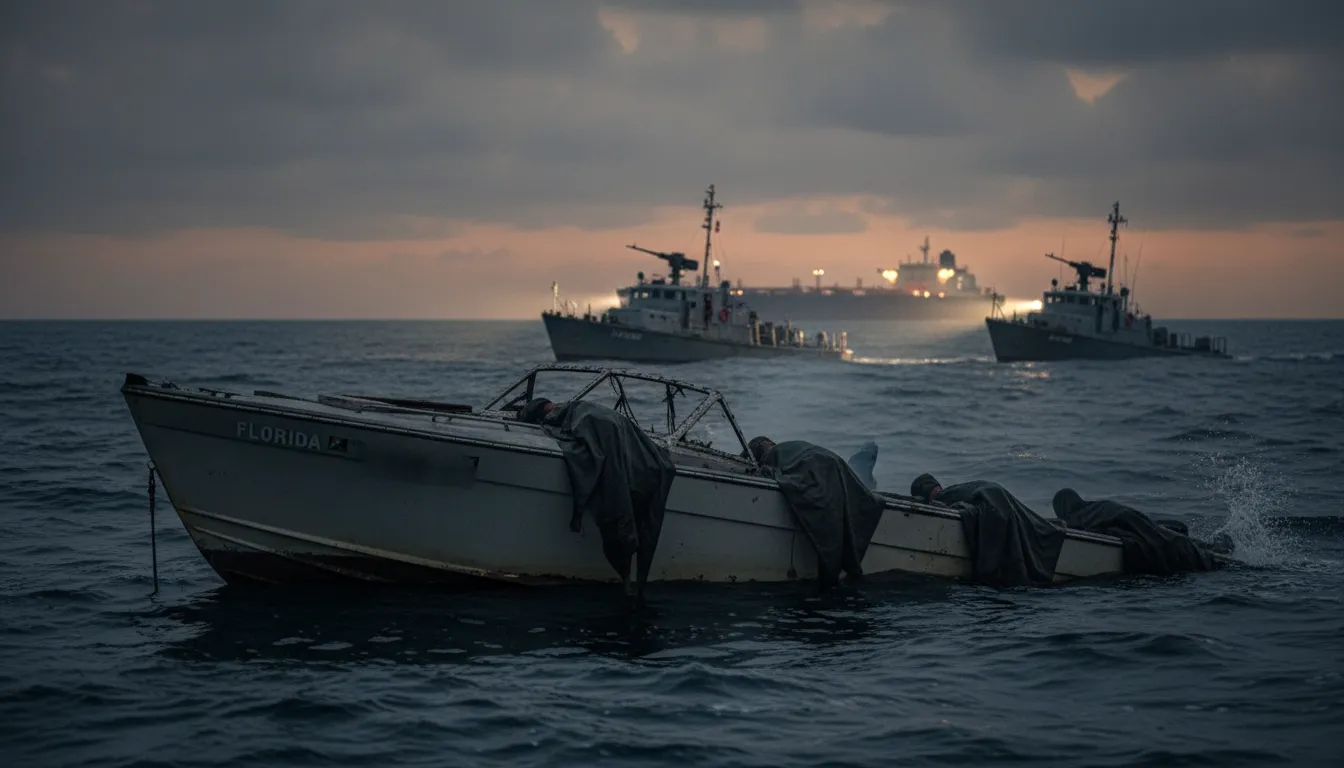
Cuban border patrol forces killed four people and wounded six others aboard a Florida-registered speedboat on Wednesday, setting off an immediate diplomatic crisis between Washington and Havana. The firefight occurred near Cayo Falcones, off Cuba's northern Villa Clara province, in what both sides describe in sharply conflicting terms.
Cuba's Interior Ministry said its personnel approached the vessel to conduct a routine identification check when the boat's occupants opened fire, wounding the commander of the Cuban patrol unit. Border guards returned fire, killing four of the 10 people aboard and injuring six others. Seven individuals were subsequently arrested — six from the boat and one alleged coordinator already on the island.
Competing Narratives
Havana wasted no time framing the incident as a foiled terrorist plot. According to Cuba's Interior Ministry, those aboard were armed Cuban-American residents from Florida carrying assault rifles, handguns, Molotov cocktails, bulletproof vests, telescopic sights, and camouflage uniforms. Cuba alleged their stated goal was armed infiltration "for terrorist purposes" on Cuban soil.
The U.S. government pushed back cautiously. Secretary of State Marco Rubio confirmed the Coast Guard had responded to the scene but denied any U.S. government involvement in the operation. "It is highly unusual to see shootouts in open sea like that," Rubio told reporters, adding that Washington was "gathering its own information to determine if the victims were American citizens or permanent residents." Vice President JD Vance, who was briefed on the incident, said he hoped it was "not as bad as we fear it could be."
Florida Officials React Sharply
Political fury erupted quickly in Florida, home to a large Cuban-American community. Florida Attorney General James Uthmeier announced a state investigation, declaring the Cuban government "cannot be trusted." Representative Carlos A. Gimenez went further, calling the killings "murder" and demanding that Cuba's government be "relegated to the dustbin of history."
The U.S. Attorney's Office for the Southern District of Florida said it would pursue answers "through every legal and diplomatic channel available," while noting that "facts remain unclear and conflicting."
A Crisis Built on Escalating Pressure
The shooting did not occur in a vacuum. The Trump administration has spent weeks ratcheting up pressure on Havana, imposing sweeping oil blockades and publicly discussing regime change by year's end — rhetoric that analysts describe as the most aggressive U.S. posture toward Cuba since the missile crisis of 1962. The policy intensified after the January ouster of Venezuelan President Nicolás Maduro, an event Cuba's government views as a direct regional threat.
Cuba, already suffering its worst economic crisis in decades, has seen mass emigration, rolling blackouts, and acute food and medicine shortages. The United Nations has warned of a potential humanitarian collapse on the island.
Historians note the incident echoes a dark precedent: in 1996, Cuban MiG jets shot down two small civilian aircraft operated by a Miami-based Cuban exile group, killing four people and triggering the U.S. Helms-Burton Act, which tightened the embargo for decades.
What Comes Next
Both governments have signalled they will conduct parallel investigations, virtually guaranteeing a prolonged dispute over the facts. With Washington already committed to isolating Havana economically, and Florida's politically powerful Cuban-American diaspora demanding accountability, the pressure for a forceful U.S. response will be intense. Whether the Trump administration treats the incident as a provocation requiring retaliation — or as a complication it prefers to manage quietly — will define the next chapter of one of the Western Hemisphere's most enduring rivalries.