Druzhba Pipeline: Budapest and Bratislava Take Case to EU
On March 4th, Hungary and Slovakia formally accused Ukraine of deliberately blocking the Druzhba oil pipeline at a meeting of the EU Oil Coordination Group. Meanwhile, Foreign Minister Péter Szijjártó held talks in Moscow and received guarantees for the continuation of Russian energy supplies.
Formal Complaint at EU Energy Forum
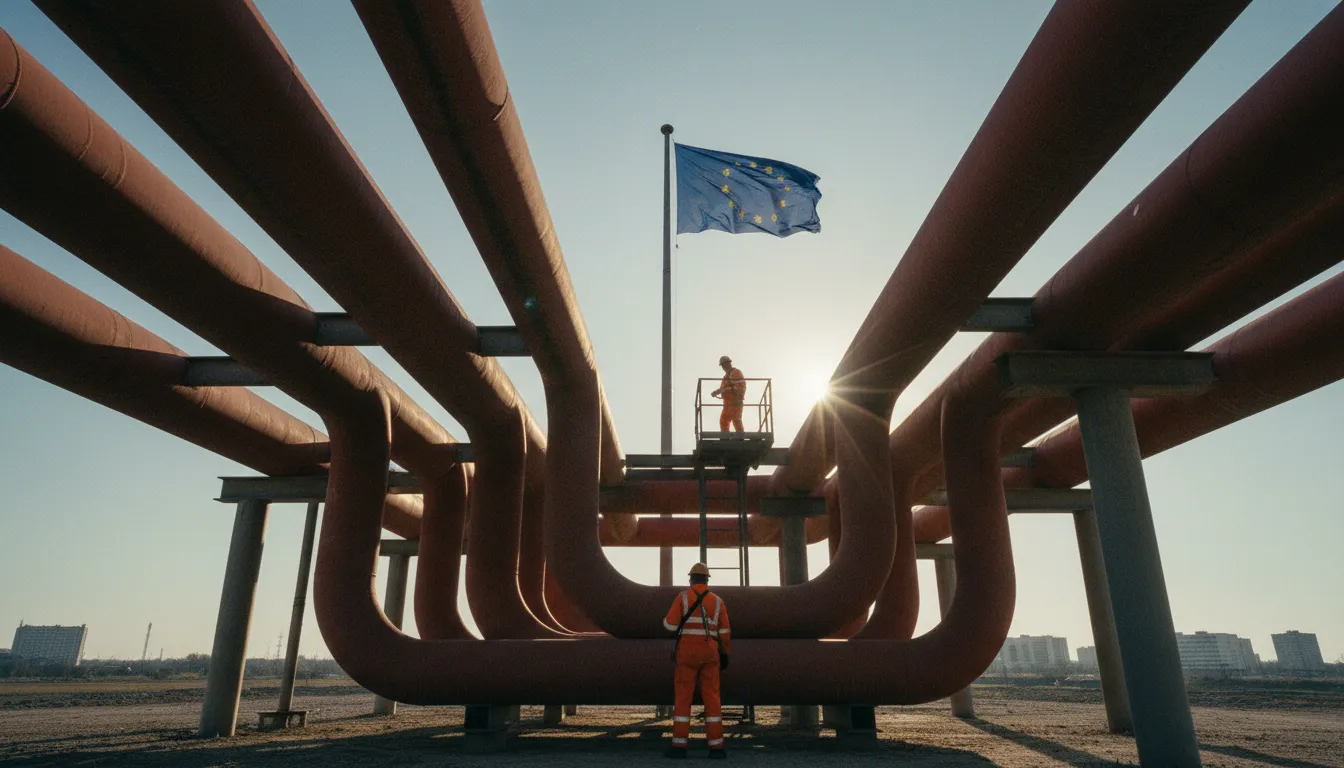
On March 4th, representatives from Hungary and Slovakia formally raised the issue of the Druzhba oil pipeline shutdown at a meeting of the European Union's Oil Coordination Group. Budapest and Bratislava accused Kyiv of deliberately delaying the restoration of supplies and using oil supplies as a political tool, according to reports from Ukrainska Pravda and Index.hu.
The EU subsequently called on Ukraine to allow access for independent monitors to the damaged pipeline, through which Russia has been supplying crude oil to refineries in Hungary and Slovakia for decades. According to the Financial Times, Brussels made it clear that transparency is essential to resolving the matter.
What Happened in January?
Supplies on the southern branch of the Druzhba oil pipeline were halted on January 27th. Kyiv claims that Russian drone strikes hit the infrastructure near Brody in western Ukraine, and repairs are being carried out under extremely difficult conditions due to Russian artillery attacks. Hungary and Slovakia, on the other hand, argue that Ukraine is technically capable of continuing supplies and that the shutdown is the result of a political decision.
According to a report by Euronews, Viktor Orbán and Robert Fico established a joint commission of inquiry on February 27th and called on the European Commission to participate in an on-site inspection. President Zelenskyy rejected the inspection proposal, citing security concerns from Ukrainian intelligence.
Szijjártó Holds Talks in Moscow
While the diplomatic battle was unfolding in Brussels, Foreign Minister Péter Szijjártó held talks in Moscow on March 4th. According to Portfolio.hu and Origo, the minister received guarantees that Russia would continue to supply natural gas and crude oil to Hungary at unchanged prices. Szijjártó said that if pipeline supplies are hindered, alternative solutions – including sea routes – will be sought.
The meeting also resulted in an agreement on the release of two Hungarian prisoners of war, further complicating the diplomatic message of the visit.
Energy Policy Fault Lines in the EU
The case has also exposed deeper tensions in EU energy policy. Prime Minister Fico announced that if Ukraine does not restart the Druzhba oil pipeline, Slovakia will veto the proposed €90 billion EU loan package for Ukraine. Bratislava has also already halted emergency electricity supplies to Ukraine.
At the end of February, the European Commission concluded that the energy security of Hungary and Slovakia was not at risk in the short term, as both countries are covering their needs from strategic reserves. Brussels has identified the Croatian Adria oil pipeline as an alternative supply route – however, Budapest considers this more expensive and less reliable than cheap Russian crude oil.
What Happens Next?
The situation is currently a stalemate: Ukraine is not allowing on-site inspections, while Hungary and Slovakia are trying to put pressure on Kyiv in EU decision-making. However, the dispute within the EU shows that reducing dependence on Russian energy – especially in member states relying on Soviet-era infrastructure – is far from a completed process.