Gas Shock: Qatar Halts LNG Production, Europe Pays the Price
Iranian drone attacks on Qatari energy facilities have forced QatarEnergy to halt production. European gas prices have subsequently risen dramatically, and Germany has reactivated its crisis committee.
Drone Attacks Cripple World's Largest LNG Plant
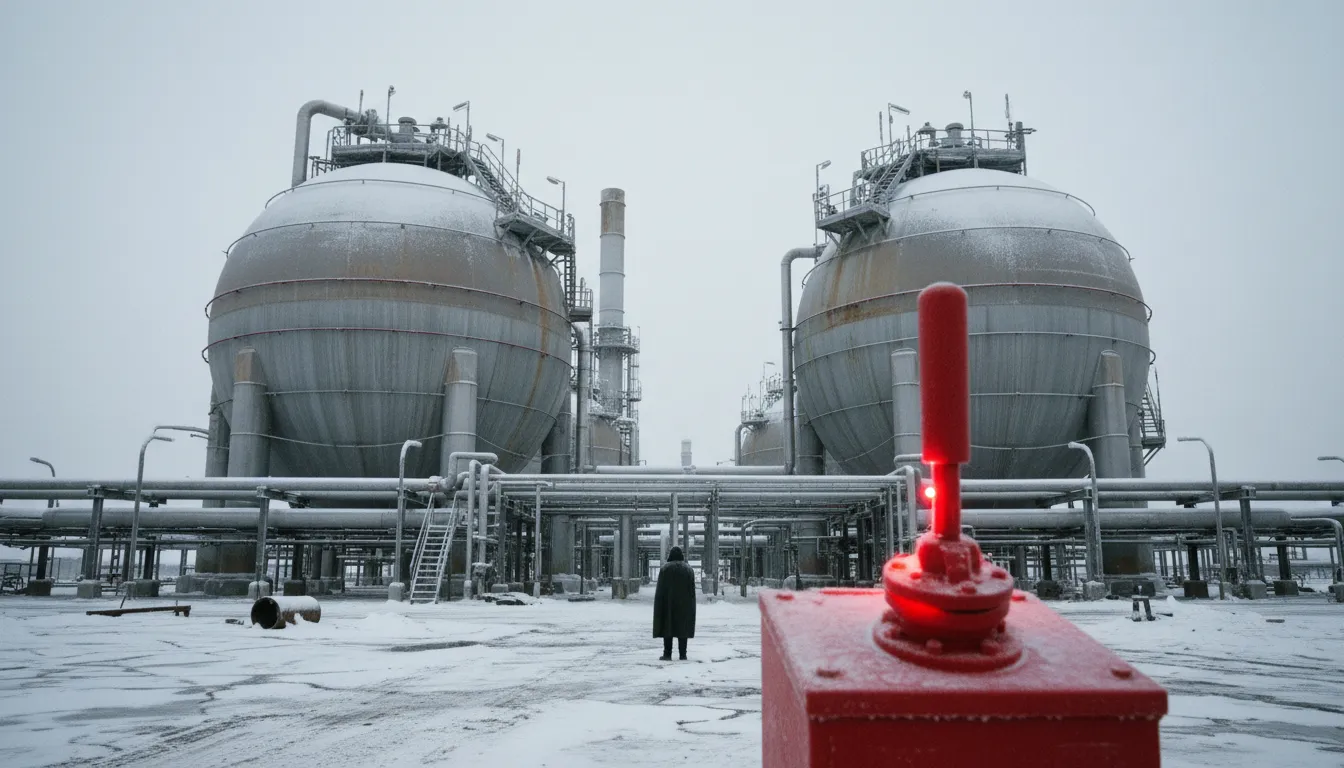
A new shockwave hit European energy markets on March 2, 2026: the state-owned Qatari energy company QatarEnergy halted production of liquefied natural gas (LNG) at its two most important industrial complexes — Ras Laffan and Mesaieed. The trigger was Iranian drone attacks, which, according to Qatar's Ministry of Defense, each struck a facility in both cities: a water tank infrastructure in Mesaieed and an energy plant in Ras Laffan, the heart of the Qatari LNG industry. QatarEnergy justified the production halt with security concerns and also declared the production of downstream products such as urea, polymers, and methanol suspended.
Qatar supplies around 20 percent of the global LNG market. This outage is therefore not a regional event — it shakes the foundations of global gas supply.
European Gas Prices Skyrocket
The market reaction was immediate and brutal. The benchmark futures contract for European natural gas, the Dutch TTF-Future, jumped as much as 50 percent on Monday, Bloomberg reported. Euronews recorded daily gains of around 45 percent. Compared to the closing price on Friday, February 27, TTF prices temporarily rose by up to 70 percent over the course of the week, exceeding the 60 euro per megawatt hour mark — almost double the previous week's level.
The investment bank Goldman Sachs raised its price forecast for European gas in April 2026 from 36 to 55 euros per megawatt hour. Analysts warn that if the conflict were to block the Strait of Hormuz for a month, prices could more than double, according to Goldman Sachs via Bloomberg.
Germany Particularly Exposed
The situation is precarious for Germany. After abandoning Russian pipeline gas, the Federal Republic had invested heavily in LNG import infrastructure and concluded supply contracts with Qatar. At the time of the crisis, German gas storage facilities were, according to market data, only around 20.6 percent full — a multi-year low for this time of year. Across the EU, the fill level at the beginning of March was only around 30 percent.
Federal Economics Minister Katherina Reiche openly acknowledged price increases, but tried to reassure: "We can expect price increases now, but not serious consequences," she stated, according to Clean Energy Wire. At the same time, the Federal Government reactivated a crisis committee to monitor the gas markets. Chancellor Friedrich Merz announced that he would travel to Qatar with a business delegation to secure the long-term supply.
Industry and Consumers Under Pressure
Business associations are sounding the alarm. German industry, which is still struggling to maintain its competitiveness after the record energy prices of 2022, is once again threatened with falling into a cost trap. Particularly energy-intensive sectors such as chemicals, steel, and paper are vulnerable to price jumps in natural gas. The development also means higher heating costs for households in the medium term.
To make matters worse, the bottleneck does not only affect the LNG itself: QatarEnergy also halted the production of petrochemical by-products, which is impacting global supply chains in the fertilizer and plastics industries.
A Second Energy Front in the Middle East War
Analysts are speaking of a second energy front in the escalating Middle East conflict. In addition to the oil market, which is already under pressure due to tensions surrounding Iran, the gas market is now also affected. According to Al Jazeera, a sustained blockade of the Strait of Hormuz threatens not only Europe but also Asia with massive competition for alternative LNG supplies — with further price increases as a result.
Europe has learned from the crisis of 2022 and diversified its supply. But the low storage levels and the ongoing outage of the world's largest LNG export facility show: The continent's energy security remains fragile — and dependent on geopolitical developments far beyond its borders.