Qatar Halts LNG Production: What Does It Mean for Poland?
Following Iranian drone attacks on Qatari facilities, QatarEnergy has suspended liquefied natural gas production. European TTF prices have surged by over 50%, and Poland – which imports approximately 17% of its gas from Qatar – is in a zone of direct price risk.
Iranian Drones Strike at the Heart of the Global LNG Market
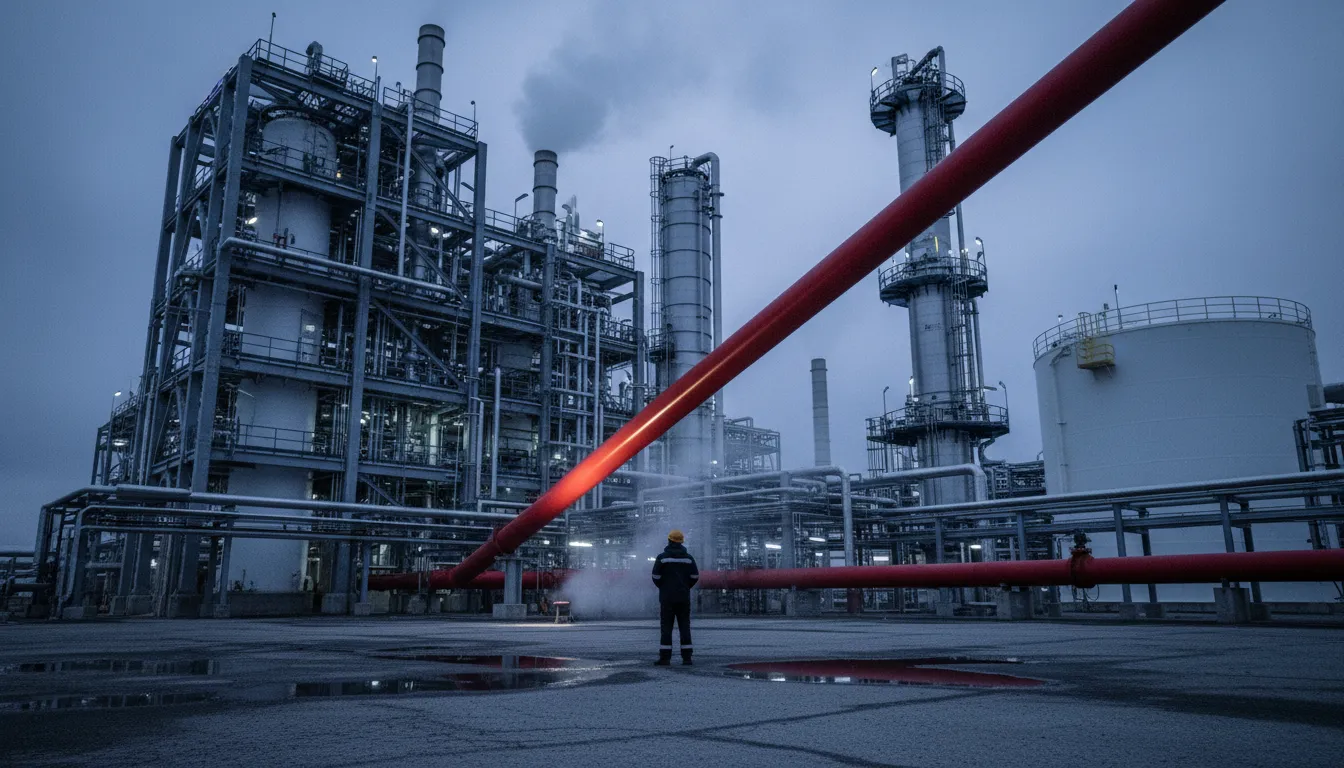
In the night of March 1st to 2nd, 2026, Iranian drones struck the Ras Laffan industrial complex and Mesaieed Industrial City in Qatar – two of the world's largest liquefied natural gas (LNG) production centers. In response, QatarEnergy, the state-owned energy giant, announced a halt to LNG production and declared force majeure, immediately sending shockwaves through energy markets. Qatar accounts for approximately 20% of global LNG supply, and its exit from the market – even temporarily – could not go without consequences.
European Gas Prices Hit Record Highs
The market reaction was immediate and sharp. Dutch TTF contracts – the European benchmark price for gas – jumped by over 50% in two trading days, reaching their highest level in three years, according to Bloomberg. British wholesale prices followed suit. Goldman Sachs raised its forecast for European gas prices in April 2026 to EUR 55/MWh from the previous EUR 36/MWh and warned that a month-long closure of the Strait of Hormuz could double prices.
The situation is exacerbated by low inventory levels. According to Euronews, European gas storage facilities are filled to below 30% of capacity – significantly less than at the same time last year, when they exceeded 40%.
Poland: Second Most Exposed EU Country
For Poland, the crisis is not an abstract phenomenon. According to analyses cited by WNP.pl, Qatar accounted for approximately 17% of Polish gas imports in 2025, making it the second-largest supplier of LNG to the Świnoujście terminal after the United States. Analysts rank Poland as the second most vulnerable country in the European Union to disruptions in Qatari supplies – behind Italy.
Two LNG shipments from Qatar are already en route and are scheduled to arrive in Świnoujście on March 11th and 24th, respectively – these shipments should arrive without disruption. The problem will arise if QatarEnergy's production halt extends for several weeks or months.
Bills and Industry: What Awaits Us?
According to Rzeczpospolita Energia, the current tariffs approved by the Energy Regulatory Office are valid until June 30, 2026. If the Qatari crisis persists, the new tariff for the second half of the year may be significantly higher. Industrial consumers buying gas on the spot market will be the hardest hit, but households will not avoid it either.
The Minister of Climate assured that Poland has secure reserves and alternative supply routes – including the Baltic Pipe gas pipeline from Norway and supplies from the USA. Prime Minister Tusk's government is analyzing the possibility of regulatory intervention; Orlen has declared its readiness to use financial instruments to mitigate the effects of price shocks.
Geopolitical Background: Iran, the USA, and the Strait of Hormuz
The drone attacks on Qatar are part of a broader escalation in the Persian Gulf region, resulting from unprecedented US and Israeli strikes on Iran. The threat of closure of the Strait of Hormuz – through which almost one-third of the world's LNG trade flows – remains real. Such an escalation would mean an energy crisis for Europe comparable to that of 2022, when Russian gas supplies were cut off.
Summary
Poland, which has consistently built LNG infrastructure and diversified gas sources over the past decade, is better prepared today than in 2022. However, dependence on the global spot market means that no country is immune to supply shocks of this scale. Key will be the pace of QatarEnergy's return to production and Europe's ability to quickly replace missing volumes – including from the USA, Norway, and Azerbaijan.