El Mencho Killed: Mexico's Deadliest Cartel Erupts
Mexican military forces killed Jalisco New Generation Cartel boss Nemesio 'El Mencho' Oseguera on February 22, triggering the most violent cartel backlash in years — over 70 dead, 250 roadblocks across 20 states, and major tourist destinations in chaos.
The Operation That Shook Mexico
On Sunday, February 22, Mexican armed forces finally caught up with one of the world's most wanted drug traffickers. Nemesio Rubén Oseguera Cervantes — known to the underworld as "El Mencho" — was killed after military units tracked him to a hideout in Tapalpa, Jalisco, the mountainous heartland of his criminal empire. According to Mexico's Defense Secretary Ricardo Trevilla, authorities located him through one of his romantic partners. Wounded in a firefight and evacuated by helicopter, the 59-year-old cartel boss died en route to Mexico City.
The operation was supported by U.S. intelligence agencies, a detail that underscores the bilateral pressure that had been mounting on the Jalisco New Generation Cartel (CJNG) for years. El Mencho had carried a $10 million U.S. bounty on his head and was considered a primary driver of America's fentanyl crisis.
A Wave of Retaliatory Violence
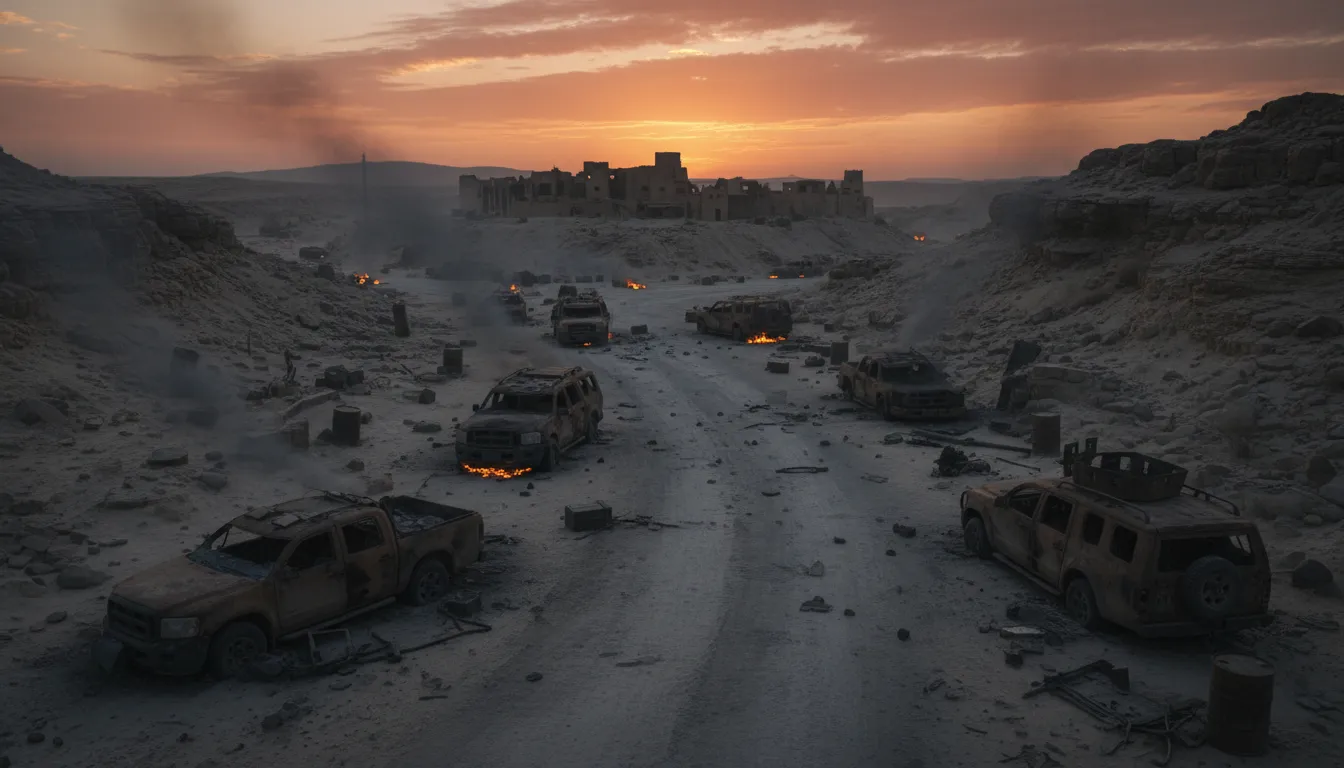
Within hours of the news breaking, the CJNG unleashed a coordinated wave of reprisals that staggered the entire country. Suspected cartel members erected more than 250 roadblocks across 20 of Mexico's 32 states, burning vehicles, torching convenience stores and petrol stations, and barricading major highways. The tactic — known locally as narcobloqueos — transformed Guadalajara, Mexico's second-largest city, into a ghost town as residents sheltered in place through Sunday night.
The death toll was staggering. Mexican authorities confirmed that over 70 people were killed in the operation and its immediate aftermath — including at least 25 members of the National Guard, 46 suspected cartel members, and one civilian. Security forces were targeted in six separate coordinated attacks in Jalisco alone, making it one of the deadliest days for Mexican law enforcement in recent memory.
Tourism and Daily Life Paralyzed
The violence struck at the heart of Mexico's tourist economy. In Puerto Vallarta, a popular Pacific coast resort city, witnesses described people running in panic as vehicles exploded and smoke billowed across the streets. NBC News reported that Air Canada suspended all flights to the city, while American Airlines waived change fees for stranded travelers.
Jalisco's state government suspended school in all public and private institutions. The U.S. Embassy ordered personnel in eight cities — including Guadalajara, Puerto Vallarta, and Tijuana — to shelter in place. Guadalajara's zoo reportedly sheltered over 1,000 visitors overnight who could not safely leave. The city is scheduled to host several matches at the 2026 FIFA World Cup in just months, raising alarm among organizers.
What Comes Next
Security analysts warn that El Mencho's death, while symbolically significant, is unlikely to dismantle the CJNG. Al Jazeera quoted experts noting there is no clear successor — El Mencho's brother is imprisoned in the United States, and his son, known as El Menchito, is also behind bars. A vacuum at the top could trigger violent internal power struggles, with regional cartel bosses competing for control.
The episode draws uncomfortable comparisons to Mexico's earlier "kingpin strategy" under presidents Felipe Calderón and Enrique Peña Nieto between 2006 and 2012, which led to massive fragmentation of the drug trade — ultimately producing more violence rather than less. NPR noted that Mexico's current government faces similar risks: the CJNG's infrastructure, smuggling routes, and illicit revenue streams remain largely intact.
For millions of Mexicans — and thousands of foreign tourists caught in the crossfire — the message from the cartel was clear: even the killing of its founder cannot stop the machine.