EU in Kyiv: Four Years of War and a €90 Billion Loan
Four years after the start of the Russian invasion of Ukraine, European Council President António Costa and European Commission President Ursula von der Leyen are traveling to Kyiv, while the EU bypasses the Hungarian veto in approving a €90 billion loan for Kyiv.
Kyiv Again at the Center of European Attention
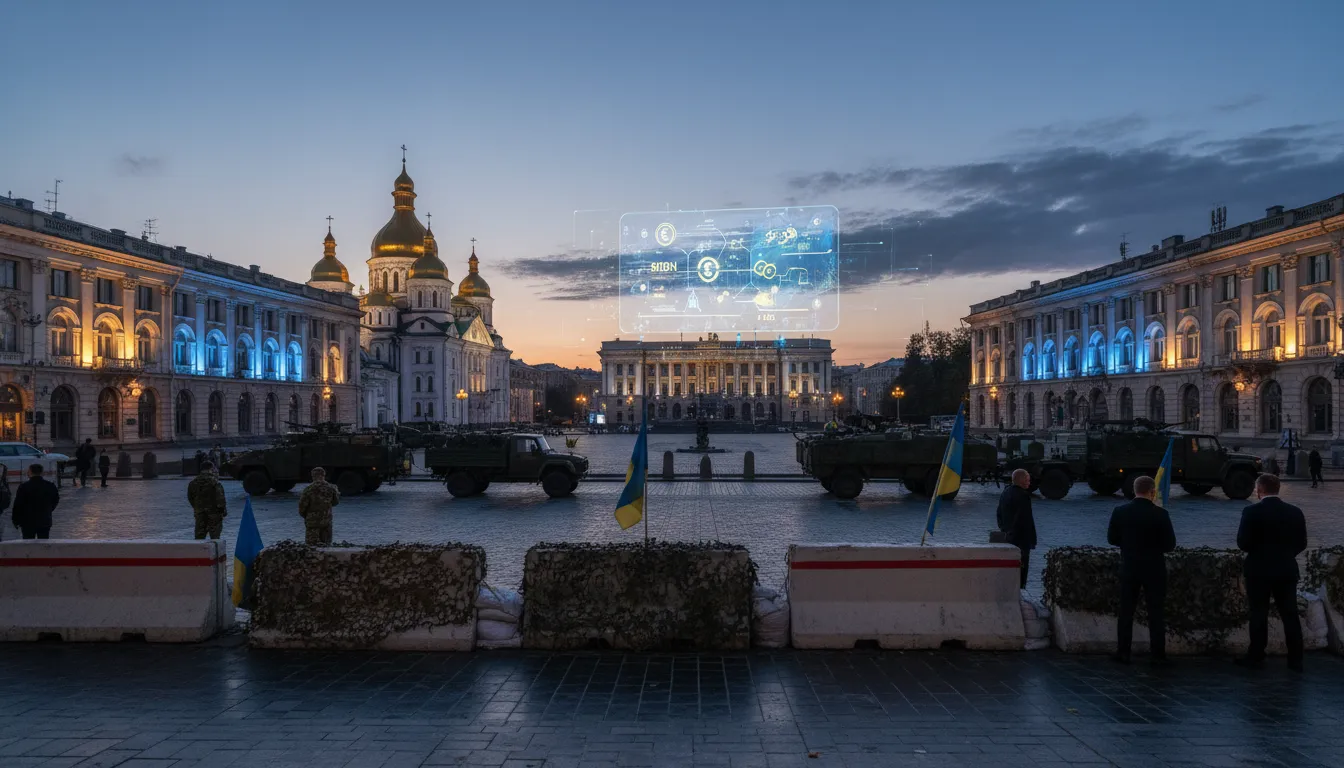
Exactly four years after February 24, 2022, when Russia launched its full-scale invasion of Ukraine, the highest representatives of the European Union visited Kyiv. European Council President António Costa and European Commission President Ursula von der Leyen attended an official memorial ceremony and visited energy infrastructure damaged by Russian missile attacks. The symbolism of the visit is clear: the EU stands with Ukraine.
Both leaders also met with Ukrainian President Volodymyr Zelenskyy for trilateral talks. According to a statement from the European Council, the visit reaffirms the EU's "unwavering commitment to the Ukrainian people and their future in Europe."
Coalition of the Willing: 35 Countries for Peace
The program in Kyiv also included a meeting of the so-called Coalition of the Willing, convened by French President Emmanuel Macron and British Prime Minister Keir Starmer. It was attended by 35 countries, which jointly reaffirmed their commitment to support Ukraine in achieving lasting peace and guaranteeing the security not only of Kyiv but of all of Europe. This is one of the broadest diplomatic signals of solidarity since the beginning of the war.
Ninety Billion Euros: Loan Despite Hungary
The European Parliament has approved a package of €90 billion in the form of a loan for Ukraine for the years 2026–2027. However, the vote was not without turbulence: Hungary blocked one of the three legislative acts needed to release the funds. Budapest is conditioning its consent on the resumption of Russian oil transit through the Druzhba pipeline, which was interrupted after a drone attack in January.
However, the EU has found a way out. European Commissioner Valdis Dombrovskis confirmed that the EU Council can adopt two of the three necessary legislative acts even without Hungary, allowing for technical preparations for the disbursement. The first payments are expected in early April. At the same time, Brussels sharply criticized Budapest for violating the principle of loyal cooperation.
Slovakia: Fico in Opposition to Brussels
While most of the EU is demonstrating solidarity with Ukraine, Slovak Prime Minister Robert Fico has chosen a different tone. He described the financing of Ukraine as "ideological madness" and the Slovak government announced the suspension of emergency electricity supplies to Ukraine — in response to the termination of Russian oil transit through the Ukrainian network. Fico also did not rule out further steps, including a review of support for Ukraine's candidacy for EU membership. Slovakia is thus under increasing diplomatic pressure from its partners in the Union.
Four Years of War in Numbers
The balance sheet of four years of conflict is devastating. According to the UNHCR, almost 5.9 million refugees from Ukraine are registered abroad, including 5.3 million in Europe. Within the country, 3.7 million people remain displaced, with 71 percent of them displaced for more than two years. Around 10.8 million people will need humanitarian assistance in 2026.
Civilian casualties are increasing at an alarming rate: in 2025, the number of civilian casualties was 31 percent higher than in 2024. More than 15,000 civilians have died since the beginning of the war. According to UNICEF, every third Ukrainian child remains displaced, with bombings claiming more than 3,200 child victims.
Four years after the start of the invasion, Europe faces a key question: how long and by what means will it be able and willing to support Ukraine — and whether internal rifts, symbolized by Hungary or Slovakia, will weaken the unity that Costa and von der Leyen came to Kyiv to demonstrate.