Spain to Regularize 500,000 Immigrants Amid European Debate
Spain has approved the regularization of up to 500,000 undocumented immigrants, mostly from Latin America, sparking intense domestic political debate and drawing attention in a Europe that is tightening its immigration policies.
An Unprecedented Process in Recent History
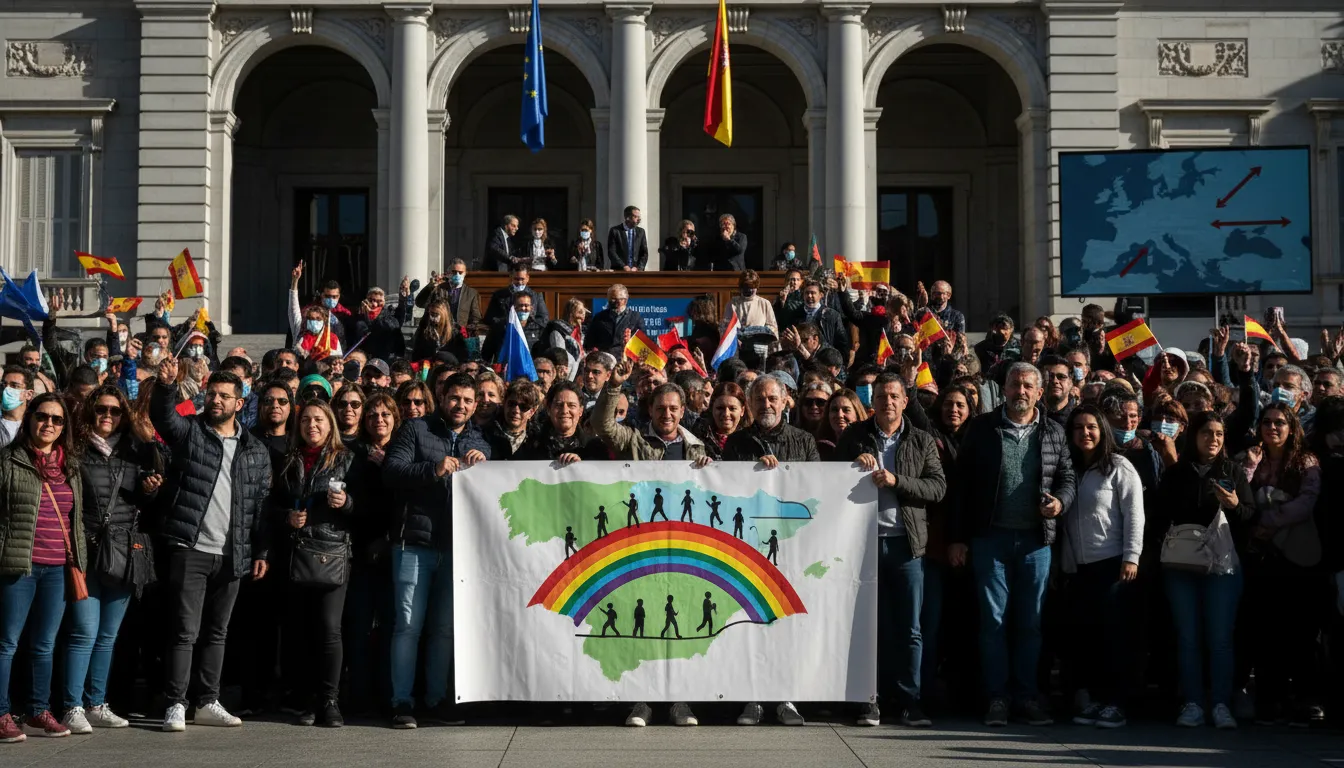
The Spanish Council of Ministers approved on January 27, 2026, the urgent processing of a royal decree that will allow the regularization of the situation of up to 500,000 people residing in Spain without authorization. The measure, promoted by President Pedro Sánchez, establishes accessible requirements: having been in Spain before December 31, 2025, proving at least five months of continuous residence, and having no criminal record. Applications can be submitted between April and June 2026.
The beneficiaries will receive an initial one-year authorization, with the right to work in any sector and anywhere in Spain. The Minister of Inclusion, Elma Saiz, stressed that the measure does not grant citizenship or the right to vote in national elections—as claimed by hoaxes circulating on social media—but rather a first step towards legal integration.
Latin Americans, the Main Beneficiaries
According to the think tank Funcas, approximately 840,000 people live in an irregular situation in Spain, of whom 91% come from Latin America. Many arrived as tourists with legal visas and decided to stay after finding work in sectors such as hospitality, agriculture, or domestic services. Colombia, Ecuador, Venezuela, Honduras, and Brazil lead the affected nationalities.
The government argues that immigration was responsible for 80% of Spanish economic growth in the last six years, and that the country needs labor to sustain its economy and cope with the aging population.
Political Debate: PP and Vox Against the Decree
The measure has generated a strong reaction from the conservative opposition. The leader of the People's Party (PP), Alberto Núñez Feijóo, called the plan a "disaster" and warned that it "will overwhelm public services." Both the PP and Vox agreed to reject the regularization, arguing that the government is "rewarding those who break the law." Vox presented a non-binding bill demanding mass deportations, while the PP drafted its own amendment that, although rejecting Vox's plan, also opposed the regularization process.
In contrast, the Spanish Catholic Church applauded the initiative as "an act of social justice," joining the voices in favor of the measure.
Spain vs. Europe: An Alternative Model
The Spanish decision comes at a time when much of Europe is tightening its immigration policies. Countries such as Germany, Italy, and the Netherlands have strengthened border controls and restricted access to asylum, partly following the discourse of far-right parties.
Spain is aiming for a different path, and its historical precedent supports it. In 2005, the government of José Luis Rodríguez Zapatero regularized 576,000 immigrants with positive economic results: according to academic research, tax revenues increased by approximately 4,000 euros per regularized migrant per year, without any significant pull effect being observed. The European Commission has remained silent on the measure—which falls within national competences—although the PP conveyed its unease directly to President Ursula von der Leyen.
A Model Under Debate on the Continent
With up to half a million people about to emerge from the legal shadows, Spain is opening a debate that goes beyond its borders. If the process achieves its objectives of labor integration and fiscal contribution, it could become a solid argument for those who defend more humane immigration policies in Europe. The Latin American response has been widely welcoming; the European response, one of cautious observation.