Fico Cuts Off Electricity to Ukraine as Druzhba Pipeline Dispute Escalates
Slovak Prime Minister Robert Fico definitively halted emergency electricity supplies to Ukraine on February 23 in retaliation for the disruption of Russian oil transit through the Druzhba pipeline. Simultaneously, Hungary blocked the EU's 20th sanctions package and a €90 billion European loan for Kyiv.
From Threat to Reality: Slovakia Cuts Off Electricity Supplies
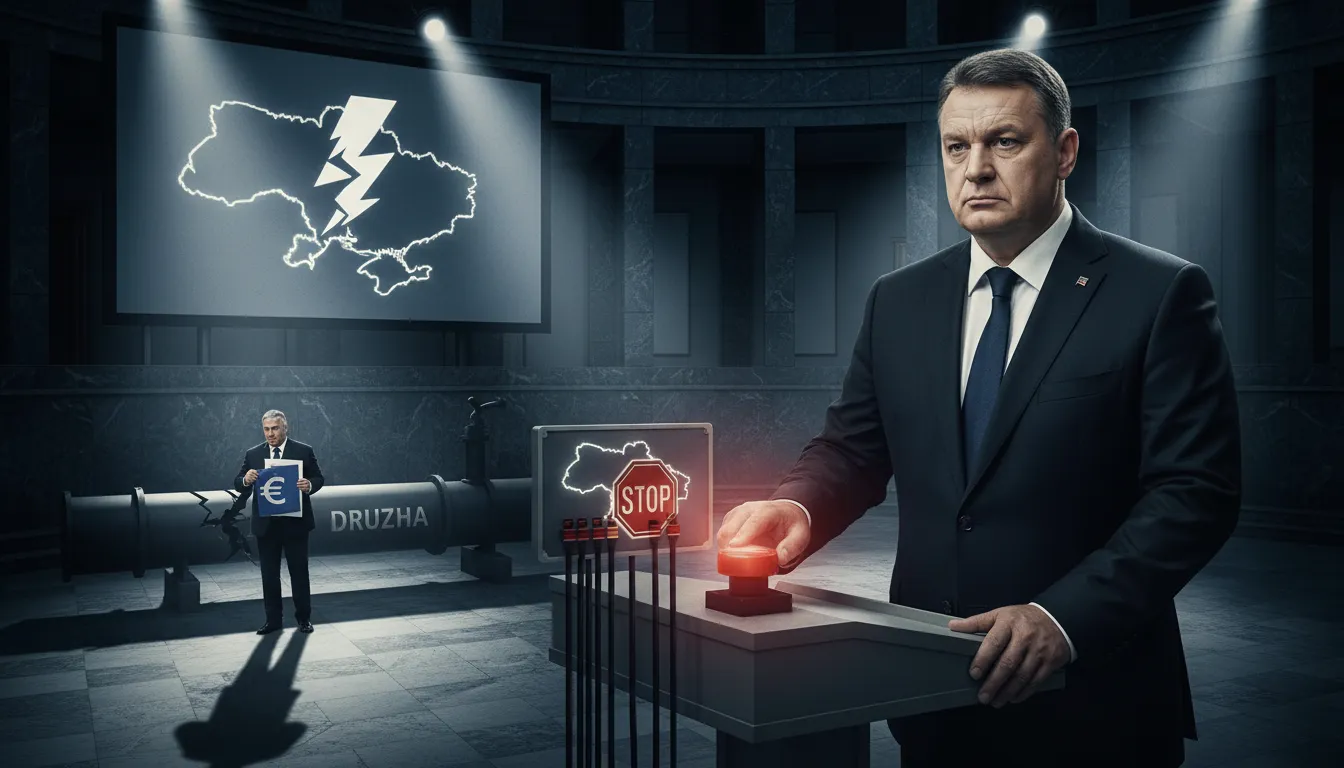
Slovak Prime Minister Robert Fico announced on February 23, 2026, that Slovakia had definitively halted emergency electricity supplies to Ukraine — precisely on the day the world commemorated four years since the outbreak of the Russian invasion. "From today, if Ukraine turns to Slovakia for assistance in stabilizing its energy grid, that assistance will not be provided," Fico declared in a video on social media. The move followed a two-day ultimatum that Bratislava sent to Kyiv — which Kyiv did not respond to by fulfilling the conditions.
Pipeline Damaged by Russian Drone
The dispute has a clear cause: the Soviet-era Druzhba pipeline, supplying Central European countries with Russian oil, ceased operating on January 27 after a drone attack near Brody, Ukraine. Kyiv presented the situation as a technical malfunction caused by Russian aggression and assured that repairs were proceeding as quickly as possible. Fico and Hungarian Prime Minister Viktor Orbán, on the other hand, claim that there are no technical obstacles to resuming transit. According to Fico, it is a "purely political decision to blackmail Slovakia."
Economic Losses and Energy Context
In 2025, Slovakia exported 2.96 terawatt-hours of electricity to Ukraine, accounting for approximately 18 percent of Ukraine's imported electricity. Together with Hungary, the two countries covered up to 68 percent of Kyiv's electricity imports. Energy experts warn that Slovakia could lose hundreds of millions of euros in trade revenue if the dispute continues. The operator of the Ukrainian transmission system, Ukrenergo, on the other hand, reassured that Slovakia had provided emergency assistance to Kyiv only once in the previous month and in a limited volume, so the immediate impact on the Ukrainian energy system would be minimal.
Hungary Blocks European Aid to Kyiv
Simultaneously with Fico's move, Hungary blocked the EU's twentieth sanctions package against Russia and a planned European loan of €90 billion for Kyiv. Foreign Minister Péter Szijjártó conditioned the resumption of Hungarian support on the restoration of oil supplies via Druzhba: "As long as Ukraine blocks the resumption of oil supplies to Hungary, Hungary will block EU decisions favorable to Ukraine." The blockade has far-reaching consequences — approval of the loan is a condition for the International Monetary Fund's program for Kyiv worth $8.2 billion. German Foreign Minister Johann Wadephul said he was "appalled" by Budapest's stance.
Kyiv: It's Blackmail in Favor of Russia
The Ministry of Foreign Affairs of Ukraine strongly rejected the actions of Bratislava and Budapest. "Ultimatums should be sent to the Kremlin, and certainly not to Kyiv," said a ministry spokesperson. Kyiv warned of endangering the energy stability of the entire region and claimed that Slovakia and Hungary are "playing into the hands of the aggressor" by using the damage to energy infrastructure by the Russian army as political leverage against the defending country.
Further Steps and European Consequences
Fico threatened further "reciprocal steps," including a review of Slovak support for Ukraine's accession to the European Union. Slovakia and Hungary are the only EU member states that, despite the Russian invasion of Ukraine, maintain full dependence on Russian oil and actively use this dependence as a diplomatic tool. The dispute thus reveals deep cracks in European solidarity precisely at a time when unity against Russia is more important than ever.