G7 in France: Rubio Faces Skepticism from Allies
France is hosting the G7 Foreign Ministers' Meeting at the Abbaye des Vaux-de-Cernay from March 25 to 27. The conflict in Iran and the war in Ukraine dominate a summit marked by transatlantic tensions.
A Summit Under High Geopolitical Tension
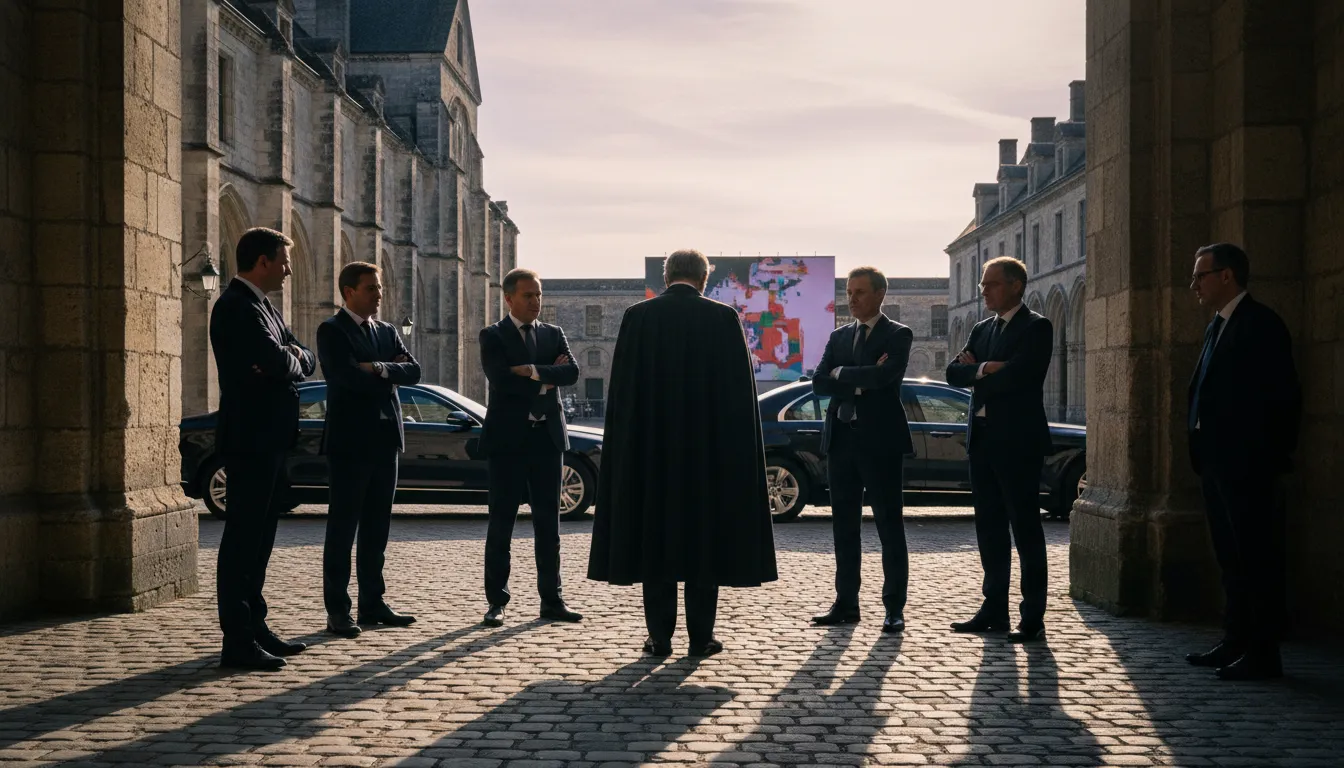
France, in its capacity as the current G7 president, is hosting the Foreign Ministers' Meeting of the group from March 25 to 27, 2026, at the Abbaye des Vaux-de-Cernay, about fifty kilometers southwest of Paris. This diplomatic gathering takes place in a particularly volatile international context, marked by the war between the United States and Israel against Iran, now in its 25th day, and by the ongoing Russo-Ukrainian conflict.
Rubio on a Mission of Persuasion
U.S. Secretary of State Marco Rubio is making his first trip abroad since the American-Israeli strikes launched on February 28 against Iran. According to the State Department, he will participate in discussions on "the Russo-Ukrainian war, the situation in the Middle East, and threats to peace and stability in the world."
His mission, however, promises to be delicate. According to The Washington Post, the other six members of the G7—Great Britain, Canada, France, Germany, Italy, and Japan—have reacted coolly to the American-Israeli military operations and have refused to participate. The closure of the Strait of Hormuz to maritime traffic, including oil tankers, has caused a surge in oil prices that weighs heavily on the G7 economies.
President Trump has sharply criticized several G7 and NATO allies for their refusal to respond to his calls to reopen the strait, although some have recently indicated a willingness to support appropriate actions to restore traffic in this strategic waterway.
Iran Rejects Any Negotiation
The summit takes place as Iran categorically denies the existence of peace talks with Washington. The Speaker of the Iranian Parliament, Mohammad Bagher Ghalibaf, has called these allegations "fake news" intended to "manipulate financial and oil markets," according to Time. Tehran promises to continue the fight "until complete victory," while Donald Trump claims that "productive conversations" have taken place—contradictory statements that significantly complicate Rubio's diplomatic task with his counterparts.
Ukraine Still at the Heart of Concerns
In addition to the Iranian issue, the war in Ukraine remains a central topic. Ministers will discuss continued support for Kyiv as well as ongoing regional crises, including in Sudan, Haiti, and the Indo-Pacific, according to the official statement from the Canadian government.
Canada Formalizes its Francophone Candidacy
On the sidelines of the summit, Canadian Foreign Minister Anita Anand will meet with Louise Mushikiwabo, Secretary General of the Francophonie, to formalize Canada's candidacy to host the 2028 Francophonie Summit. This initiative, announced by Prime Minister Mark Carney in December 2025, aims to strengthen ties with 90 member countries and governments of the French-speaking world.
Outlook
This meeting is a major test for Western cohesion. The ability of French diplomacy to find common ground between Washington and its skeptical allies will partly determine the future of G7 coordination in the face of the multiple crises shaking the international stage. The economic fallout from the Iranian conflict—particularly rising energy prices—makes the issue all the more pressing for Europeans.


