How Ancient DNA Analysis Works—and What It Reveals
Scientists extract and sequence degraded genetic material from bones thousands of years old, rewriting human history and revealing lost populations, extinct species, and the deep genetic roots of modern traits.
Unlocking Genetic Secrets From the Deep Past
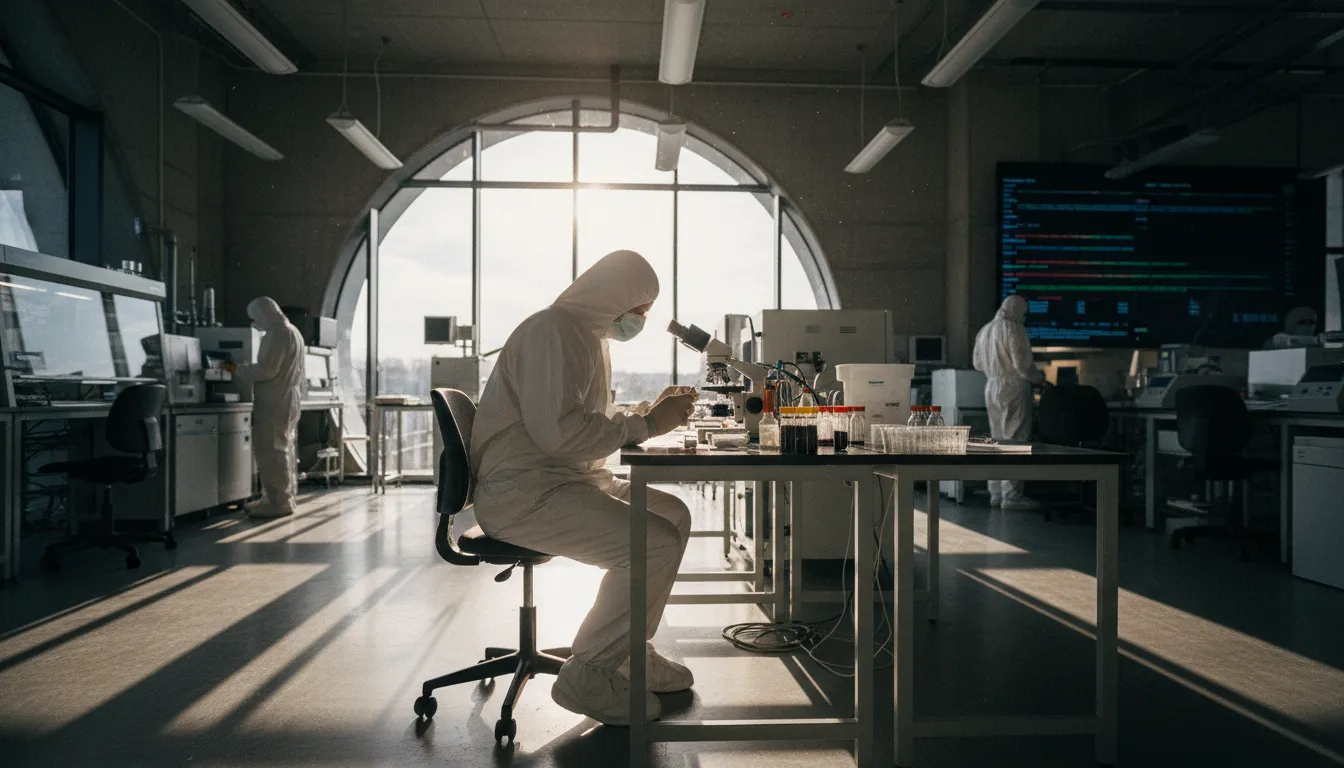
In a cave, a laboratory technician wearing sterile surgical gear carefully drills into a tiny bone fragment from a human skull. The target is the petrous bone, the densest bone in the body, tucked behind the inner ear. It yields up to 100 times more usable DNA than any other skeletal element. From this thumbnail-sized piece of ancient tissue, scientists can reconstruct an entire genome — and with it, a lost chapter of human history.
Ancient DNA (aDNA) analysis, the foundation of a discipline called paleogenomics, has transformed archaeology, evolutionary biology, and medicine. It earned Swedish geneticist Svante Pääbo the 2022 Nobel Prize in Physiology or Medicine and continues to deliver headline-making discoveries, from vanished populations to genes inherited from extinct relatives.
How Scientists Extract DNA From Ancient Remains
DNA begins degrading the moment an organism dies. Microbes, water, UV radiation, and heat break long molecular strands into fragments often shorter than 50 base pairs — compared to the roughly three billion that make up a complete human genome. Chemical damage further corrupts the sequence, and contamination from anyone who has handled the specimen can swamp the ancient signal.
To combat these challenges, extraction takes place in ultra-clean laboratory environments purpose-built for aDNA work. Researchers use modified silica-based protocols, originally developed at the Max Planck Institute for Evolutionary Anthropology, to capture even the shortest DNA fragments. They then build sequencing libraries and run them through next-generation sequencing (NGS) machines, which read millions of overlapping fragments simultaneously.
Bioinformatic pipelines align those fragments against a reference genome and filter out contamination by looking for telltale post-mortem damage patterns — specific chemical signatures that only appear in genuinely ancient molecules. The result is a validated ancient genome ready for analysis.
What Ancient DNA Has Revealed
The field's landmark achievement came in 2010, when Pääbo's team published the first complete Neanderthal genome. It showed that modern Europeans and Asians carry one to four percent Neanderthal ancestry, proof that our ancestors interbred with Neanderthals between 55,000 and 40,000 years ago. Shortly after, the same lab identified an entirely new hominin species — the Denisovans — from a single finger bone found in a Siberian cave.
Since then, the pace of discovery has accelerated dramatically. David Reich's laboratory at Harvard has helped build a database of more than 10,000 ancient genomes. A 2026 study analyzing nearly 16,000 ancient genomes from West Eurasia revealed that natural selection has shaped hundreds of genes over the past 10,000 years — far more than previously suspected — and that the rate of selection actually accelerated after humans adopted farming.
Other studies have uncovered ghost populations with no living descendants, tracked the spread of diseases like plague across millennia, and identified ancient gene variants that still influence modern immunity, metabolism, and disease risk.
Why It Matters Beyond History
Ancient DNA does more than fill in archaeological blanks. Neanderthal gene variants inherited by modern humans have been linked to immune function, skin pigmentation, and even susceptibility to certain respiratory infections. Understanding which genes were selected for — or against — over thousands of years gives medical researchers a deeper evolutionary context for present-day health conditions.
The field also raises ethical questions. Indigenous communities worldwide are increasingly asserting control over ancestral remains and the genetic data derived from them, prompting researchers to develop more collaborative and consent-based frameworks for aDNA studies.
The Frontier Ahead
Technological advances continue to push the boundaries of how far back scientists can reach. Researchers have recovered environmental DNA from soil sediments more than 400,000 years old, and high-throughput extraction methods now process 96 samples in roughly four hours at significantly reduced cost. As sequencing technology grows cheaper and more sensitive, paleogenomics is poised to keep rewriting humanity's deepest story — one ancient fragment at a time.