How DRAM Prices Work—and Why They Spike
Three companies control 95% of the world's DRAM supply. Here's how memory chip pricing works, why the market is so volatile, and what drives the boom-and-bust cycles that ripple through every electronic device you own.
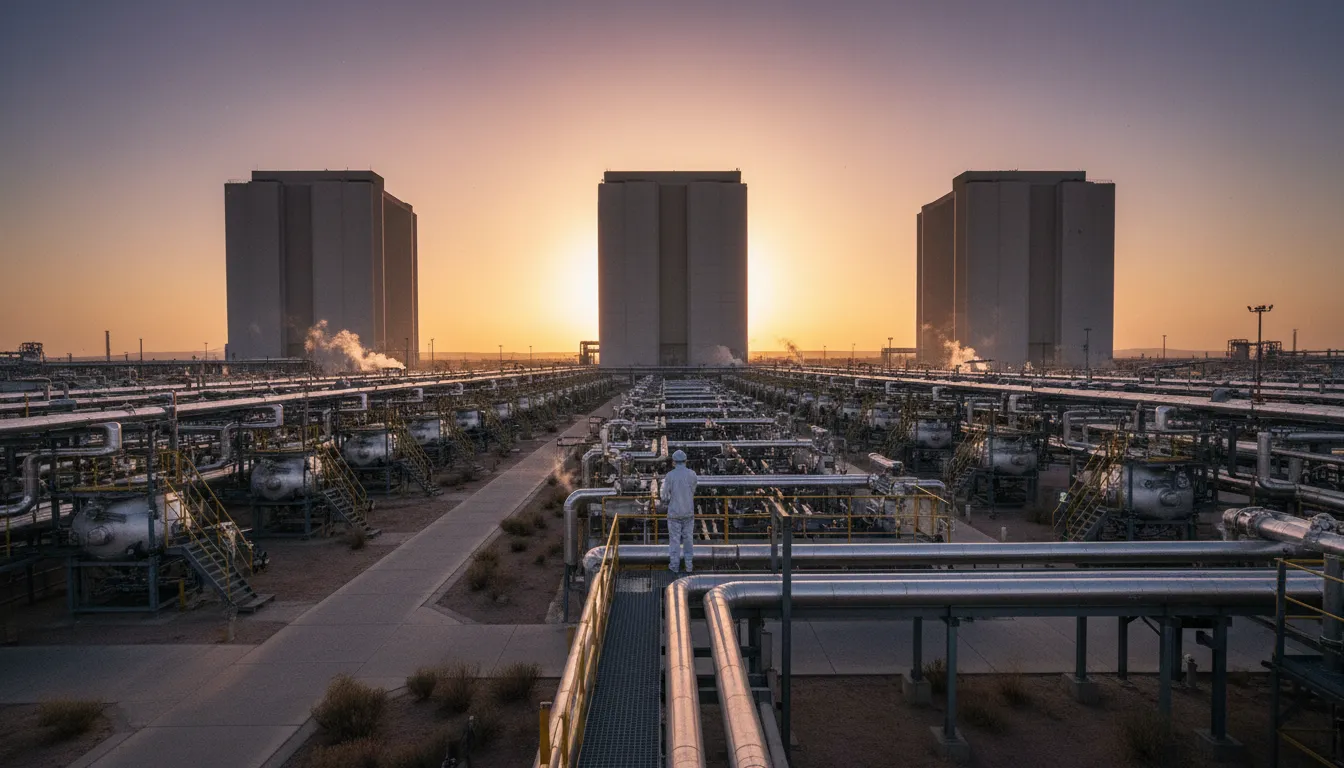
The Chip Inside Everything
Every smartphone, laptop, game console, and server on Earth depends on a single component: DRAM, or dynamic random-access memory. These tiny chips store the data your device needs right now—the app you're running, the browser tab you're reading, the AI model crunching your query. And yet most people never think about DRAM until its price spikes and the cost of everything electronic climbs with it.
Understanding how DRAM pricing works means understanding one of the most concentrated, cyclical, and strategically important markets in the global economy.
An Oligopoly of Three
The first thing to know is that just three companies—Samsung Electronics, SK Hynix, and Micron Technology—control roughly 95% of the world's DRAM production. No other major semiconductor segment is this concentrated. Building a new fabrication plant costs upward of $15 billion and takes 18 months or more to bring online, creating an enormous barrier to entry that has kept the market a tight oligopoly for decades.
This concentration gives the Big Three significant pricing power. When all three restrict supply—whether deliberately or because capacity is physically maxed out—prices rise sharply, and buyers have almost nowhere else to turn.
The Boom-and-Bust Cycle
DRAM has historically followed a predictable cycle. Demand rises, prices climb, and manufacturers invest billions in new fabrication capacity. But because new fabs take so long to build, the additional supply arrives well after the initial demand surge, flooding the market and crashing prices. Margins collapse, investment freezes, and the cycle eventually resets.
According to IEEE Spectrum, this pattern has repeated roughly every three to four years for decades. It punishes manufacturers and consumers alike: companies post massive losses during downturns, while buyers face sudden price spikes during shortages.
How Prices Are Actually Set
DRAM is a commodity product—one company's DDR5 module is largely interchangeable with another's. Prices are set through quarterly contract negotiations between manufacturers and their largest customers, primarily PC makers, smartphone brands, and cloud providers. Industry trackers like TrendForce publish spot and contract pricing data that serves as a benchmark for the entire market.
Recently, however, the Big Three have shifted toward shorter contracts and post-settlement pricing, as reported by Tom's Hardware. This gives manufacturers more flexibility to adjust prices upward as conditions tighten—a sign that pricing power has tilted firmly back toward suppliers.
Why AI Broke the Old Rules
The traditional cycle is now under enormous strain. The explosion of artificial intelligence has created a new category of price-inelastic demand: hyperscalers like Microsoft, Google, and Amazon are buying massive quantities of high-bandwidth memory (HBM) for AI training chips, and they are not slowing purchases when prices rise.
According to Tom's Hardware, data centers are expected to consume up to 70% of all memory chips produced globally—up from roughly 32% just five years earlier. Every wafer allocated to an AI-grade HBM stack is a wafer not available for consumer-grade DDR5, creating a zero-sum competition between data centers and ordinary devices.
The result: DRAM prices have surged by 30% to 60% in recent quarters, and consumer electronics makers from Apple to Meta have passed those costs directly to buyers.
Why It Matters to You
When DRAM prices spike, the effects cascade. Smartphones, laptops, gaming consoles, VR headsets, and even automobiles all become more expensive. The IDC estimates that the global PC market could contract by around 9% and smartphone sales could drop 5% during a severe memory shortage, as manufacturers either raise prices or cut production.
For consumers, the takeaway is straightforward: the price of your next phone or laptop is shaped not just by the brand on the box, but by a global tug-of-war for a commodity chip made by just three companies—and increasingly, by how much memory the world's AI systems are consuming.