How Carbon Offsets Work—and Why They're Controversial
Carbon offsets let companies pay to cancel out their greenhouse gas emissions by funding climate projects elsewhere. But how do they actually work—and do they deliver real results?
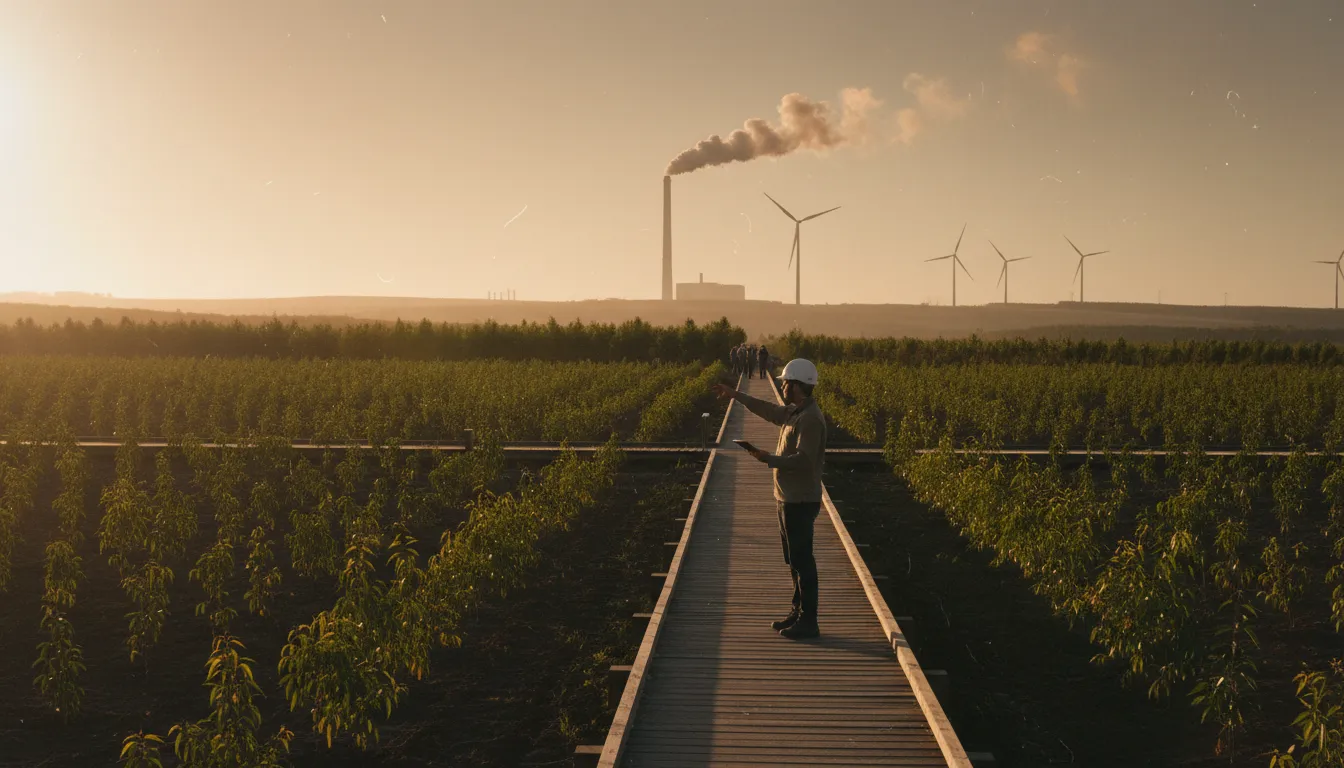
The Basic Idea: One Ton of Carbon, One Credit
A carbon offset represents the reduction, avoidance, or removal of one metric ton of carbon dioxide—or an equivalent amount of another greenhouse gas—from the atmosphere. When a company buys a carbon offset, it is theoretically compensating for emissions it cannot yet eliminate by paying for climate action somewhere else in the world.
The logic is straightforward: the atmosphere does not care where a ton of CO₂ is removed. A tonne avoided in a Brazilian rainforest counts the same as a tonne cut from a European factory chimney. This fungibility is what makes carbon markets possible.
Where Offsets Come From
Carbon credits are generated by projects that reduce or remove greenhouse gas emissions. According to the United Nations Development Programme, common project types include:
- Avoided deforestation — paying landowners not to cut down forests (known as REDD+)
- Reforestation and afforestation — planting trees that absorb CO₂ as they grow
- Renewable energy — building solar or wind capacity that displaces fossil fuel power
- Methane capture — collecting methane from landfills or livestock operations before it enters the atmosphere
- Cookstove programs — distributing cleaner-burning stoves in developing countries to cut wood and charcoal use
Each project calculates how many tons of CO₂ equivalent it prevents or removes, and issues a corresponding number of credits.
Two Markets: Compliance and Voluntary
Carbon markets come in two forms. Compliance markets are government-mandated systems—like the European Union Emissions Trading System—where companies must surrender credits to cover regulated emissions. Voluntary markets operate outside regulation: corporations, event organizers, and even individuals choose to purchase credits to meet self-imposed climate targets.
The voluntary market has grown rapidly as corporate net-zero pledges have multiplied. Its value reached roughly $4 billion in 2024 and is projected to exceed $5 billion in 2025, according to market research cited by Ecosystem Marketplace. Renewable energy projects dominate, accounting for about 39% of voluntary credit supply.
How Credits Are Verified
Not all offsets are created equal. To prevent fraud and exaggeration, independent certification bodies set rules for how projects measure and report emissions reductions. The two dominant standards are:
- Verra's Verified Carbon Standard (VCS) — the world's most widely used crediting program, requiring independent third-party audits before and after project activities
- Gold Standard — a stricter certification that also requires projects to demonstrate contributions to UN Sustainable Development Goals; credits typically trade at a 20–40% premium over comparable Verra credits
Both systems issue credits to a public registry. When a buyer "retires" a credit, it is permanently removed from circulation so no one else can claim the same reduction.
The Greenwashing Controversy
Critics argue that the system is riddled with problems. A landmark investigation by the Guardian and academic partners found that more than 90% of Verra's rainforest offset credits may be "phantom credits" that do not represent genuine emissions reductions—a finding Verra disputed. A 2025 peer-reviewed analysis in One Earth identified systemic weaknesses including inflated baselines, lack of additionality (the requirement that a project would not have happened without carbon finance), and poor long-term permanence.
"Additionality" is the central test: would the forest have been cut down anyway? Would the wind farm have been built without offset revenue? If the answer is no—if the climate benefit would have happened regardless—the credit is essentially worthless.
Carbon Market Watch, a Brussels-based advocacy group, warns that offsets can function as a "get out of jail free card," allowing corporations to keep emitting while claiming climate neutrality. Legal cases against companies for misleading carbon claims quadrupled in a single year, with airlines and consumer brands among those facing lawsuits.
Reform Efforts and the Road Ahead
Defenders of carbon markets argue that, despite their flaws, well-designed offsets channel billions of dollars toward forests, clean energy, and communities in the developing world that would otherwise receive little climate finance. The MIT Climate Portal notes that the real danger is not offsets per se, but using them as a substitute for cutting emissions at the source.
International negotiators have been working to create cleaner rules under Article 6 of the Paris Agreement, which governs cross-border carbon trading. Meanwhile, standard-setting bodies are tightening methodologies and the market is gradually shifting toward higher-quality credits—a trend analysts describe as "quality over quantity."
For now, carbon offsets remain a contested but ubiquitous tool in the climate toolkit—useful when they work, dangerous when they don't.