How Crude Oil Prices Are Set—and Why They Swing
An explainer on how global crude oil prices are determined through benchmarks, futures markets, OPEC+ quotas, and geopolitics — and why prices can spike overnight.
The World's Most Watched Commodity
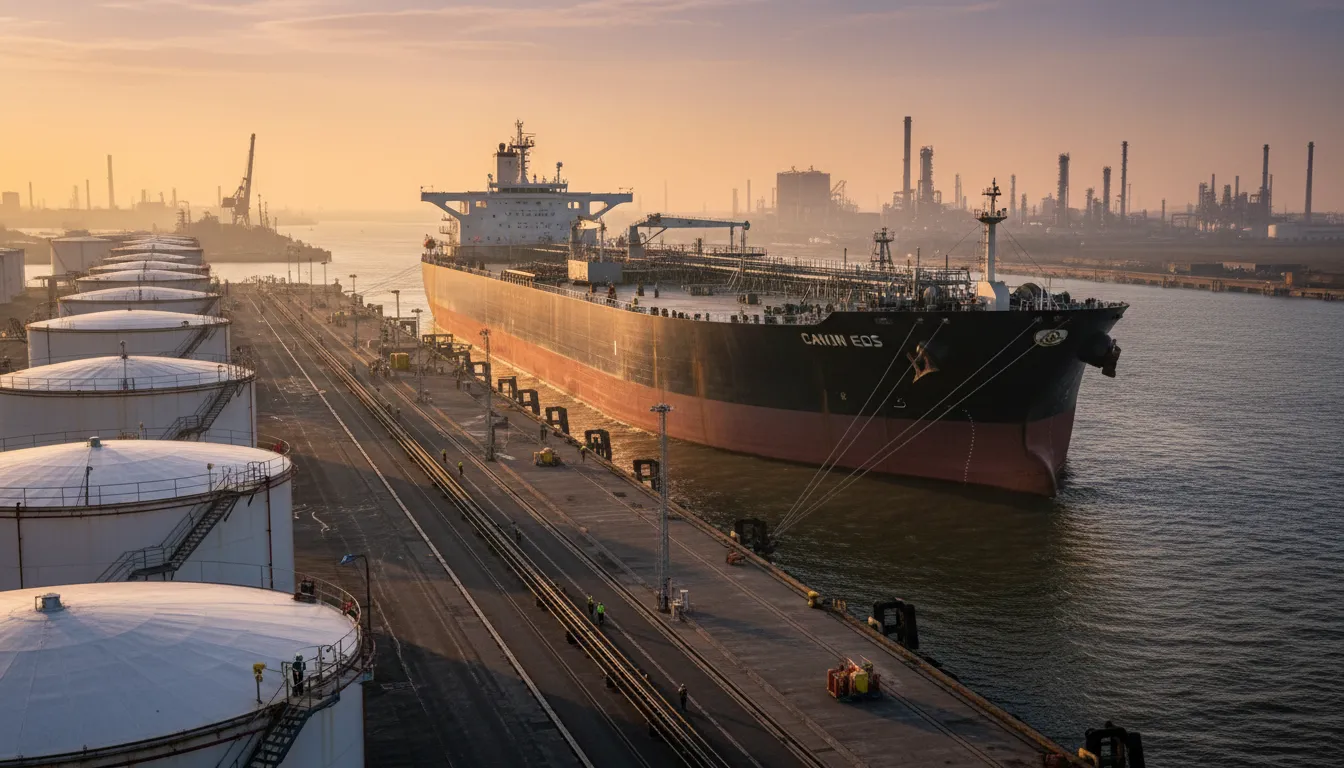
Few numbers ripple through the global economy faster than the price of crude oil. It shapes what drivers pay at the pump, what airlines charge for tickets, and what central bankers worry about at night. Yet the mechanism that produces that single dollar figure — quoted on screens from Houston to Hong Kong — is surprisingly layered, blending physical supply, financial speculation, and raw geopolitics.
Two Benchmarks Rule the Market
Not all crude oil is the same. Lighter, lower-sulfur crudes are easier to refine into petrol and diesel, while heavier, "sour" grades require more processing. To impose order on thousands of crude varieties, the industry relies on benchmarks — reference prices against which other crudes are measured.
The two dominant benchmarks are Brent Crude, drawn from North Sea fields and traded on the Intercontinental Exchange (ICE) in London, and West Texas Intermediate (WTI), delivered to Cushing, Oklahoma, and traded on the New York Mercantile Exchange (NYMEX). Roughly two-thirds of the world's oil contracts are priced relative to Brent, making it the de facto global standard. WTI serves primarily as the U.S. benchmark. A third reference, Dubai Crude, anchors pricing in Asian markets.
Because Brent is extracted at sea and easily loaded onto tankers, it reflects international shipping dynamics. WTI, landlocked in Oklahoma, can diverge from Brent when pipeline bottlenecks or regional gluts develop — sometimes trading several dollars cheaper, sometimes higher.
Supply, Demand, and the OPEC+ Lever
At its core, oil pricing follows supply and demand. Global economic growth drives consumption — factories burn fuel, commuters fill tanks, planes fly — while production from oil fields around the world provides supply. When demand outpaces supply, prices climb; when the reverse occurs, they fall.
The most powerful supply-side actor is OPEC+, a coalition of the 12-member Organization of the Petroleum Exporting Countries and allied producers led by Russia. Together, OPEC+ nations produce roughly 35% of the world's crude and account for about half of all internationally traded oil, according to the U.S. Energy Information Administration.
OPEC+ manages prices primarily by setting production quotas — ceilings on how many barrels each member may pump. When the group cuts output, supply tightens and prices tend to rise. When it opens the taps, prices usually soften. These quotas are agreed at ministerial meetings and take effect after 30 days, though they are not legally binding — members sometimes cheat, pumping above their limits.
Spare capacity matters too. If OPEC+ holds millions of barrels per day in reserve, markets feel reassured that any sudden shortfall can be covered. When spare capacity shrinks, traders price in a higher risk premium.
Futures, Speculators, and the Paper Barrel
Most oil is not bought and sold on the spot market for immediate delivery. Instead, prices are largely discovered through futures contracts — agreements to buy or sell oil at a set price on a future date. The "front-month" contract — the nearest delivery date — is the figure quoted in headlines.
Financial traders, hedge funds, and commodity index funds participate alongside physical buyers, adding liquidity but also introducing sentiment-driven swings. Research from the European Central Bank suggests that speculation on its own does not dramatically amplify fundamental price shocks, but it can accelerate how fast new information is priced in.
Why Geopolitics Moves the Needle
Oil prices often spike before a single barrel of supply is actually lost. Research from the Centre for Economic Policy Research shows that geopolitical oil price shocks generate sharper price increases relative to production declines than ordinary supply disruptions, and their macroeconomic effects tend to be more persistent.
Conflicts near major shipping lanes, sanctions against producing nations, and political instability in oil-rich regions all create risk premiums — extra cost baked into the price to account for possible future disruptions. Traders react to the probability of lost supply, not just actual shortages.
What It All Means for You
The price on the pump is the endpoint of a chain that starts in futures pits and OPEC+ conference rooms. Understanding that chain — benchmarks, quotas, futures, and geopolitical risk — explains why oil prices can swing 10% in a week without a single well shutting down. In a world still dependent on hydrocarbons for transport, manufacturing, and heating, few prices carry more consequence.