How Defense Cooperation Agreements Work—and Why
Defense cooperation agreements are the most common form of institutionalized military partnership between nations, covering everything from joint exercises to arms procurement. Here's how they work and why they've proliferated.
The Quiet Backbone of Global Security
When Italy announced in April 2026 that it would suspend its defense cooperation agreement with Israel, it highlighted a type of international pact most people never think about. Defense cooperation agreements, or DCAs, are now the most common form of institutionalized defense partnership between nations—more prevalent than formal military alliances—yet they rarely make headlines until something goes wrong.
What Is a Defense Cooperation Agreement?
A DCA is a formal bilateral treaty that establishes a legal framework for routine, day-to-day military cooperation between two countries. Unlike mutual defense alliances—which are essentially promises to come to each other's aid during conflict—DCAs are active, operational agreements focused on practical collaboration.
According to research by Brandon J. Kinne, a political scientist at the University of California, Davis, who compiled the Defense Cooperation Agreement Dataset, DCAs typically cover:
- Defense policy coordination — regular ministerial meetings and strategic consultations
- Joint military exercises — combined training operations and war games
- Arms procurement and technology transfer — shared weapons development and equipment sales
- Education and training — exchange programs for military personnel
- Intelligence sharing — exchange of classified security information
A typical DCA also establishes a Bilateral High-Level Defense Committee, usually co-chaired by both countries' defense ministers, to oversee implementation and resolve disputes.
How DCAs Differ From Alliances
The distinction matters. A formal alliance, like NATO's Article 5 commitment, is essentially a passive promise: if you are attacked, we will help. A DCA, by contrast, is an active framework for ongoing cooperation. As Kinne explained in an interview with UC's Institute on Global Conflict and Cooperation, "The point is to engage in routine forms of day-to-day defense cooperation, like promoting research into new types of military technology, facilitating arms trade, and conducting joint military exercises."
New formal alliances are actually quite rare. But DCAs have been proliferating for decades. By 2010, nearly as many country pairs were bound by DCAs as by traditional alliances.
A Post-Cold War Explosion
The growth of DCAs has been dramatic. According to data from the Correlates of War Project, fewer than ten DCAs were signed per year during the 1980s. After the Cold War ended, that number surged to between 40 and 65 annually through the 1990s and 2000s. By 2015, nearly a hundred DCAs were signed in a single year, between partners as varied as Indonesia and Turkey, South Africa and Liberia, and Argentina and Russia.
Between 1980 and 2010 alone, independent countries signed 1,872 unique DCAs, according to Kinne's dataset.
Why They Spread: The Network Effect
Research published in International Organization shows that DCAs spread through a network effect. Countries observe who their partners cooperate with and use those connections to evaluate potential new defense partners. If Country A has DCAs with Countries B and C, then B and C are more likely to sign a DCA with each other.
This pattern is especially visible in East Asia. The United States built a "hub-and-spoke" system of bilateral DCAs with Australia, Japan, the Philippines, and South Korea. Because those countries now use similar military equipment, follow compatible training standards, and share operational protocols learned from working with Washington, they have increasingly signed DCAs with each other—creating a web of cooperation that extends far beyond any single agreement.
What Happens When a DCA Is Suspended
When a country suspends or terminates a DCA, the practical consequences can be significant. Joint exercises halt, technology-sharing programs freeze, arms deliveries may stop, and military personnel exchanges end. However, the political signal often matters more than the operational impact. Suspension of a DCA is a calibrated diplomatic tool—less dramatic than breaking off diplomatic relations entirely, but far more concrete than a verbal rebuke.
DCAs can also contain automatic renewal clauses, meaning they continue indefinitely unless one party formally acts to stop them. This design creates stability but also means that suspension requires a deliberate political decision—making it a clear statement of intent when it happens.
The Invisible Architecture of Security
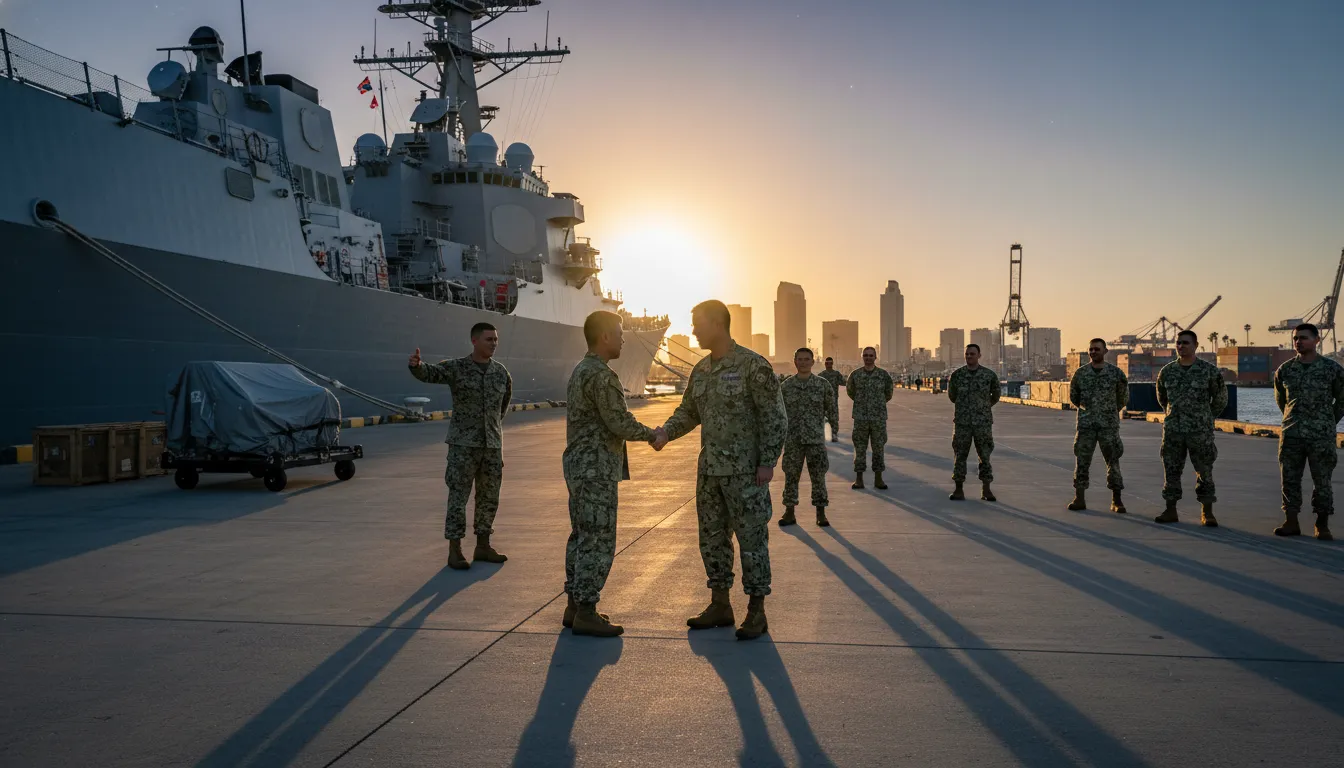
Defense cooperation agreements may lack the drama of military alliances or the visibility of arms deals, but they form the connective tissue of modern international security. With thousands of these agreements now linking nations across every continent, they represent a dense, evolving network that shapes how countries prepare for conflict, share technology, and build trust—one bilateral handshake at a time.