What Is the US Semiquincentennial—and Why It Matters
America marks its 250th birthday on July 4, 2026. Here's how the semiquincentennial works, what events are planned, and how past anniversary celebrations shaped the nation's identity.
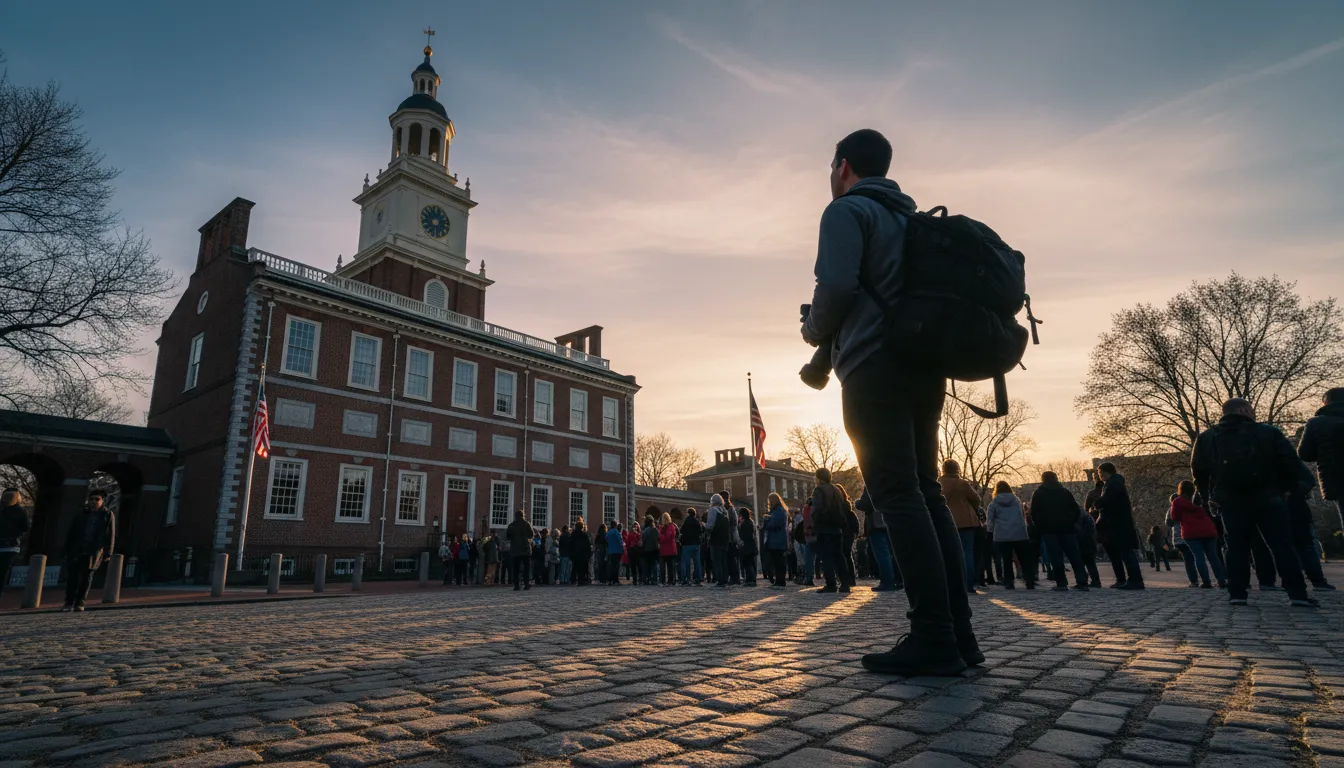
A Quarter-Millennium of Independence
The United States Semiquincentennial—sometimes called the bisesquicentennial or simply "America 250"—marks the 250th anniversary of the adoption of the Declaration of Independence on July 4, 1776. It is the largest planned national commemoration since the bicentennial in 1976, and preparations have been underway for a decade.
Congress established the United States Semiquincentennial Commission in 2016 as a bipartisan body to coordinate celebrations. The commission's nonprofit arm, America250, set an ambitious goal it calls "350 by 250"—engaging all 350 million Americans by the anniversary date. A separate Freedom 250 Task Force, created by executive order in 2025, operates from the White House with its own programming and funding.
What's Happening in 2026
The celebrations span the entire year and stretch across the country. Four cities—Boston, Philadelphia, New York, and Charleston—serve as primary hosts for federally coordinated events, but hundreds of communities are organizing their own commemorations.
Headline events include:
- Sail4th 250 (New York, July 3–9): The largest international maritime gathering in U.S. history, featuring 60 tall ships from over 20 countries, more than 40 allied naval vessels, and aerial displays led by the Blue Angels.
- National Time Capsule Burial (Philadelphia, July 4): A capsule will be sealed at Independence Mall, steps from where the Declaration was signed.
- Times Square Countdown (New York, July 3): A special one-off ball drop counting down to midnight on the Fourth of July.
- National Archives Exhibition (Washington, D.C.): An extended display running through 2027, showcasing founding documents and artifacts.
- Lincoln Memorial Immersive Museum: A new underground experience beneath the memorial, funded through National Park Service restoration grants.
Tentpole programs such as America's Field Trip (student contests), America Gives (service initiatives), and America Innovates (a traveling technology exposition) aim to carry the commemoration beyond a single holiday.
How Past Anniversaries Shaped the Nation
Each previous milestone reflected the country's preoccupations at the time—and the 250th is no different.
The 1876 Centennial in Philadelphia drew roughly 10 million visitors—about one-fifth of the population—to a sprawling exposition that showcased industrial might. Attendees witnessed Alexander Graham Bell's telephone and Thomas Edison's telegraph improvements. Yet the celebration largely excluded Black Americans, and several Southern states boycotted in protest against Reconstruction policies.
The 1926 Sesquicentennial, also in Philadelphia, was a commercial disappointment. Organizers expected 30 million visitors; fewer than 6.5 million came, and the exposition declared bankruptcy. Its most lasting contribution was a recreated colonial street that presented a sanitized version of 1776 life.
The 1976 Bicentennial arrived amid the aftermath of Vietnam, Watergate, and economic stagnation. Planning that began in the optimistic 1960s collided with deep national disillusionment. The tall ships parade in New York Harbor became an iconic moment, but attendance in Philadelphia fell far short of projections.
Debates and Challenges
The 2026 celebrations have not been without friction. The existence of two parallel organizing bodies—the congressional America250 commission and the White House Freedom 250 task force—has raised concerns about politicization. By early 2026, the America250 commission had received only $25 million of its congressionally appropriated $150 million, while $10 million was redirected to the Freedom 250 initiative.
Historians note a recurring pattern: anniversary celebrations inevitably become contests over how the nation tells its own story. Disputes over which historical narratives to emphasize—and which to downplay—echo tensions present at every previous milestone.
Why It Matters Beyond the Fireworks
National anniversaries do more than mark the calendar. The 1876 centennial helped establish the United States as an industrial power on the world stage. The 1976 bicentennial sparked a historic preservation movement that saved thousands of buildings and neighborhoods. Whatever form the semiquincentennial ultimately takes, its legacy will likely be shaped less by any single event than by the broader conversation it forces about American identity at 250 years old.