How Jet Fuel Gets From Refinery to Your Plane
Jet fuel powers every commercial flight, yet few passengers know the complex supply chain that moves kerosene from crude oil refineries through pipelines, fuel farms, and hydrant systems to an aircraft's wing tanks.
What Jet Fuel Actually Is
Every commercial flight runs on a refined petroleum product called Jet A-1 — a kerosene-type fuel composed of C9 to C16 hydrocarbons that boils in the range of 145–300 °C. Its defining feature is a very low freezing point of −47 °C, which keeps it liquid at cruising altitudes where outside temperatures can plunge below −55 °C. Military variants (JP-5, JP-8) share the same kerosene base but meet stricter flash-point or additive requirements.
Only about 9 percent of every barrel of crude oil ends up as kerosene-type jet fuel, according to the U.S. Energy Information Administration. That limited yield is one reason jet fuel prices are so sensitive to crude oil disruptions — refiners cannot simply "dial up" kerosene output without altering the balance of gasoline, diesel, and other products that come from the same barrel.
From Crude Oil to Kerosene
At the refinery, crude oil enters an atmospheric distillation column where it is heated and separated into fractions by boiling point. The kerosene fraction — sometimes called "straight-run" kerosene — is drawn off at the correct temperature range. Heavier crude fractions can also be converted into jet fuel through hydrocracking, a process that uses hydrogen and catalysts to break large molecules into lighter, jet-range hydrocarbons.
Raw kerosene still contains impurities. A hydrotreating step removes sulfur, nitrogen, and unstable compounds, while a Merox sweetening process converts corrosive mercaptans into harmless disulfides. The result is a clean, stable fuel that meets international specifications such as ASTM D1655 and the UK's DEF STAN 91-091.
Moving Fuel to the Airport
Once refined, jet fuel must travel — sometimes hundreds of miles — to reach an airport. According to Airlines for America, the breakdown of transport methods in the United States is roughly:
- Pipeline — 63% of all refined product movement
- Water carriers (barges, tankers) — 26%
- Tanker trucks — 5%
- Rail — 5%
Major airports sit at the end of dedicated pipeline spurs. New York's JFK, for instance, receives fuel via a 40-mile underground pipeline from a storage facility in Linden, New Jersey, feeding a fuel capacity of 32 million gallons. Smaller regional airports, by contrast, rely almost entirely on tanker truck deliveries — making them more vulnerable to road disruptions and driver shortages.
The Fuel Farm and Quality Control
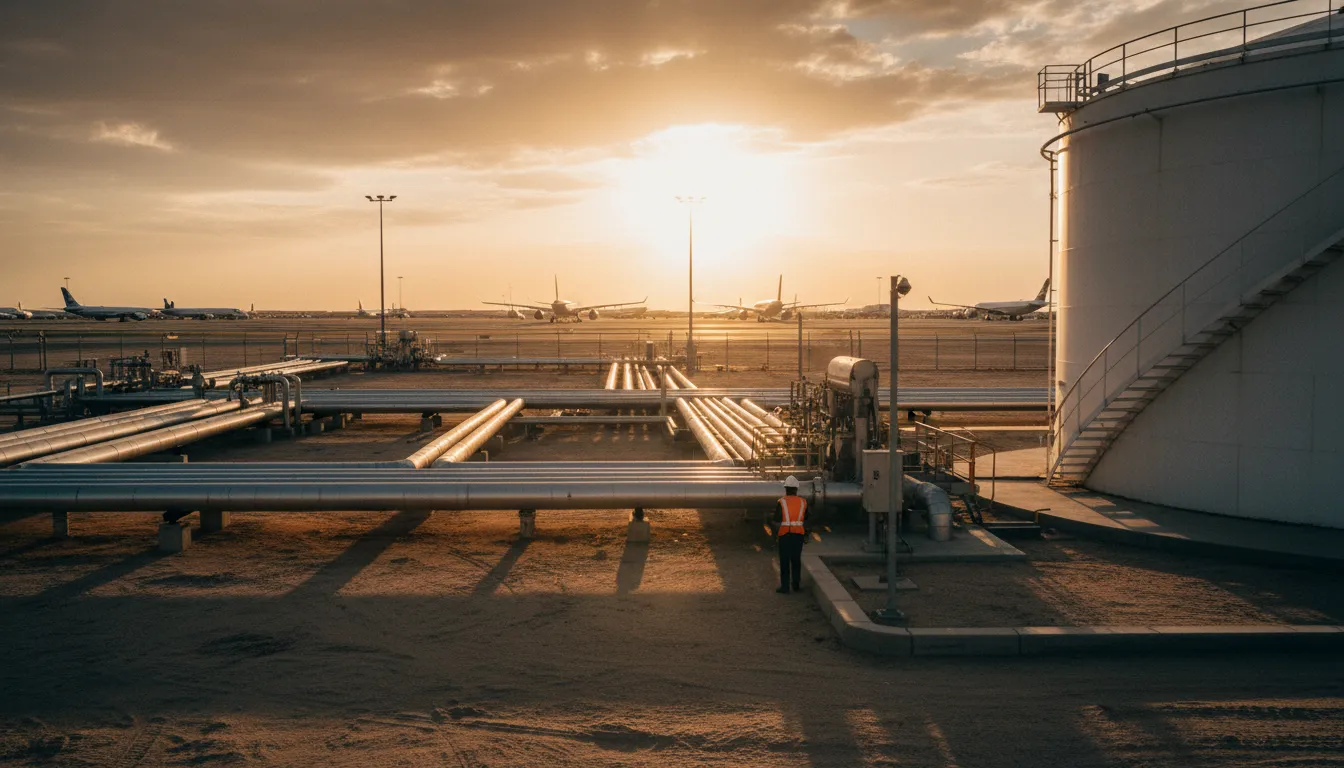
At the airport, fuel arrives at a fuel farm: a cluster of large storage tanks equipped with pumping systems, metering equipment, and fire-safety infrastructure. Before fuel enters the tanks, it passes through filtration rigs and is tested under ATA Spec 103 protocols for water, particulates, and microbial contamination. Any batch that fails is rejected — contaminated fuel in a turbine engine can cause flameouts or catastrophic damage.
From Tank to Wing
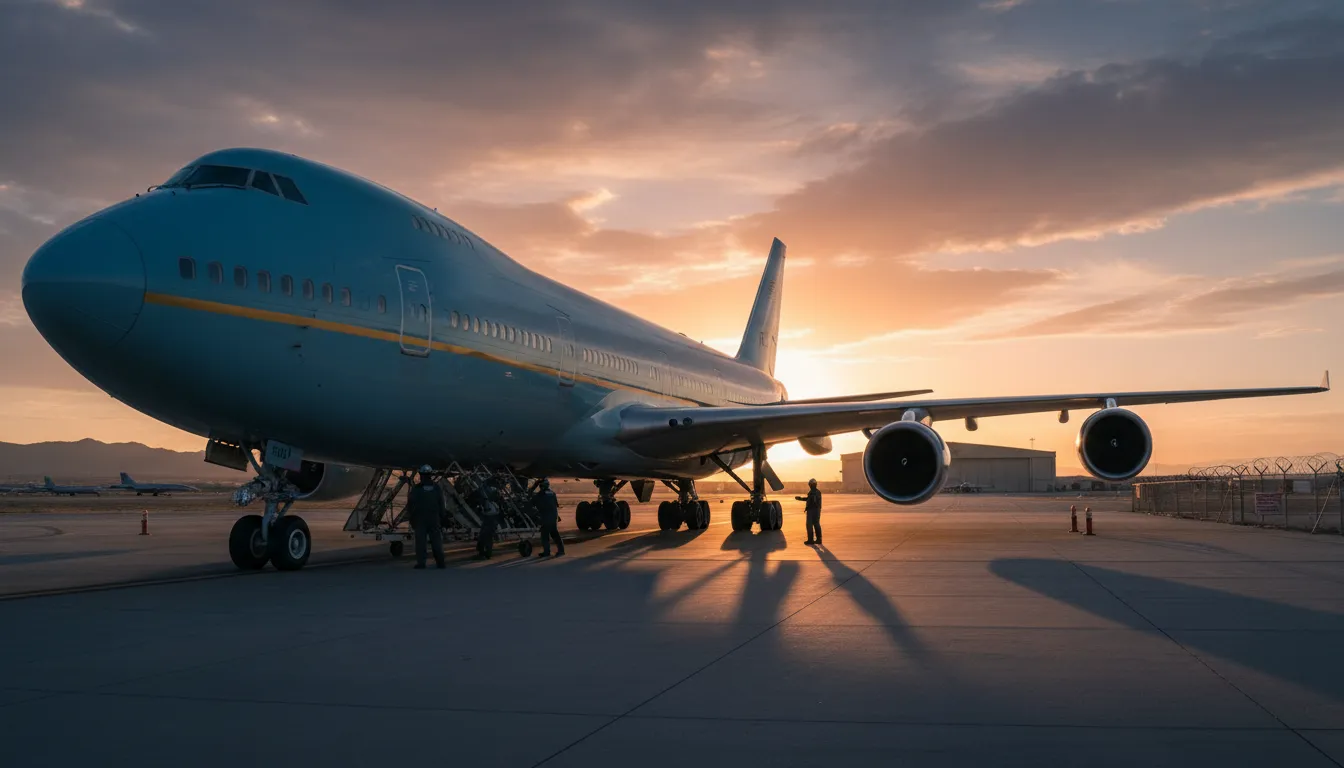
The final step uses one of two systems. At smaller airports, refueling trucks (bowsers) carry several thousand liters of fuel directly to the aircraft. At major hubs, a more efficient hydrant system pumps fuel through underground pipes running beneath taxiways to hydrant pits at each gate. A hydrant dispenser vehicle connects a hose between the buried valve and the aircraft's wing-mounted fueling port, delivering fuel at 600–1,000 gallons per minute. For wide-body jets, two dispensers can work simultaneously — filling even the largest aircraft in about an hour.
Safety dominates the process. Aircraft accumulate static electricity in flight, and fuel flowing through hoses generates more. Before any fuel flows, ground crews attach a bonding cable from the dispenser to the aircraft's landing gear, equalizing electrical potential and preventing sparks.
Why the Chain Is Fragile
Because jet fuel is a just-in-time commodity, airports typically hold only a few days' worth of supply. Any bottleneck — a refinery outage, a pipeline rupture, a blocked shipping lane — can cascade quickly into rationing and flight cancellations. Unlike gasoline, jet fuel cannot easily be sourced from alternative suppliers on short notice; it must meet exacting specifications, and the infrastructure to deliver it is fixed and capital-intensive.
Understanding this chain explains why events far from any runway — an oil-field disruption thousands of miles away or a single pipeline failure — can ground flights within days. The journey from crude oil well to aircraft wing is long, complex, and surprisingly delicate.