How Reusable Rockets Work—and Why They Slashed Costs
Reusable rockets land themselves after launch and fly again, cutting the cost of reaching orbit by up to 70 percent. Here is the engineering behind propulsive landing and why it transformed the space industry.
The Problem With Throwing Away a Rocket
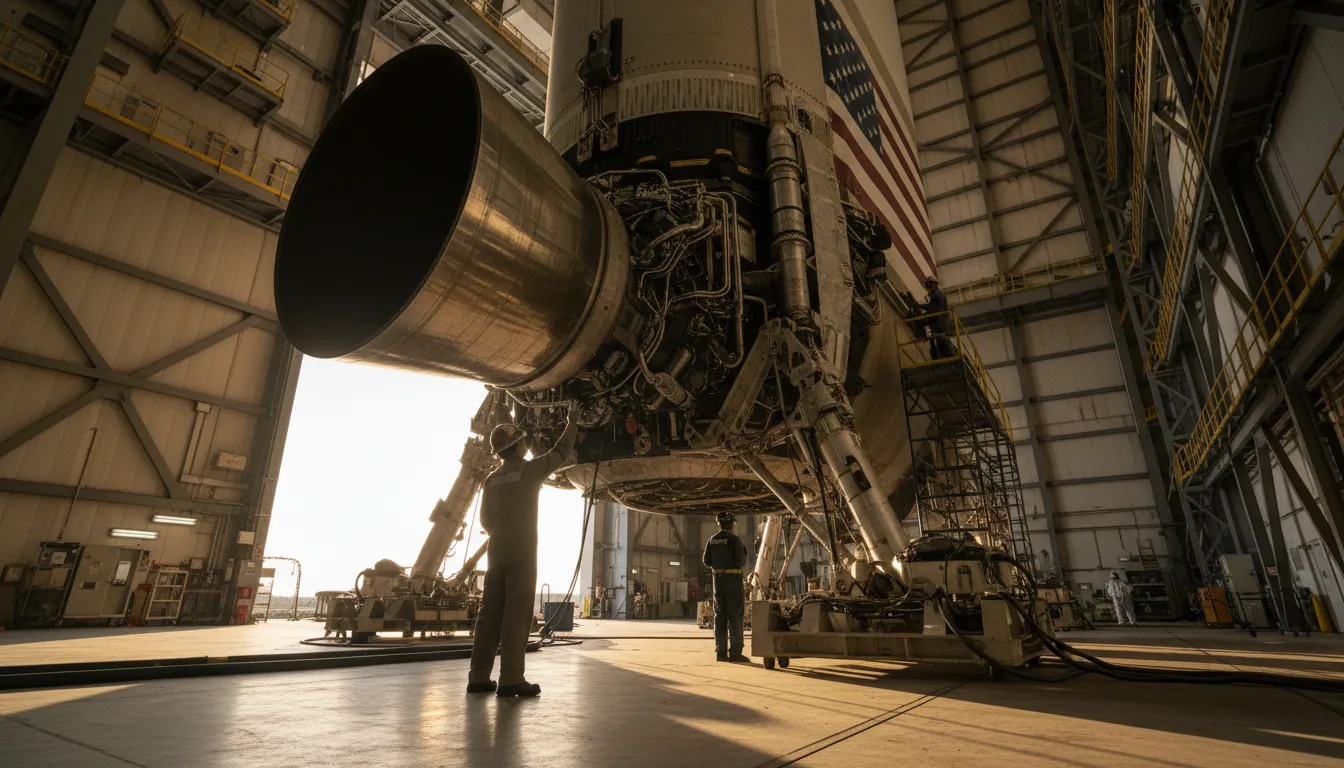
For most of spaceflight history, every rocket that left the launch pad was discarded after a single use. Billion-dollar boosters would burn for a few minutes, separate from their payload, and fall into the ocean. NASA's Space Shuttle partially addressed this by recovering its solid rocket boosters and orbiter, but refurbishment costs were so high that the system never delivered on its promise of cheap access to space.
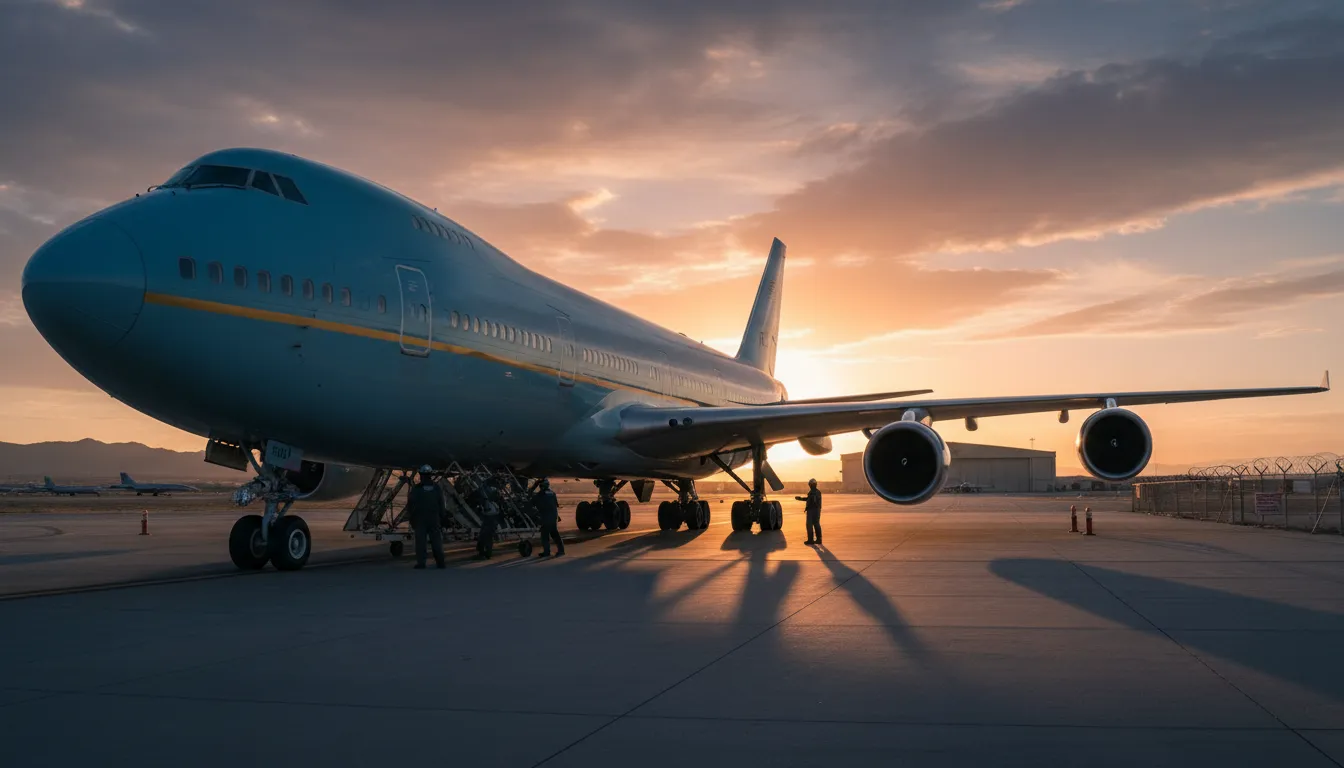
The economics were brutal. Traditional expendable rockets cost upward of $25,000 per kilogram to deliver cargo to low Earth orbit. Imagine scrapping a Boeing 747 after every transatlantic flight—that was the standard business model of the launch industry for decades.
How a Booster Lands Itself
A reusable rocket launch begins identically to a disposable one. The first-stage booster fires its engines, accelerates the vehicle to roughly ten times the speed of a bullet, and separates from the upper stage after about two and a half minutes. What happens next is the revolutionary part.
Cold-gas thrusters near the top of the booster flip it around so it faces engines-down. The booster then performs a boostback burn—a brief engine firing that redirects its trajectory toward the landing site. As it re-enters the atmosphere, grid fins unfold from the rocket's body. These lattice-shaped surfaces steer the booster with remarkable precision at supersonic and hypersonic speeds, generating control forces while allowing airflow to pass through, which reduces drag.
Throughout the descent, an onboard flight computer processes data from inertial measurement units, GNSS receivers, and radar altimeters, executing thousands of corrections per second. In the final moments, one or three engines reignite for the landing burn, slowing the 40-metre-tall booster to a gentle touchdown on either a ground pad or an autonomous drone ship at sea. The entire landing sequence is fully automated.
What Made It Possible
Several engineering breakthroughs converged to make propulsive landing practical:
- Thrust vectoring — engines that gimbal (swivel) to steer the rocket precisely during powered flight
- Deep throttling — the ability to reduce engine thrust low enough for a controlled hover and soft touchdown
- Thermal protection — heat-resistant materials on engine nozzles and the booster base that survive re-entry temperatures
- Rapid software iteration — machine-learning-augmented guidance algorithms that improve with every flight
SpaceX's Falcon 9 was the first orbital-class rocket to demonstrate propulsive vertical landing in December 2015. Blue Origin's smaller New Shepard suborbital vehicle had achieved a landing weeks earlier, and the company's much larger New Glenn orbital rocket successfully landed its booster on its second flight in late 2025.
The Numbers That Changed an Industry
Reusability has slashed launch costs by up to 70 percent. A Falcon 9 launch now costs around $62 million—roughly $2,700 per kilogram to low Earth orbit. Refurbishing a recovered booster costs about 10 percent of building a new one, saving more than $46 million each time a booster flies again.
The fleet statistics are staggering. As of early 2026, Falcon 9 boosters have landed successfully in 598 of 611 attempts—a 97.9 percent success rate. Individual boosters have flown more than 30 times, with turnaround times as short as nine days between flights. NASA alone has saved over $500 million by using reused boosters for crewed missions.
Blue Origin's New Glenn is designed for a minimum of 25 flights per booster, and in April 2026 the company completed a static fire test of a previously flown booster—its first step toward routine reuse.
What Comes Next
The next frontier is full reusability—recovering and reflying both the first and second stages. SpaceX's Starship aims to make the entire vehicle reusable, with a target cost below $10 per kilogram. If achieved, that would represent a reduction of more than 99 percent from the expendable-rocket era.
China's space agencies and commercial startups are also developing reusable boosters, while Rocket Lab and Relativity Space pursue their own recovery programs. The principle that proved impossible for decades—landing a rocket after orbital flight—has become routine, and the economics of space will never be the same.