How Lab-Grown Organs Work—From Scaffold to Transplant
Scientists strip donor organs of their cells, rebuild them with a patient's own tissue, and implant them without immunosuppression. Here is how the decellularization process works and why it could solve the organ-shortage crisis.
The Organ Shortage Problem
More than 100,000 people in the United States alone sit on transplant waiting lists at any given time, and thousands die each year before a matching organ becomes available. Even those who receive a transplant face a lifetime of immunosuppressive drugs to prevent rejection. For decades, researchers have pursued a radical alternative: growing replacement organs in the laboratory. Recent breakthroughs—including the first lab-grown esophagus that restored swallowing in a large animal without immunosuppression—suggest this goal is closer than ever.
Strip, Rebuild, Implant
The dominant technique behind lab-grown organs is a two-step process called decellularization and recellularization. It works like renovating a building: tear out the interior but keep the frame, then rebuild with new materials tailored to the new occupant.
Step 1 — Decellularization
A donor organ—animal or human—is flushed with detergents, enzymes, or other chemical agents that dissolve every living cell inside it. What remains is the extracellular matrix (ECM): a ghostly, translucent scaffold made of collagen, elastin, and glycoproteins. This scaffold retains the organ's original architecture—its blood-vessel channels, its mechanical strength, and the biochemical signals that tell cells where to attach and how to behave.
Complete removal of cellular material is critical. Leftover DNA or antigens can trigger inflammation and immune rejection, undermining the entire purpose of the technique.
Step 2 — Recellularization
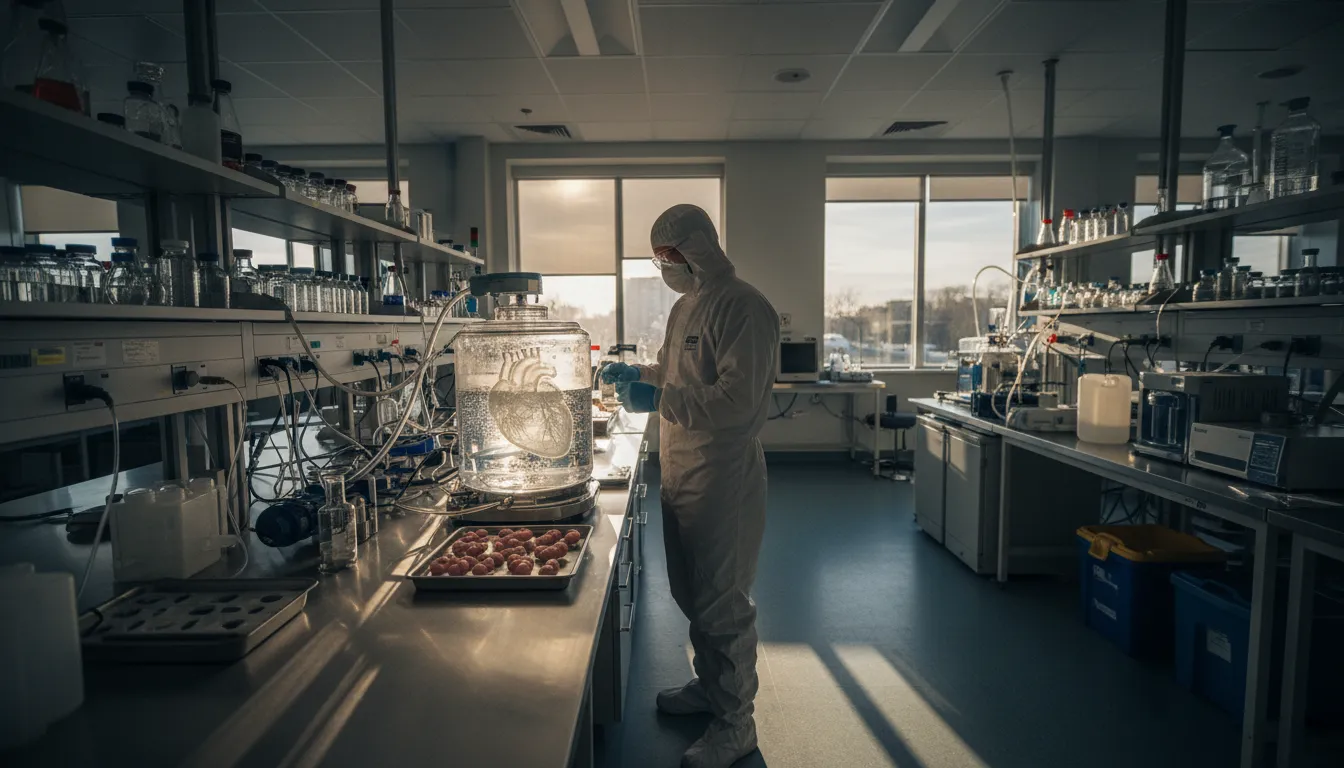
The empty scaffold is then repopulated with the patient's own cells, harvested from a small biopsy. These cells are multiplied in the lab and injected into the scaffold, which is placed in a bioreactor—a chamber that pumps nutrients and growth factors through the tissue, simulating conditions inside the body. Over days to weeks, the cells migrate into position, multiply, and begin forming functional tissue.
Because the rebuilt organ uses the recipient's own cells, the immune system recognizes it as "self." In principle, this eliminates the need for immunosuppressive drugs—a transformative advantage over conventional transplants.
What Has Already Worked
The first laboratory-grown internal organs were transplanted in humans in 1999, when a team led by Anthony Atala at Wake Forest University implanted lab-grown bladders into children with spina bifida. Results, published in The Lancet in 2006, showed the engineered bladders functioned for years.
Since then, researchers have successfully transplanted lab-grown skin, cartilage, and windpipes. In 2026, scientists from Great Ormond Street Hospital and University College London reported in Nature Biotechnology that they had created a lab-grown esophagus using the decellularization method. Eight pigs received the engineered grafts and recovered normal swallowing within three months—without any immunosuppression. The tissue grew naturally alongside the animals.
The Remaining Hurdles
Simple, hollow organs like bladders and esophagi are one thing. Complex organs like hearts, livers, and kidneys are vastly harder. They contain dozens of specialized cell types, intricate vascular networks, and precise micro-architecture that must function in concert from the moment of transplant.
Progress is being made. United Therapeutics has 3D-printed a human lung scaffold containing 4,000 kilometers of capillaries and 200 million alveoli capable of gas exchange in animal models. Researchers at UC San Francisco have engineered "organizer" cells that can direct stem cells to form rudimentary heart-like structures with beating ventricles.
Still, no fully functional complex organ has been grown in a laboratory and transplanted into a human. Scaling up production, ensuring long-term durability, and navigating regulatory approval remain significant challenges.
Why It Matters
If decellularized scaffolds can be reliably rebuilt with a patient's own cells, the implications are enormous. Organ waiting lists could shrink or disappear. Lifetime immunosuppression—with its risks of infection, cancer, and organ damage—could become unnecessary. Children born with congenital defects, like the esophageal gaps that the GOSH team aims to treat, could receive engineered replacements that grow with them.
The field is no longer asking whether lab-grown organs are possible. The question now is how quickly they can move from the lab bench to the operating room.