How NASA's SLS Mega-Rocket Works—and Why It Matters
NASA's Space Launch System is the most powerful rocket ever built for crewed spaceflight, designed to send astronauts beyond low Earth orbit for the first time since the Apollo era. Here is how its engines, boosters, and stages work together to reach the Moon.
A Rocket Built for Deep Space
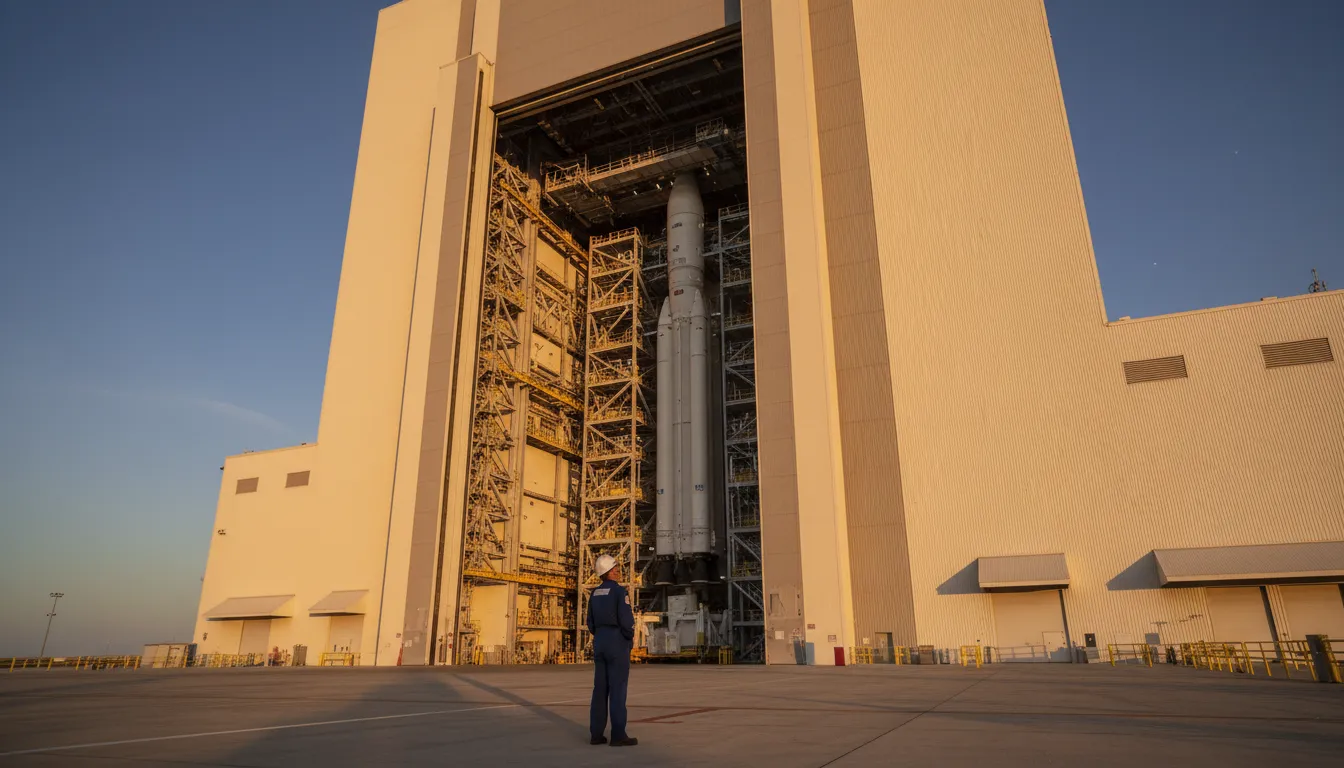
For decades after the Space Shuttle retired in 2011, NASA lacked a vehicle capable of sending humans beyond low Earth orbit. The Space Launch System (SLS) was built to fill that gap—a super heavy-lift expendable rocket designed specifically to launch the Orion crew capsule and large payloads toward the Moon and, eventually, deeper into the solar system.
Standing 322 feet tall in its Block 1 configuration, SLS is the most powerful rocket NASA has ever flown. When it first lifted off on the uncrewed Artemis I mission in November 2022, it generated more than 8.8 million pounds of thrust at liftoff—roughly 20 percent more than the legendary Saturn V that carried Apollo astronauts to the Moon.
How the Stages Work Together
Twin Solid Rocket Boosters
The two side-mounted solid rocket boosters are the largest ever built for crewed flight. Each stands 17 stories tall, weighs 1.6 million pounds, and produces up to 3.6 million pounds of thrust. Together, the boosters supply more than 75 percent of the total thrust during the first two minutes of flight. They are derived from the Space Shuttle's four-segment boosters but extended to five segments for greater power. Once their propellant is spent, they separate and fall into the ocean.
The Core Stage
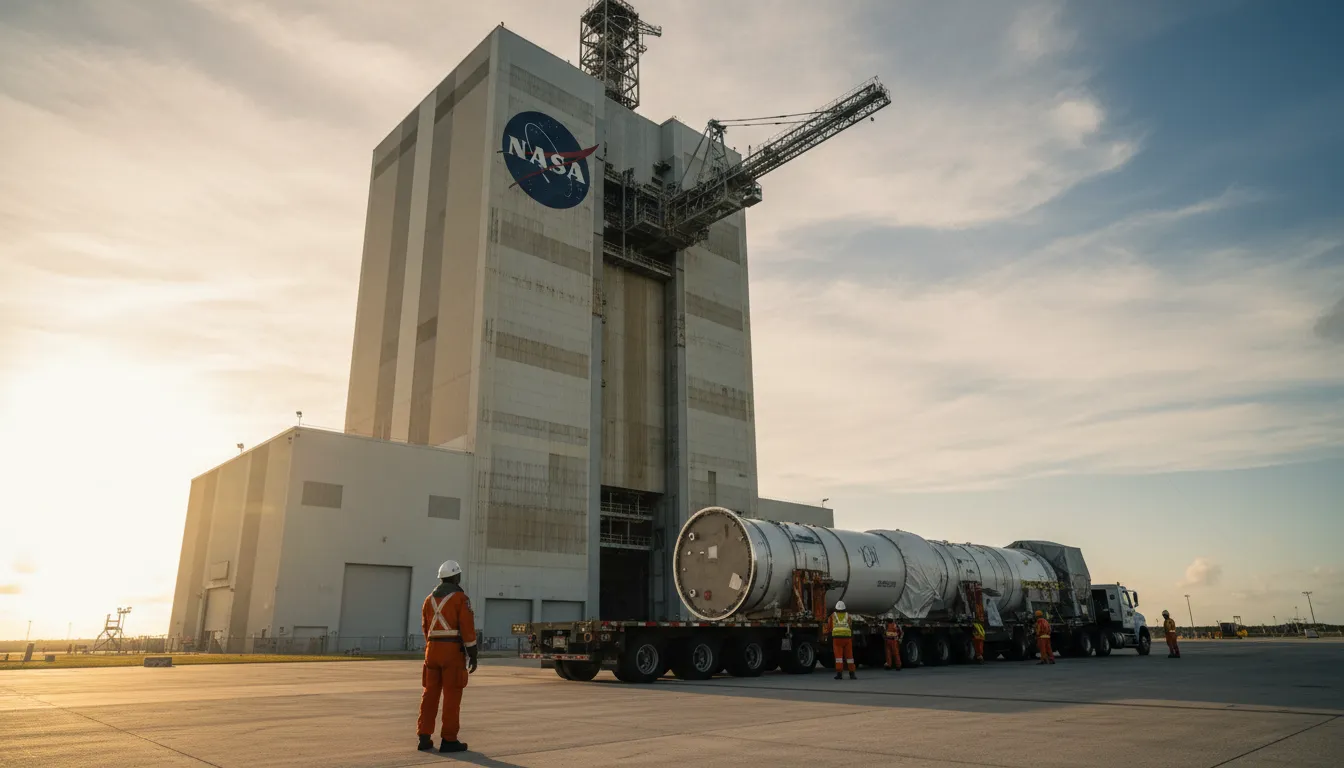
Between the boosters sits the core stage—a 212-foot-tall, 27.6-foot-diameter cylinder built by Boeing. It holds 733,000 gallons of super-cooled liquid hydrogen (at −423 °F) and liquid oxygen (at −297 °F). Four RS-25 engines, heritage powerplants upgraded from the Space Shuttle program, ignite seconds before liftoff and fire continuously for roughly 500 seconds. The RS-25 uses a staged-combustion cycle, mixing hydrogen and oxygen at extreme pressure to produce efficient, controllable thrust. Together the four engines generate about 2 million pounds of force, complementing the boosters' raw power.
Upper Stage
After the core stage separates approximately eight minutes into flight, the Interim Cryogenic Propulsion Stage (ICPS) takes over. Powered by a single RL10 engine burning liquid hydrogen and oxygen, the ICPS performs one or two burns to place Orion on its trajectory toward the Moon. For the first three Artemis missions, the ICPS serves as the upper stage; NASA plans to switch to ULA's Centaur V upper stage, with twin RL10 engines, for Artemis IV and beyond.
What SLS Can Carry
In its Block 1 form, SLS can send more than 27 metric tons (59,500 pounds) to the Moon on a single launch—enough for the Orion spacecraft, its crew of four, and supporting hardware. NASA originally planned more powerful Block 1B and Block 2 variants with an Exploration Upper Stage and upgraded boosters, but in February 2026 Administrator Jared Isaacman cancelled those upgrades in favor of standardizing on Block 1 with the Centaur V upper stage to reduce risk and improve launch cadence.
Why It Matters
SLS is currently the only rocket rated to send astronauts beyond low Earth orbit. While commercial alternatives like SpaceX's Starship are in development, SLS remains NASA's proven path for crewed lunar missions under the Artemis program. Its design philosophy—combining heritage Shuttle-era hardware with modern avionics—allowed NASA to leverage decades of engineering experience while meeting the demanding requirements of deep-space flight.
Critics point to its cost and slow launch rate; the gap between Artemis I and Artemis II exceeded three years. NASA has responded by adding missions and targeting at least one lunar surface landing per year after 2027. Whether SLS remains the backbone of American deep-space exploration or is eventually supplemented by commercial heavy-lift vehicles, it represents a critical bridge between the Shuttle era and humanity's next chapter beyond Earth.