How Plate Tectonics Works—and Why Earth Needs It
Earth's outer shell is cracked into massive moving plates that drive earthquakes, build mountains, regulate climate, and may be essential for life itself. Here's how the system works.
A Planet in Pieces
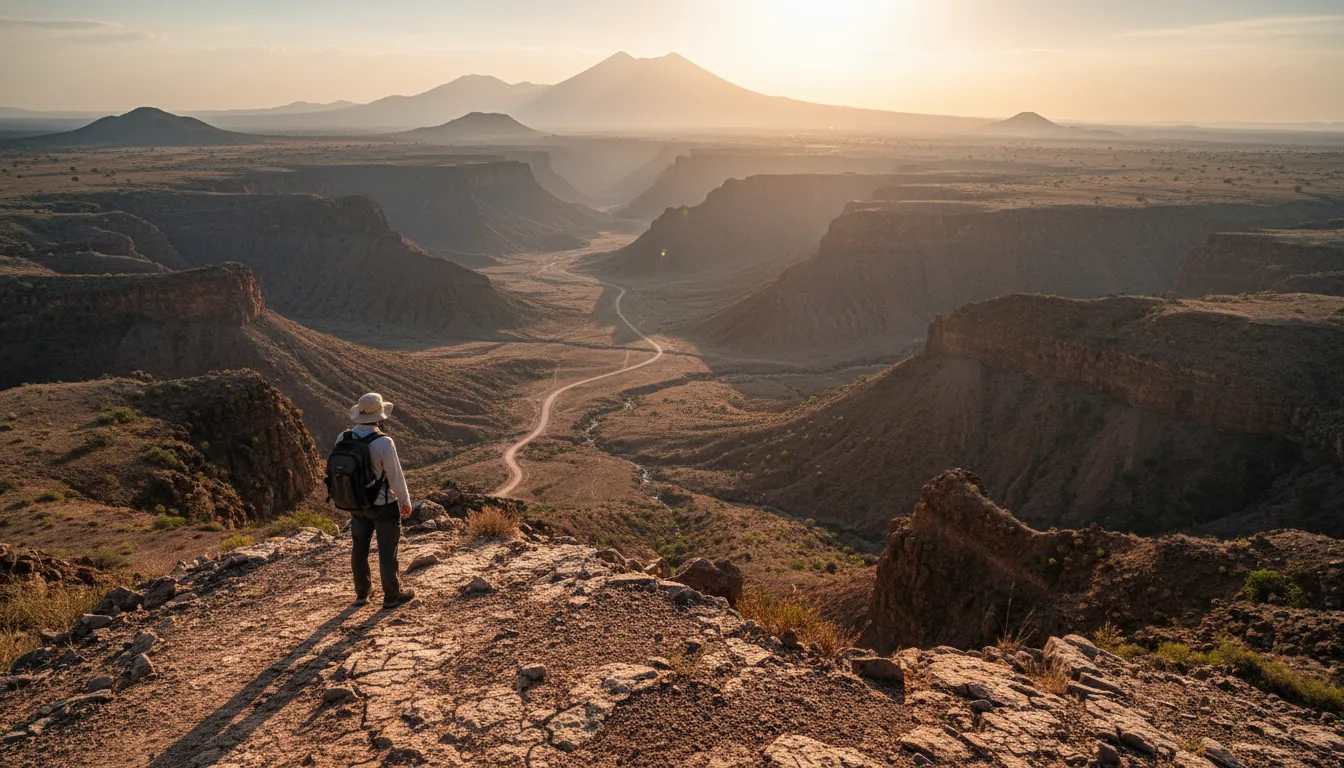
Earth looks solid from space, but its outermost layer is anything but. The lithosphere—a rigid shell of crust and upper mantle roughly 100 kilometers thick—is broken into about 15 major plates and dozens of smaller ones. These enormous slabs float on a hotter, softer layer called the asthenosphere, creeping across the planet's surface at roughly the speed fingernails grow: a few centimeters per year.
That slow motion reshapes continents, triggers earthquakes and volcanic eruptions, and—according to growing evidence—helps keep Earth habitable. Understanding plate tectonics is key to understanding why our planet looks, and works, the way it does.
What Drives the Plates
Deep inside the Earth, radioactive decay generates enormous heat. That heat sets up convection currents in the mantle: hot rock rises toward the surface, spreads laterally, cools, and sinks back down. These slow-churning currents drag the overlying plates along.
Two additional forces help. At mid-ocean ridges, fresh magma pushes plates apart in a process called ridge push. At subduction zones, cold, dense oceanic crust plunges back into the mantle under its own weight—a mechanism known as slab pull, which most geophysicists consider the dominant driving force.
Three Types of Boundaries
Plates interact at their edges in three fundamental ways:
- Divergent boundaries — Plates pull apart. Magma wells up to fill the gap, creating new oceanic crust. The Mid-Atlantic Ridge, which runs the length of the Atlantic Ocean, is the textbook example.
- Convergent boundaries — Plates collide. When oceanic crust meets continental crust, the denser oceanic plate dives beneath in subduction, generating deep-ocean trenches and volcanic arcs. When two continental plates collide, neither subducts easily—instead they crumple upward, building mountain ranges like the Himalayas.
- Transform boundaries — Plates slide past each other horizontally. California's San Andreas Fault is the most famous example, producing frequent earthquakes as the Pacific and North American plates grind alongside one another.
More than 80 percent of the world's earthquakes and volcanic eruptions occur along or near these plate boundaries, according to the U.S. National Park Service.
Earth's Built-In Thermostat
Plate tectonics does far more than rearrange geography. It acts as a planetary climate regulator through the carbon cycle. Volcanoes at divergent and convergent boundaries release carbon dioxide into the atmosphere, warming the planet. Meanwhile, rain dissolves CO₂ to form carbonic acid, which weathers silicate rocks on land. Rivers carry the dissolved carbon to the ocean, where it is locked into limestone on the seafloor. Subduction eventually pulls that carbon back into the mantle, completing the loop.
This feedback mechanism has helped keep Earth's surface temperature within a livable range for billions of years—even as the Sun's energy output has increased by roughly 30 percent since our planet formed, according to Quanta Magazine.
When Did It All Start?
One of geology's biggest open questions is when plate tectonics began. Estimates range wildly—from before four billion years ago to as recently as one billion years ago. A 2026 study published in Science pushed the timeline back dramatically. By analyzing magnetic signatures preserved in 3.48-billion-year-old rocks from Western Australia, researchers showed that a section of crust drifted from 53 to 77 degrees latitude and rotated more than 90 degrees over roughly 30 million years—the oldest direct evidence of relative plate motion.
Part of the difficulty is that plate tectonics erases its own history. Oceanic crust is continuously recycled at subduction zones, so almost none of it survives more than about 200 million years. Scientists must rely on indirect clues in the rare fragments of ancient continental rock that remain.
Why It Matters Beyond Earth
As astronomers catalogue thousands of exoplanets, a pressing question is whether plate tectonics is necessary for life. Many scientists argue it is, because the process recycles nutrients, regulates atmospheric chemistry, and generates the magnetic-field-sustaining heat that shields a planet from stellar radiation. Others point to research suggesting that "stagnant lid" planets—those without active tectonics—could still maintain liquid water for billions of years.
Either way, Earth's cracked, restless shell remains one of its most distinctive features. It builds the mountains, feeds the volcanoes, shakes the ground—and, quite possibly, made life itself possible.