What Is the Clarion-Clipperton Zone and Why It Matters
The Clarion-Clipperton Zone is a vast stretch of Pacific seafloor rich in critical minerals and undiscovered species. It sits at the center of the global debate over deep-sea mining.
A Hidden Frontier Between Hawaii and Mexico
Stretching roughly 4,500 miles across the central and eastern Pacific Ocean, the Clarion-Clipperton Zone (CCZ) is one of the least explored places on Earth. Named after two undersea fracture systems that mark its northern and southern boundaries, this abyssal plain covers approximately 4.5 million square kilometers — an area roughly the size of the continental United States. Its flat, sediment-covered seafloor sits four to five kilometers beneath the surface, in perpetual darkness and near-freezing temperatures.
Yet this remote wasteland is anything but empty. The CCZ harbors staggering biodiversity and trillions of dollars' worth of critical minerals, making it the focal point of a fierce global debate: should humanity mine the deep ocean?
The Treasure on the Seafloor
Scattered across the CCZ's abyssal plains are billions of polymetallic nodules — potato-sized lumps of rock that form over millions of years as dissolved metals precipitate around a nucleus, such as a shark tooth or fragment of shell. Layer by layer, they accumulate manganese, nickel, cobalt, copper, titanium, and rare earth elements.
These are precisely the metals the world needs for batteries, wind turbines, smartphones, and electric vehicles. According to the journal Nature Reviews Earth & Environment, the CCZ alone contains more nickel and cobalt than all known land-based reserves combined. That has made the zone irresistible to mining companies eyeing the clean-energy transition.
A Biodiversity Hotspot in the Dark
Recent surveys have upended the assumption that the deep ocean is barren. A landmark five-year expedition documented nearly 800 species in the CCZ, with researchers from the Natural History Museum estimating that 88 to 92 percent of species in the zone remain scientifically undescribed. Many are found nowhere else on Earth.
Ironically, the very nodules targeted for mining serve as the primary habitat for much of this life. On the featureless abyssal plain, nodules are one of the only hard surfaces for organisms to anchor onto — sponges, corals, xenophyophores, and countless invertebrates depend on them.
How Deep-Sea Mining Would Work
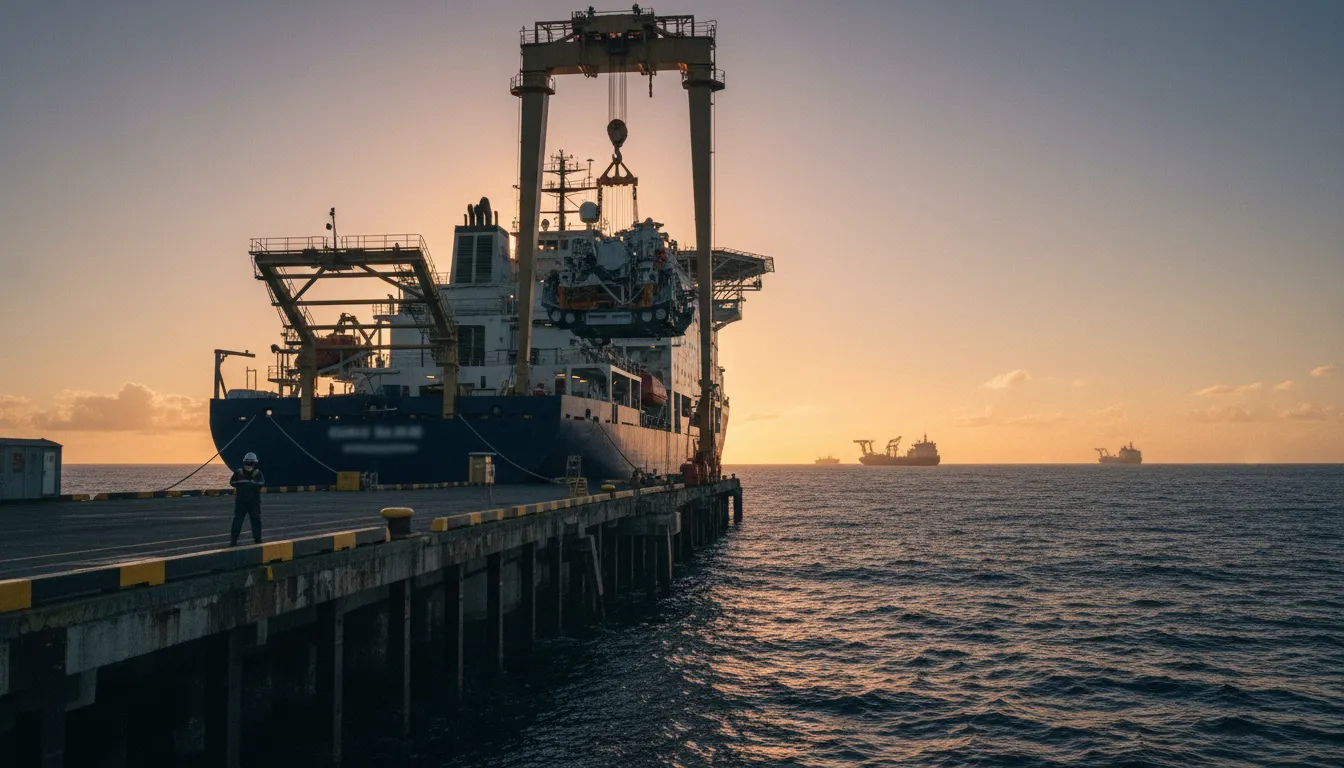
The proposed extraction process involves deploying heavy robotic collectors to the seafloor. These machines vacuum up nodules along with the top layers of sediment, then pump the material through a riser pipe to a surface vessel. Waste sediment is discharged back into the water column, creating plumes that can drift for hundreds of kilometers.
Scientists warn the impacts could be severe and long-lasting. A study published in Nature examined a test mining track disturbed four decades ago and found that biological impacts persist — many organisms had not recovered. Because deep-sea species are slow to reproduce and nodules take millions of years to regrow, some researchers say mining could cause irreversible species loss.
Who Decides?
Under international law, the CCZ lies in waters beyond any nation's jurisdiction. The seabed is legally designated as the "Common Heritage of Mankind," and its mineral resources are governed by the International Seabed Authority (ISA), a United Nations body based in Jamaica. The ISA has issued exploration contracts to 17 companies and governments but has not yet approved commercial extraction.
Negotiations on a Mining Code to regulate extraction have stalled repeatedly. At its 2025 sessions, the ISA Council remained unable to reach consensus, with the regulatory text still heavily bracketed with unresolved disagreements. Meanwhile, Norway became the first country to approve deep-sea mining in its own waters in 2024, only to postpone licensing until 2029 after fierce scientific and public backlash.
The Core Dilemma
Supporters argue that seabed minerals could reduce reliance on environmentally destructive land mining and accelerate the green-energy transition. Critics counter that recycling, technological innovation, and circular-economy strategies could cut mineral demand by up to 58 percent by 2050, making ocean mining unnecessary. Major corporations including BMW, Samsung, and Google have pledged not to source deep-sea minerals.
For now, the Clarion-Clipperton Zone remains untouched — a vast, dark repository of both mineral wealth and biological mystery. How the world decides to treat it may define ocean governance for generations.